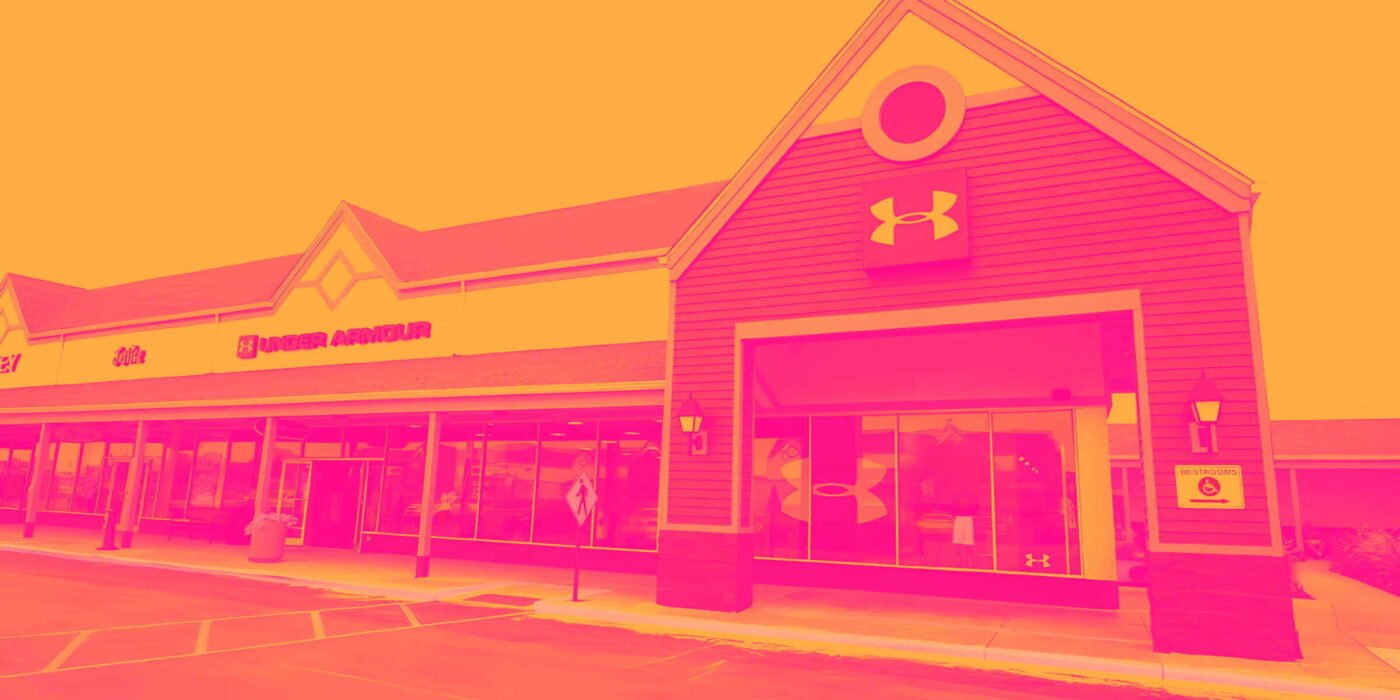
Under Armour (NYSE:UAA) shares dropped 2.6% during today’s afternoon session as the athletic apparel retailer’s second-quarter revenue of $1.10 billion failed to meet Wall Street’s $1.11 billion target. While the company successfully outperformed earnings expectations, the 3.2% year-over-year revenue decline intensified investor concerns regarding the brand’s long-term demand struggles.
Profitability vs. Top-Line Growth
Despite the revenue miss, Under Armour delivered a notable win in operational efficiency. The company reported an adjusted earnings per share (EPS) of $0.05, more than doubling the $0.02 forecast by analysts. Furthermore, leadership reiterated its full-year earnings guidance. However, these gains were overshadowed by persistent market apprehension, as investors remain focused on the company’s multi-year pattern of inconsistent sales performance.
At the time of reporting, shares were trading at $6.18, reflecting a 3.4% decline from the previous market close.
Volatility and Market Sentiment
Under Armour remains a highly volatile asset, having recorded 23 individual moves greater than 5% over the past year. Today’s price adjustment suggests that while shareholders view the latest financial data as significant, it does not necessarily represent a fundamental shift in the company’s business outlook.
A Look Back at Performance Trends
The company’s current struggle echoes challenges from exactly one year ago. During that period, Under Armour shares plummeted 22.4% following a second-quarter report that featured a $1.13 billion revenue figure—meeting expectations but marking a 4.2% year-over-year decline. At that time, the market reacted sharply to a bleak third-quarter outlook, where the company projected EPS of only $0.02 against a consensus expectation of $0.26.
Long-Term Investor Perspective
While Under Armour has managed a 16.7% gain since the start of the year, the stock remains under pressure. Trading at $6.18, the equity sits 24.1% below its 52-week high of $8.14, recorded in February 2026. The long-term picture remains challenging for shareholders; an initial $1,000 investment in the company five years ago would currently be valued at approximately $246.80.