
Categoria: news

  • FICO Q3 2026: Profit Soars 30% as AI Platform Growth Accelerates

    FICO Q3 2026: Profit Soars 30% as AI Platform Growth Accelerates

    FICO (Fair Isaac Corporation) reported a robust financial performance for the third quarter of 2026, with revenue reaching $674 million—a 26% increase year-over-year—and GAAP net income climbing 30% to $237 million. During the earnings call held on July 29, 2026, CEO Will Lansing and CFO Steve Weber announced that strong operational execution and record-breaking share repurchases have prompted the company to raise its full-year guidance.

    Record Share Repurchases and Financial Momentum

    In a display of confidence, FICO returned significant capital to shareholders this quarter. The company repurchased 1.705 million shares for a total of $1.96 billion, exceeding historical records by more than 3x. This move, supported by $370 million in free cash flow for the quarter, underscores the company’s aggressive approach to capital allocation while maintaining a disciplined focus on long-term debt reduction.

    Scores Segment Dominance

    The Scores segment remains a primary growth engine, generating $459 million in revenue, up 41% from the previous year. Growth was largely propelled by B2B Scores, particularly in mortgage originations. Despite fluctuations in the broader mortgage market due to interest rates, FICO continues to see widespread adoption of its latest innovations.

    A key highlight this quarter was the release of FICO Score 10T data sets by the GSEs (Fannie Mae and Freddie Mac). Independent analysis by Milliman confirmed that FICO Score 10T outperforms competitor models in predictiveness across all key statistical measures. The FICO Score 10T Adopter Program now includes 70 lenders, representing roughly 55% of the volume generated by the top 50 mortgage originators.

    Strategic Expansion with UltraFICO

    FICO has also moved into the general availability phase for the next-generation UltraFICO Score, developed in partnership with Plaid. By integrating consumer-permissioned cash flow data, the score provides a more comprehensive view of credit risk for subprime and near-prime consumers. Initial data indicates a 7% relative increase in approvals for these segments without increasing risk, signaling a significant opportunity for market expansion in auto, personal, and card lending.

    AI-Driven Software Transformation

    The Software segment is undergoing a pivotal shift as the FICO Platform cements its role as the industry standard for AI decisioning. For the first time in company history, platform revenue exceeded non-platform revenue. Platform ARR (Annual Recurring Revenue) grew 62% year-over-year to $413 million, while the company’s “land and expand” strategy continues to drive high dollar-based net retention rates of 148% within the platform business.

    CEO Will Lansing emphasized that the company is actively pursuing an end-of-life strategy for legacy products, guiding customers toward the more robust, AI-powered FICO Platform. “We are not forcing migration, but there is tremendous benefit in simplifying our product catalog,” Lansing noted. This transition is supported by a new collaboration with Accenture, aimed at scaling AI implementation for enterprise clients.

    Market Outlook and Guidance

    Looking ahead, FICO has raised its full-year 2026 revenue guidance to $2.53 billion, representing a 20% increase over the prior year. GAAP earnings per share are now projected at $36.86, a 39% increase. Despite ongoing macro-economic headwinds in the mortgage sector, FICO remains focused on leveraging its proprietary IP and the compounding value of its AI decisioning platform to drive margin expansion and market leadership.

    Management confirmed that while the Mortgage Direct Licensing (DLP) program is still awaiting final certification from one of the GSEs, lender interest remains strong, with agreements already covering 60% of mortgage volume.

  • Corvus Pharmaceuticals Q2 Loss Widens Amid Clinical Expansion

    Corvus Pharmaceuticals Q2 Loss Widens Amid Clinical Expansion

    Corvus Pharmaceuticals (NASDAQ:CRVS) reported a net loss of $18 million for the second quarter of 2026, up from $8 million in the same period last year, driven by a strategic surge in clinical development spending for its flagship ITK inhibitor, soquelitinib.

    R&D Investment and Financial Position

    Research and development expenses rose to $16 million this quarter, compared to $7.9 million in the prior-year period. CFO Leiv Lea attributed this increase primarily to intensified clinical trial activity and higher personnel costs. Despite the wider loss, the company maintains a robust balance sheet, reporting $215.2 million in cash equivalents and marketable securities as of June 30, 2026. Bolstered by $189.4 million in net proceeds from a first-quarter follow-on offering, Corvus projects its current capital is sufficient to fund operations through the second quarter of 2028.

    Additionally, the company invested $5 million into a $13.5 million financing round for Angel Pharmaceuticals, its China-based partner, further solidifying its position as Angel’s largest shareholder.

    Advancing the Soquelitinib Pipeline

    CEO Richard Miller confirmed that the company is prioritizing two core clinical programs: a Phase III trial for relapsed or refractory peripheral T-cell lymphoma (PTCL) and a Phase II study for moderate-to-severe atopic dermatitis.

    The Phase III PTCL trial aims to enroll 150 patients, comparing soquelitinib against standard-of-care chemotherapy (belinostat or pralatrexate). Enrollment is proceeding as planned, with an interim futility analysis expected in Q1 2027. While final Phase III data is anticipated in late 2027, the company also noted that results from its Phase I PTCL trial are currently in press at the journal Blood and expected later this year.

    Atopic Dermatitis and Efficacy Data

    Corvus showcased positive Phase I results for soquelitinib in atopic dermatitis during the Society for Investigative Dermatology annual meeting. In the highest-dose cohort, 75% of patients achieved EASI-75—a key measure of skin clearance—compared to only 20% in the placebo group. Notably, 33% of treated patients achieved an Investigator’s Global Assessment score of 0 or 1, with no reported severe adverse events or significant laboratory abnormalities.

    The ongoing Phase II SIERRA-1 trial, which targets approximately 200 patients, is expected to complete enrollment in early 2027, with top-line data anticipated in the third quarter of 2027.

    Upcoming Clinical Milestones

    Beyond PTCL and atopic dermatitis, Corvus is aggressively expanding its clinical footprint:

    • Hidradenitis Suppurativa: A Phase Ib proof-of-concept trial is scheduled to begin in September, evaluating 25 patients on a 12-week regimen.
    • Asthma: The company remains on track to initiate a U.S. Phase II trial later in 2026, which will evaluate both allergic/eosinophilic T2 and non-T2 patient populations.

    Management emphasized that cross-border data sharing with Angel Pharmaceuticals will remain a key component of their regulatory strategy, allowing for the integration of safety and efficacy findings across both U.S. and Chinese clinical studies as they push toward year-end development goals.

  • Pentagon Taps IonQ for $58M Quantum Clock Contract

    Pentagon Taps IonQ for $58M Quantum Clock Contract

    Quantum computing firm IonQ (IONQ) has secured a transformative $28 million contract modification from the Defense Advanced Research Projects Agency (DARPA) to mass-produce advanced optical atomic clocks, marking a shift from theoretical research to tangible, revenue-generating military hardware.

    Scaling Quantum Technology for Defense

    The Maryland-based company announced the deal under DARPA’s “It’s About Time” program. The initial $28 million will fund the development and production of 25 Evergreen-05 optical atomic clocks. Furthermore, the agreement includes a $30 million option for an additional 100 units, potentially bringing the total contract value to $58 million.

    To meet the demands of this production scale, IonQ is committing $15 million of its own capital to establish specialized manufacturing facilities, acquire advanced testing equipment, and expand its technical workforce.

    Why the Pentagon Needs Quantum Clocks

    These devices are far more than simple timekeepers. They represent a critical leap in military infrastructure, designed for radar systems, secure communications, and geolocation in environments where traditional GPS signals are unreliable, jammed, or entirely inaccessible.

    The Evergreen-05 is a marvel of precision, boasting a timing error of less than one second over a span of 30 million years. Housed in a compact five-liter chassis—roughly the size of a shoebox—the device provides performance metrics that rival active hydrogen masers while occupying only 1/75th of the volume.

    Strategic Expansion Beyond Qubits

    This contract validates IonQ’s broader strategy of diversifying its portfolio beyond pure quantum computing into networking, sensing, and security. Related: IonQ stock spikes on massive quantum announcement

    The technology underpinning the Evergreen-05 originated from Vector Atomic, a firm IonQ acquired in 2025 to bolster its position in quantum navigation and timing. By securing DARPA as a foundational customer, IonQ is successfully bridging the “valley of death” between laboratory innovation and commercial manufacturing.

    The Road Ahead and Execution Risks

    While the partnership offers significant validation, investors must distinguish between the secured $28 million and the conditional $30 million option, which has yet to be exercised. Success now hinges on IonQ’s ability to transition from an R&D-focused entity to a repeatable, high-precision manufacturing operation.

    This development signals a new chapter for the quantum industry, where value is increasingly measured by the ability to solve immediate, high-stakes operational problems for government and defense clients rather than relying solely on future computing projections. Related: Morgan Stanley resets IonQ stock price target after earnings

  • Kopin Q2 Revenue Soars 51% on Defense and MicroLED Gains

    Kopin Q2 Revenue Soars 51% on Defense and MicroLED Gains

    Kopin (NASDAQ:KOPN) reported a 51% year-over-year revenue surge for the second quarter of 2026, reaching $12.7 million compared to $8.5 million in the same period last year, fueled by government-funded MicroLED research, defense contracts, and strategic AI infrastructure partnerships.

    Financial Performance and Operational Efficiency

    While total revenue climbed, product-specific revenue remained stable at $7.6 million, as gains in defense-related thermal weapon sights and liquid-crystal displays were balanced by a softening in industrial sales. Notably, non-product revenue jumped significantly to $5.1 million, driven by grants and collaborative R&D efforts.

    The company improved its cost structure, with product revenue costs falling to 86% of net revenue, down from 94% in the previous year. CFO Erich Manz attributed this efficiency to a favorable product mix. Consequently, Kopin’s operating loss narrowed to $3.5 million, and the company posted a net income of $0.9 million ($0.00 per share), a sharp recovery from a $5.2 million loss a year prior.

    MicroLED Milestones and Army Integration

    CEO Michael Murray highlighted significant progress in the U.S. government’s Industrial Base Analysis and Sustainment (IBAS) program. Kopin surpassed brightness targets for its Color MicroLEDs, achieving over 150,000 nits. The company has also installed critical bonding equipment at its Westborough, Massachusetts headquarters, with manufacturing production slated to begin in mid-2027.

    These displays are intended for advanced military applications, including Soldier Borne Mission Command, heads-up displays, and helmet-mounted systems. The company plans to provide initial samples to industry and government partners in 2027, with full-scale production for Army programs targeted for 2028.

    Drone Technology and Defense Expansion

    Kopin is gaining traction with its “Sentinel” first-person-view (FPV) headset, designed for the Pentagon’s Drone Dominance Program. Unlike standard enclosed goggles, the Sentinel allows for drone imagery while maintaining peripheral awareness. With over $45 million in total orders secured so far in 2026, Kopin is positioning itself for volume orders that could reach tens of millions of dollars in 2027.

    To support this demand, Kopin is bringing OLED deposition in-house. This move is expected to improve gross margins by at least 15 percentage points starting next year. Additionally, the company will open a new optics and photonics design center in Dallas by the end of 2026 to focus on its Neural I/O platform and custom optical solutions.

    AI Infrastructure and Future Outlook

    Collaboration with Fabric.AI remains a cornerstone of Kopin’s AI strategy. Under a $15 million development order, the companies are working on GPU-to-GPU connectivity, aiming to demonstrate a 1.6-terabit-per-second solution at CES in January 2027. While Kopin anticipates R&D orders for this program ranging from $20 million to $30 million, production revenue for the Neural I/O platform is not expected until 2028.

    Looking ahead, management remains optimistic about the second half of 2026. CFO Erich Manz confirmed that the company expects to reach GAAP profitability and generate positive free cash flow by the fourth quarter of 2026.

  • Ducommun (DCO) Q2 Surge: Is the Stock Price Overheated?

    Ducommun (DCO) Q2 Surge: Is the Stock Price Overheated?

    Ducommun (DCO) reported robust second-quarter 2026 earnings, characterized by increased sales, improved profit margins, and a surging backlog driven by missile-related defense contracts.

    Market Momentum and Recent Performance

    The company’s recent financial results have fueled significant investor interest, reflected in a 90-day share price gain of 43.61% and a 120.53% total shareholder return over the past year. This performance has forced investors to re-evaluate the balance between Ducommun’s long-term growth potential and current market risks.

    Valuation Discrepancies: Overvalued or Undervalued?

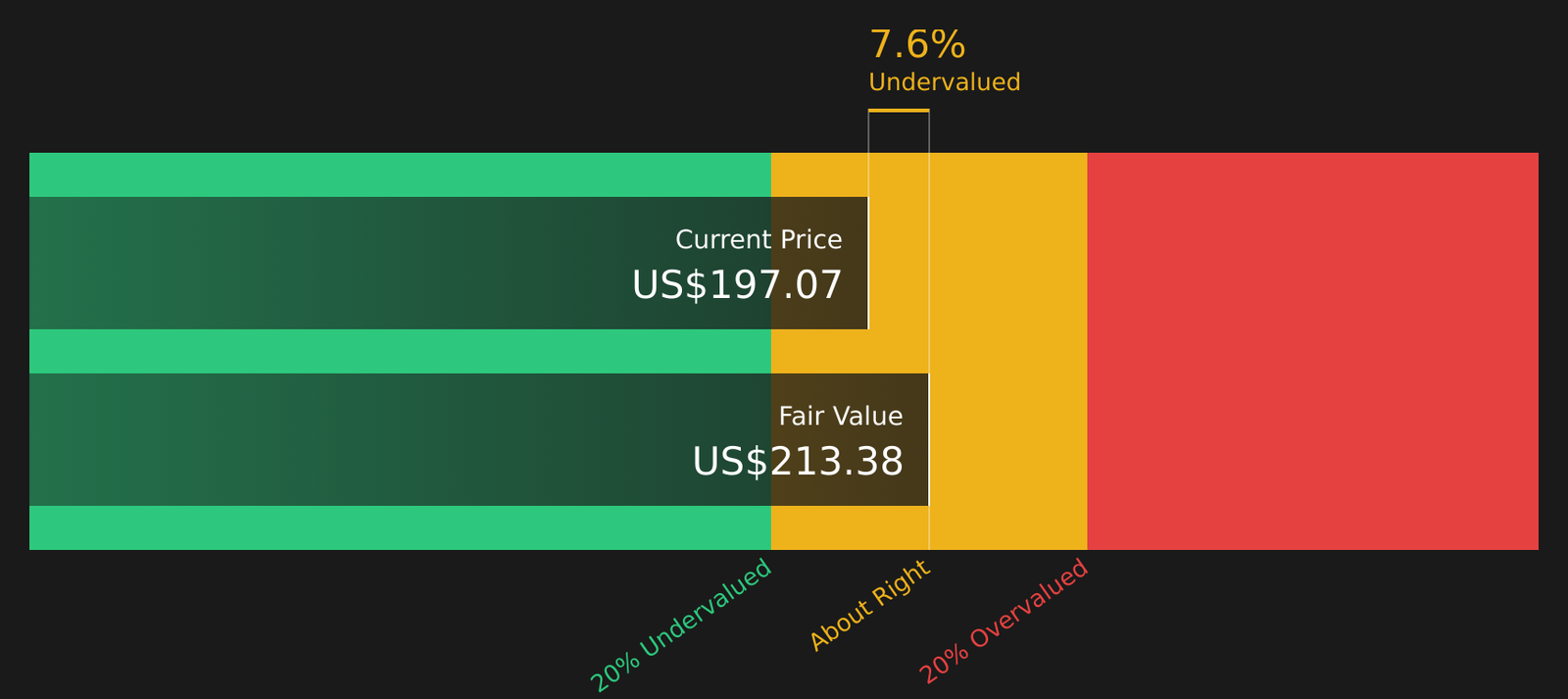
    Following the stock’s sharp ascent, a critical question remains: is it time to buy, or should investors wait for a price correction? Current analyst consensus places the fair value of Ducommun at $190.80. With the stock recently closing at $197.07, the market price suggests that much of the expected upside may already be priced in.

    The Drivers Behind the Margin Story

    The positive outlook for Ducommun rests on a narrative of high-quality earnings, disciplined cost management, and an increasingly sophisticated mix of engineered products. Valuation models currently incorporate an 8.19% discount rate, projecting steady revenue growth and profit margins that remain competitive within the broader US aerospace and defense sector.

    Currently, analysts view Ducommun as approximately 3.3% overvalued based on standard price targets. However, competing models offer a different perspective. The Simply Wall St Discounted Cash Flow (DCF) model estimates a future cash flow value of $213.37, which would categorize the stock as undervalued at its current price point of $197.07. Investors must now weigh these conflicting assumptions to determine their position.

    Risks and Future Outlook

    Despite the optimistic earnings, the Ducommun narrative remains sensitive to external pressures. Potential headwinds include a prolonged destocking phase in the commercial aerospace sector and shifts in defense spending that could impact critical missile and radar programs.

    Given the mixed signals regarding valuation and the underlying risks, investors are encouraged to scrutinize the fundamental data before making further commitments. Comparing the two key rewards against the identified warning signs remains a prudent step for those navigating the current aerospace market landscape.

  • Clean Energy Fuels Q2: RNG Growth and Hydrogen Strategy

    Clean Energy Fuels Q2: RNG Growth and Hydrogen Strategy

    Clean Energy Fuels Corp. reported its second-quarter performance, highlighting strategic shifts in Renewable Natural Gas (RNG) adoption, expansion into industrial power generation, and a disciplined approach to hydrogen infrastructure during its latest earnings call.

    Navigating Market Volatility and Emissions Standards

    CEO Andrew Corbus noted that demand is currently being shaped by industry uncertainty surrounding the EPA 2027 emissions standards. This regulatory landscape has triggered a significant “pre-buy” of legacy diesel trucks. Despite this, Corbus emphasized that the long-term cost advantage for natural gas remains intact, as diesel engines are expected to become increasingly expensive with the integration of complex emissions-related technologies.

    To capitalize on this, Clean Energy has intensified its marketing efforts toward trucking fleets over the past several months. By highlighting the price stability of RNG compared to the inherent volatility of diesel, the company has successfully generated an uptick in leads, appointments, and high-level customer discussions.

    Expanding Footprint in Canada and Industrial Markets

    The company’s footprint continues to grow, particularly in Canada, where two new stations—including a strategic site near Vancouver—have completed a robust fueling network in the western region. Factors such as high diesel taxes and the introduction of the X15N engine model have driven positive responses from local fleets.

    Beyond traditional transportation, Clean Energy is diversifying into power generation and industrial applications. Utilizing compressed natural gas (CNG) tube trailers, the company is serving facilities that lack direct pipeline access or are waiting for electrical-grid connections.

    Leveraging Existing Assets for New Revenue Streams

    The company’s NG Advantage subsidiary, which manages 102 trailers and significant compression capacity in the Northeast, is central to this industrial strategy. Corbus stated that Clean Energy can scale these opportunities by utilizing existing assets and excess capacity at its network of approximately 600 fueling stations, minimizing the need for heavy capital expenditure.

    Recent wins include a contract to supply CNG to a major California fulfillment center requiring bridge fuel for power, as well as new agreements in Puerto Rico involving a pharmaceutical manufacturing plant and a 6-megawatt power facility.

    Hydrogen Strategy and Operational Leadership

    Clean Energy is taking a cautious, risk-averse approach to hydrogen. The company recently secured a $27 million contract with the Orange County Transportation Authority (OCTA) to design and build a private fueling station for 50 fuel-cell buses. Corbus clarified that the hydrogen strategy relies on cost-plus contracts with transit agencies, avoiding commodity risk or massive capital deployment for standalone projects.

    Simultaneously, the company announced the appointment of Bart Frabotta as Chief Operating Officer. Frabotta is tasked with optimizing operational performance, technology deployment, and overall business execution to support the company’s ongoing growth initiatives.

  • Jim Cramer Likens SpaceX Stock to Century-Long Bonds

    Jim Cramer Likens SpaceX Stock to Century-Long Bonds

    SpaceX shares tumbled 13.61% on Wednesday, marking a volatile reaction to the company’s first quarterly earnings report since its June initial public offering.

    Capital Expenditures vs. Revenue Growth

    While SpaceX surpassed Wall Street revenue expectations, investors zeroed in on significantly higher capital expenditures, fueling anxiety regarding the company’s near-term spending trajectory.

    Market commentator Jim Cramer also highlighted a looming supply hurdle: approximately 911 million previously locked-up shares are set to become eligible for trading. This influx of shares could exert substantial selling pressure on the stock in the coming months.

    The Musk Factor and Long-Term Strategy

    Despite these immediate headwinds, Cramer maintains that the long-term investment thesis for SpaceX remains solid, primarily due to Elon Musk’s proven ability to deliver on complex, capital-intensive projects.

    “I would never recommend SpaceX if Musk weren’t involved,” Cramer stated. “I’m confident that Musk can raise all of the money he needs.”

    Future Growth Drivers

    Cramer pointed to several key pillars for future growth, including the Starship program, the Starlink network, and the firm’s burgeoning AI compute business. The latter has already secured compute-rental agreements with major players such as Anthropic and Alphabet Inc.’s Google.

    “One day this stock could be a huge winner,” Cramer added. “I just don’t know when that day will come.”

    Quarterly Performance Snapshot

    Earlier this week, SpaceX reported second-quarter revenue of $7.81 billion, a 92% year-over-year increase that comfortably beat the Street’s consensus estimate of $6.93 billion. The company concluded the quarter with $100 billion in cash and cash equivalents, supported by a robust $47.5 billion backlog.

    Operational Outlook

    Looking ahead, SpaceX reports strong demand across all three of its business segments, with particular strength in cloud services. The company expects the current supply-demand imbalance in AI compute to persist, noting that new compute investments are currently delivering a payback period of less than one year.

  • Trump Slaps 15% Tariff on Polysilicon to Secure U.S. Tech

    Trump Slaps 15% Tariff on Polysilicon to Secure U.S. Tech

    President Donald Trump has announced a new 15% tariff on specific polysilicon-derivative products, citing national security concerns over foreign imports that have weakened U.S. production capabilities for critical semiconductor and solar manufacturing materials.

    New Tariffs Target Semiconductor and Solar Supply Chains

    The new trade measures, set to take effect on December 4, target polysilicon ingots and specified derivatives, including solar cells and various semiconductor components. The proclamation also establishes a mandatory minimum import price program for these materials to stabilize the domestic market.

    This Section 232 action effectively replaces a narrower safeguard tariff on solar cells and modules that expired in February—a duty originally established during Trump’s first term in office.

    Global Impact and Pricing Floors

    The tariff structure varies by region: imports from Japan, South Korea, Taiwan, Switzerland, Liechtenstein, and the European Union will face a combined total duty of 15%. Meanwhile, covered products originating from the United Kingdom will be subject to a 10% tariff.

    To prevent price undercutting, the proclamation sets strict minimum import prices: $21 per kilogram for polysilicon, $100 per kilogram for ingots and wafers, $0.22 per watt for solar cells, and $0.38 per watt for solar modules. The Commerce Secretary retains the authority to adjust these price floors based on shifting market conditions and fair market value assessments.

    Incentivizing Domestic Manufacturing

    Beyond the immediate financial impact of the tariffs, the administration is pushing for a resurgence in domestic manufacturing. The Commerce Secretary has been directed to launch a program allowing companies to trade tariff relief for concrete plans to onshore production.

    Firms that commit to building, refurbishing, or expanding U.S. facilities for these materials may be granted exemptions on duties for imported production equipment. This approach mirrors previous directives aimed at the aluminum industry, where the Commerce Secretary will evaluate the required duty-free import volumes based on the scale of a company’s domestic investment and the progress made toward their facility commitments.

    A Continued Focus on Section 232

    This move is the latest in a series of Section 232 tariffs deployed by the Trump administration to protect critical industrial sectors. Earlier this year, the president implemented a 25% tariff on a select range of semiconductor imports, specifically targeting advanced computing chips. Similar to that policy, these new measures are designed to bolster the U.S. technology supply chain and prioritize domestic manufacturing capacity over reliance on foreign inputs.

  • Anthropic Secures $71B in Chip Debt via Clever Finance Hack

    Anthropic Secures $71B in Chip Debt via Clever Finance Hack

    Anthropic has secured $71 billion in chip-lease debt over a two-month period by leveraging specialized off-balance-sheet vehicles, allowing the AI firm to aggressively scale its compute capacity without impacting its primary corporate financial statements.

    The Mechanics of Off-Balance-Sheet Scaling

    The core of this financial strategy lies in the use of special purpose vehicles (SPVs) to sequester massive hardware deployments. Rather than carrying the burden of hardware depreciation on its own balance sheet, Anthropic utilizes these structured finance vehicles to manage its growing infrastructure requirements.

    Broadcom’s Critical Role as a Credit Backstop

    The $35 billion deal finalized in June 2026, orchestrated by Apollo Global Management and Blackstone Credit and Insurance, serves as the blueprint. In this arrangement, the SPV acquires Google’s tensor processing units (TPUs) and leases them back to Anthropic. The structure is anchored by a Broadcom residual value backstop.

    This backstop is vital: if Anthropic defaults or the hardware’s resale value plummets, Broadcom covers the difference. This allows the senior tranches—approximately $6 billion in Senior A1 notes and $24 billion in Senior A2 notes—to effectively inherit Broadcom’s investment-grade credit rating. In contrast, the $4.5 billion Class B tranche, which lacks this support, trades at an 8.5 percent spread, highlighting the immense value provided by the Broadcom guarantee.

    IPO Projections vs. Debt Structures

    As the market anticipates Anthropic’s October 2026 IPO, it is crucial to separate the company’s two distinct capital engines. While the confidential S-1 filed with Morgan Stanley, Goldman Sachs, and JPMorgan aims to raise equity for corporate operations, the SPVs function as a separate debt-based engine for hardware acquisition. Consequently, this $71 billion in structured debt remains largely invisible to public-market investors focusing solely on equity.

    Expanding the Footprint: The $36 Billion Follow-up

    Following the initial success, a second $36 billion debt package led by Blackstone is currently in preliminary talks. This deal targets data center deployments across New York, Texas, Louisiana, and Indiana. If finalized, this will bring Anthropic’s total structured-credit exposure to Google hardware to $71 billion, marking one of the largest private-credit arrangements in history.

    The New Era of Compute-Driven Finance

    Anthropic’s strategy represents the latest iteration of the “Compute Landlord Thesis.” While previous industry benchmarks included OpenAI’s vendor-financed exposure with Nvidia and the massive equity-funded initiatives of SpaceX, Anthropic has pioneered a credit-funded model. By essentially borrowing Broadcom’s balance sheet to secure scarce hardware, Anthropic has proven that in the current AI arms race, the sophistication of the funding mechanism is just as critical as the silicon itself.

  • Is Atmos Energy (ATO) 9% Undervalued? Key Earnings Insights

    Is Atmos Energy (ATO) 9% Undervalued? Key Earnings Insights

    Atmos Energy (ATO) reported strong fiscal 2026 third-quarter growth and reaffirmed its full-year earnings guidance, signaling potential undervaluation as the stock currently trades approximately 9% below its estimated fair value of $186.18.

    Strong Quarterly and Fiscal Performance

    For the third quarter ending June 30, 2026, Atmos Energy posted revenue of US$879.06 million, up from US$838.77 million in the same period last year. Net income rose significantly to US$242.69 million, compared to US$186.43 million a year prior. Consequently, diluted earnings per share (EPS) climbed to US$1.43, up from US$1.16.

    The nine-month fiscal performance follows this positive trajectory, with total revenue reaching US$4.18 billion compared to US$3.97 billion in the previous year. Net income for this period hit US$1.23 billion, with diluted EPS reaching US$7.33, an increase from US$6.40 in the prior year.

    Strategic Guidance and Market Adjustments

    Management has reaffirmed its fiscal 2026 earnings guidance, maintaining a range of US$8.40 to US$8.50 per diluted share. The company is committing to a capital expenditure plan of approximately US$4.2 billion for the fiscal year, while simultaneously targeting US$334 million in annualized operating income growth through regulatory filings.

    Regarding its APT pipeline business, the company noted that increased takeaway capacity has led to narrower spreads. As a result, Atmos Energy anticipates that the second-half earnings contribution from the APT segment will land near the lower end of its previous forecast of US$0.08 to US$0.12 per share.

    Dividend Consistency and Stock Valuation

    Demonstrating its commitment to shareholders, the Board of Directors declared a quarterly dividend of US$1.00 per share, marking the 171st consecutive quarterly payout. The dividend is set for distribution on September 8, 2026, to shareholders of record as of August 24, 2026.

    Despite recent short-term volatility—with the share price dipping 3.9% over the last 30 days and 5.9% over the quarter—the company maintains a robust 5-year total shareholder return of 89.9%. Current market analysis suggests that the recent price cooling reflects a broader sentiment reset rather than fundamental flaws in the company’s risk profile or long-term growth trajectory.

    Investment Risks and Outlook

    While the valuation model points to a fair value of $186.18—representing a 9% upside from the recent close of $170.19—investors should remain mindful of potential headwinds. Key risks include rising capital and operating costs that may pressure cash flows, as well as unpredictable regulatory outcomes that could impact future earnings visibility.