Categoria: economy

  • China’s Teapot Refiners Ready to Boost Iranian Oil Imports

    China’s Teapot Refiners Ready to Boost Iranian Oil Imports

    China’s independent refineries, known as “teapots,” are set to aggressively increase Iranian crude oil purchases this August as stockpiles in the Shandong province plummet to their lowest levels of the year following a record-breaking monthly inventory drawdown.

    Depleted Reserves Trigger New Buying Spree

    Throughout the first six months of the ongoing Middle East conflict, China’s independent refiners significantly slowed imports. They opted to tap into massive domestic reserves—estimated at over 1.3 billion barrels in total commercial and strategic storage—rather than contend with volatile international crude prices and a reported unofficial government policy to curb imports.

    However, this strategy of self-reliance has reached a critical turning point. Data from Energy Aspects, cited by Bloomberg, indicates that Shandong’s stockpiles plunged to approximately 360 million barrels by the end of July. This represents an eight-month low, with a staggering 35-million-barrel withdrawal in July alone—the sharpest monthly decline since the firm began tracking the data in 2016.

    A Strategic Shift Toward Iranian Supply

    The urgency to replenish these depleted reserves is driving a return to Iranian crude. Independent refiners are expected to ramp up imports this month, capitalizing on a surge of Iranian tankers that cleared the Strait of Hormuz between mid-June and early July. This window of opportunity opened when U.S. enforcement efforts briefly eased, allowing millions of barrels to transit toward Asian markets.

    Recent customs data underscores this shift; total Chinese crude imports saw a significant rebound in July, jumping 22% from June to an average of 8.45 million barrels per day (bpd).

    Global Market Implications

    China’s ability to sit on the sidelines as the world’s largest oil importer has been a primary factor in keeping global price spikes in check during recent geopolitical instability. By utilizing its substantial supply cushion, Beijing effectively acted as a ceiling for oil prices. Analysts warn, however, that China’s inevitable return to the international market as a primary buyer will likely reverse this trend, posing a significant challenge to oil bears betting on sustained lower prices.

  • Bitcoin and Ethereum Dip Ahead of Critical Inflation Data

    Bitcoin and Ethereum Dip Ahead of Critical Inflation Data

    Bitcoin and Ethereum opened lower on Tuesday, August 11, 2026, as markets brace for pivotal inflation reports later this week that could influence Federal Reserve interest rate policy.

    Crypto Market Movements: Tuesday Update

    Bitcoin (BTC-USD) started the day at $63,912.50, reflecting a 1.4% decline from Monday’s opening price. By 8:32 a.m. ET, the asset showed signs of recovery, climbing to $64,282.28. Meanwhile, Ethereum (ETH-USD) opened at $1,871.33—a 2% drop from the previous day—before ticking upward to $1,888.83 by mid-morning.

    Market Sentiment and Economic Headwinds

    Current prices for both assets have retreated to levels observed one week ago. Although the crypto market experienced a brief rally following last week’s underwhelming jobs report, that momentum proved unsustainable. Investors are now shifting their focus toward upcoming inflation data, which will be instrumental in determining the Federal Reserve’s stance during their September meeting. Because cryptocurrencies do not generate interest, they often face significant pressure when interest rates rise.

    Bitcoin and Ethereum Price Performance

    The price of bitcoin this morning was down 1.4% from Monday’s opening price. Here’s a look at how the opening bitcoin price has changed versus last week, month, and year:

    The price of ethereum this morning was 2% lower than Monday’s open. Here’s a look at how the opening ethereum price has changed versus last week, month, and year:

    Understanding Ethereum and Market Strategy

    It is important to distinguish between Ethereum, the underlying blockchain, and ether (ETH), the digital asset used to power applications and store value. Investors typically utilize different strategies when engaging with the asset, ranging from short-term trading to long-term accumulation or earning yield through staking.

    While ether remains more volatile than traditional indices like the S&P 500, it has evolved from a speculative asset into a foundational component of modern digital portfolios.

    For those looking to enter the market, understanding the basics is essential. You can learn more about the process in this guide: How to buy Ethereum and what to know before you do.

    Whether you are a newcomer tracking price action or a seasoned investor, monitoring historical trends is vital. Yahoo Finance’s price-of-ethereum chart provides a visual history of how the currency’s value continues to evolve over time.

  • Why Weak Jobs Data Could Actually Fuel a Stock Market Rally

    Why Weak Jobs Data Could Actually Fuel a Stock Market Rally

    The S&P 500 is eyeing record highs this week, bolstered by a robust corporate earnings season and a cooling labor market that has tempered Federal Reserve interest-rate hike expectations following Friday’s surprisingly weak jobs report.

    “Bad News is Good News” for Wall Street

    Analysts at Citi Research, led by Scott Chronert, have adopted a “bad news is good news” stance regarding the current labor market. This sentiment aligns with Dennis DeBusschere, chief market strategist at 22V Research, who suggests that a “benign slowing” of U.S. economic growth could act as a catalyst for higher stock prices.

    The latest nonfarm-payrolls report revealed a loss of 23,000 jobs in July, defying expectations of an 83,000 gain. While employment conditions are easing—evidenced by a lower employment-to-population ratio and slowing nominal wage growth—economic activity remains resilient. For DeBusschere, this cooling effect provides the economy with necessary breathing room to expand before inflation becomes a systemic threat.

    Raising the GDP Speed Limit

    “This easing labor market dynamic, counterintuitively, raises the implied speed limit for GDP growth,” DeBusschere argues, noting that the threshold could now potentially exceed 2%. By preventing wage-driven inflation, the economy can run hotter without forcing the Federal Reserve to aggressively tighten monetary policy. Consequently, the Fed retains the flexibility to respond to demand shocks with interest rate cuts as long as labor slack increases and wage pressures diminish.

    Investors are now looking ahead to Wednesday’s release of the July consumer-price index data to confirm this trend.

    The Outlook for Treasury Yields and Equities

    Despite the cooling labor market, DeBusschere does not anticipate a significant drop in Treasury yields. He expects 10-year Treasury yields BX:TMUBMUSD10Y to hover around 4.5%, reflecting a firmer long-term growth outlook and a higher equilibrium interest rate, or R*.

    This environment—characterized by sustainable growth, easing inflation, and a central bank with room to maneuver—creates a powerful tailwind for equities. DeBusschere anticipates that a more durable expansion will lower equity risk premiums, providing further upside potential for stocks. Additionally, he points to artificial intelligence as a key driver of profitability. His analysis suggests that AI-linked efficiencies are contributing to an average 150 basis-point improvement in corporate margins.

    Driven by these factors, DeBusschere projects the S&P 500 SPX could reach 8,500 within the next 12 months, leading him to favor cyclical stocks over defensive alternatives.

    Market Movements and Corporate Updates

    As of the opening bell, U.S. stock indices SPX DJIA COMP are trading slightly lower as Treasury yields BX:TMUBMUSD10Y edge upward. The dollar index DXY has strengthened, while gold futures GC00 are trading near $4,392 an ounce.

    In corporate news, Berkshire Hathaway BRK.B reported that its second-quarter profit more than doubled, fueled by successful stock investments. Meanwhile, oil prices CL.1 BRN00 rose on Monday amid concerns regarding a stalled U.S.-Iran deal that would have reopened the Strait of Hormuz. Intel shares INTC are trending downward following the company’s announcement of a $15 billion stock sale, and Apple AAPL shares faced a downgrade to “underperform” by Jefferies analysts.

    Regarding precious metals, Jonathan Krinsky, technical strategist at BTIG, notes that while gold has rallied from recent lows, it is approaching strong resistance in the $4,400 to $4,500-an-ounce range. This zone coincides with the 200-day moving average and the downtrend from previous all-time highs.

  • Inflation Week: CPI and PPI Data Set to Shake Markets

    Inflation Week: CPI and PPI Data Set to Shake Markets

    As the market shifts focus from employment figures and Federal Reserve interest rate policy, this week centers on “Inflation Week,” with critical Consumer Price Index (CPI) and Producer Price Index (PPI) data arriving Wednesday and Thursday.

    CPI Data: Will Inflation Continue to Cool?

    On Wednesday morning, the July CPI report will be released, with analysts projecting a second consecutive decline in the headline inflation rate to +3.4% year-over-year, down from the previous +3.5%. This follows a peak of +4.2% in May, which marked a three-year high. When volatile food and energy prices are excluded, core inflation is expected to retreat to +2.5%, a level not seen since the beginning of the year.

    If these figures align with market expectations, they could provide the Federal Reserve with the necessary justification to hold interest rates steady during its September meeting. While inflation appeared to be accelerating previously, the moderation of oil prices and transportation costs—aided by diplomatic developments—has helped stabilize the outlook, keeping investor sentiment cautiously optimistic.

    The PPI Outlook and Market Implications

    While retail inflation shows signs of cooling, the wholesale side remains more aggressive. The Producer Price Index (PPI) reported a +5.5% headline increase last month. Projections for Thursday’s July data suggest a slight dip to +5.1%. However, this remains more than 300 basis points above the Federal Reserve’s optimal inflation target. Because wholesale costs often act as a leading indicator for retail price trends, investors will be watching these figures closely.

    A cooling trend in these reports would likely be welcomed by investors, potentially driving major market indexes toward new record highs. Conversely, inflation data that exceeds expectations could trigger a sharp downturn. Consequently, market activity is expected to remain muted until the CPI data drops on Wednesday.

    Key Earnings to Watch: Cisco, AI, and More

    Despite the majority of “Mag 7” companies having already released their quarterly results, the earnings calendar remains packed. Cisco Systems (CSCO) stands out as the week’s primary headliner, with its report scheduled for Wednesday afternoon. Additionally, the market will keep a close watch on AI infrastructure players, including CoreWeave (CRWV) and Nebius (NBIS).

    Other notable reports include Rocket Lab (RKLB), a spacecraft and launch services provider, which anticipates Q2 earnings growth of +70% and revenue growth of +60.25% year-over-year. The company currently holds a Zacks Rank #4 (Sell) and has missed earnings estimates in four of the last six quarters. Meanwhile, Hims & Hers (HIMS) reports after today’s closing bell, with expectations of a -141% year-over-year decline in bottom-line earnings despite a +26.7% increase in revenue. HIMS is currently a Zacks Rank #3 (Hold).

  • Bank of America Warns: Fed’s Silence is Hurting the Economy

    Bank of America Warns: Fed’s Silence is Hurting the Economy

    Bank of America economists are sounding the alarm on the Federal Reserve’s current communication strategy, arguing that the lack of clear forward guidance from Chair Kevin Warsh is creating unnecessary market volatility and acting as a hidden tax on the broader economy.

    The “3D Chess” Theory Under Fire

    Since the Federal Reserve’s July 29 meeting, where policymakers held the federal funds rate steady at 3.50%-3.75%, Wall Street has been obsessed with a single question: Was the bond market doing the Fed’s tightening for it?

    Fed Chair Kevin Warsh noted that Treasury yields had surged despite the pause in rate hikes. This fueled a “3D chess” theory suggesting the Fed was deliberately allowing long-term rates to climb to cool demand without needing further immediate hikes. However, Bank of America economists Aditya Bhave and Mark Cabana are challenging this narrative, noting that the market reaction has been anything but orderly.

    Why Market Uncertainty Functions as a Tax

    The core issue, according to BofA, is not necessarily the Fed’s decision to withhold specific future rate promises, but its failure to clarify its “reaction function”—the framework that dictates how and when policy will change. This ambiguity is forcing investors to demand a higher risk premium, which BofA warns “works like a tax on the economy.”

    As this uncertainty trickles down through Treasury yields, it directly inflates borrowing costs, mortgages, and financing for businesses. This lack of transparency is particularly concerning given the rise in inflation expectations observed following Warsh’s July press conference.

    Credibility and the Inflation Challenge

    Todd Campbell, former sell-side analyst and TheStreet’s Co-Editor-in-Chief, highlights the historical shift in policy communication: “Warsh is rolling back decades of transparency. We got immediate post-decision statements in 1994, and Greenspan started giving forward guidance in 2003. Investors hate uncertainty. And businesses and consumers tap brakes when higher yields flow into bank lending rates.”

    BofA argues that while the market doesn’t require a crystal ball for every future meeting, it desperately needs evidence of a coherent plan to return inflation to the 2% target. Without this, the recent jump in yields—driven by inflation expectations and term premiums rather than confidence in the Fed—signals deeper skepticism about the central bank’s policy path.

    Economic Resilience vs. Sticky Inflation

    Despite the communication hurdles, Bank of America maintains that the U.S. economy is not on the brink of collapse. The bank forecasts 75 basis points of rate hikes throughout 2026, targeting a federal funds rate of 4.25% to 4.50%, where it expects rates to remain through 2028.

    Growth is expected to average nearly 2.5% in the latter half of 2026, supported by robust consumer spending and sustained AI investment. The labor market also appears stable, with unemployment projected to hover around 4.2% by year-end.

    However, the inflation battle remains the primary obstacle. While headline inflation is expected to ease as oil shocks subside, core PCE is forecast to remain stubbornly above 3% this year. This creates an uncomfortable reality for the Fed: an economy strong enough to absorb tighter policy, coupled with inflation persistent enough to mandate it.

    What Lies Ahead for Fed Policy

    As the market awaits upcoming CPI and employment reports, the pressure on the Fed to provide clarity is mounting. Bank of America suggests that if inflation data remains firm, Chair Warsh may adopt a more hawkish tone at Jackson Hole.

    The irony is profound: while Warsh seeks to diminish the influence of Fed communication, the combination of sticky inflation and policy uncertainty has made every word from the Fed Chair more market-moving than ever before.

  • Markets Eye Fed Independence as Lisa Cook Faces New Pressure

    Markets Eye Fed Independence as Lisa Cook Faces New Pressure

    Wall Street reached record highs on Friday despite a surprise dip in July U.S. payrolls, as markets weigh cooling job growth against persistent concerns over Federal Reserve independence and upcoming inflation data.

    Market Resilience Meets Interest Rate Uncertainty

    Although July payroll figures fell short of expectations, interest rate markets remain largely unmoved, with a 50-50 split on the probability of a Federal Reserve rate hike next month. Treasury yields saw only marginal movement, reflecting investor caution amid $125 billion in new Treasury issuance slated for this week.

    The Inflation Watch and Geopolitical Tensions

    Attention now shifts to Wednesday’s consumer price inflation report for July. While annual headline and core rates are projected to decline, the headline rate is expected to remain above 3%. Compounding the mood, Brent crude prices climbed above $84 per barrel on Monday, driven by stalled negotiations regarding the Strait of Hormuz.

    Political Heat Targets Fed Governor Lisa Cook

    Concerns regarding the Federal Reserve’s autonomy were reignited on Friday when President Donald Trump demanded that Governor Lisa Cook respond to mortgage allegations within three weeks. The ultimatum carries the threat of dismissal, a move previously contested by Supreme Court rulings.

    Corporate Earnings and Global Market Trends

    Stock markets continue to benefit from a robust second-quarter earnings season, with S&P 500 companies reporting an aggregate annual profit gain of 51%, according to LSEG data. Asian markets tracked Wall Street’s positive momentum on Monday, while U.S. equity futures showed slight gains in pre-market trading.

    Economic Data and BLS Leadership

    In China, July inflation figures missed forecasts, adding to a relatively quiet global economic calendar. Domestically, July payrolls unexpectedly fell by 23,000, with downward revisions for May and June totaling 103,000 jobs. Average job growth has slowed to 20,000 per month over the last quarter.

    These data revisions echo last year’s volatility, which culminated in President Trump’s dismissal of BLS commissioner Erika McEntarfer over unsubstantiated claims of data manipulation. On Friday, the Senate confirmed career economist Brett Matsumoto as the new BLS commissioner.

    Key Indicators to Watch

    • U.S. Conference Board Employment Trends Index for July (10 a.m. EDT)
    • Cleveland Fed’s Beth Hammack speaks (3 p.m. EDT)
  • Stocks Edge Higher as Markets Eye Middle East and Inflation

    Stocks Edge Higher as Markets Eye Middle East and Inflation

    US stock benchmarks traded higher in Monday’s premarket session as investors balanced geopolitical tensions in the Middle East against the anticipation of critical inflation data scheduled for release later this week. The S&P 500 rose 0.1%, while the Nasdaq Composite gained 0.4% ahead of the opening bell.

    Market Sentiment Amid Geopolitical Uncertainty

    Market participants are closely tracking the evolving situation in the Middle East, which continues to influence global risk appetite. Despite the underlying uncertainty, equity indices have shown resilience in early trading as traders position their portfolios for potential volatility.

    Focus Shifts to Impending Inflation Prints

    Beyond regional conflicts, the primary driver for market direction this week remains the upcoming inflation reports. These data points are expected to provide the Federal Reserve with further clarity regarding the trajectory of interest rates, serving as a pivotal signal for institutional and retail investors alike.

  • Stocks Dip as Oil Prices Stoke Fresh Inflation Fears

    Stocks Dip as Oil Prices Stoke Fresh Inflation Fears

    Major U.S. stock indices retreated on August 10 as surging oil prices and growing geopolitical tensions fueled renewed inflation concerns, stalling the previous week’s market rally. The S&P 500 (SNPINDEX:^GSPC) dipped 0.06% to 7,753, the Nasdaq Composite (NASDAQINDEX:^IXIC) fell 0.32% to 26,605, and the Dow Jones Industrial Average (DJINDICES:^DJI) slipped 0.11% to 53,976 as it retreated from record highs.

    Market Movements and Sector Performance

    As investors braced for Wednesday’s highly anticipated consumer price data, energy stocks stood out as the top performers, buoyed by the rise in crude oil prices. Conversely, the technology and real estate sectors faced the heaviest selling pressure. Treasury markets also reacted to the uncertainty, with the 10-Year Treasury yield climbing 0.06% to 4.71%, while gold prices saw a significant uptick of 1.14%, closing at $4,390.85.

    Geopolitical Headwinds and Energy Concerns

    Market sentiment remains sensitive to the ongoing closure of the Strait of Hormuz. Hopes for a diplomatic resolution have begun to fade, and the resulting supply concerns are exerting downward pressure on the broader markets. This geopolitical instability, combined with the anticipation of inflation reports, has effectively cooled the bullish momentum seen in the prior week.

    Key Corporate Developments

    Corporate news drove significant volatility across individual tickers:

    • Intel Corporation: Shares slumped following the company’s announcement of a $15 billion stock offering aimed at financing its artificial intelligence (AI) and manufacturing expansion plans.
    • Meta Platforms, Inc.: The stock finished up 0.48% after an intraday climb, as investors assessed Mark Zuckerberg’s latest AI manifesto and the rollout of the Muse Glimmer model.
    • Nvidia: The chipmaker saw its shares fall after announcing a $500 billion funding partnership with major asset managers. While the company aims to build investable AI infrastructure, investors are increasingly wary of the extreme capital intensity required to remain competitive in the AI arms race.
    • Archer Aviation: Shares soared 12% following the announcement of a deal to acquire three Boeing subsidiaries, which also includes Boeing taking an equity stake in the firm.
  • Why Momentum and Fed Policy Signal Further Stock Gains

    Why Momentum and Fed Policy Signal Further Stock Gains

    Market momentum, shifting Federal Reserve liquidity expectations, and stellar tech earnings are fueling a bullish outlook for the remainder of the year. According to data from OddStats, the QQQ index gained 17.7% in the first 150 days of 2026—a historical threshold that has consistently preceded strong performance through year-end.

    Liquidity Remains the Market’s Primary Engine

    As legendary investor Stanley Druckenmiller famously noted, it is not just earnings that drive the broader market, but the movement of liquidity directed by the Federal Reserve. While many investors fixate on conventional earnings metrics, the true catalyst for asset prices remains the central bank’s policy stance.

    The Impact of the Jobs Report on Fed Policy

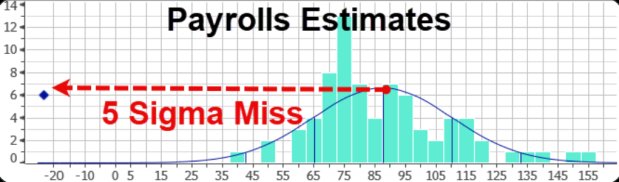
    The market narrative shifted abruptly following last week’s dismal jobs report. Prior to the data release, investors were bracing for a September rate hike driven by inflation fears linked to the U.S.-Iran conflict. However, payrolls suffered a staggering 5-sigma miss, contracting by 23,000 against expectations of an 80,000 gain.

    This economic cooling has drastically reduced the likelihood of a September rate hike under Federal Reserve Chair Kevin Warsh. Predictably, betting markets like Polymarket have seen the odds of aggressive policy tightening plummet, providing a more favorable environment for equities.

    Mega-Cap Tech Earnings Signal Strength

    The market’s resilience is further underscored by dominant performances from the tech sector. SpaceX (SPCX) made a historic public debut, shattering Zacks Consensus Estimates by 65.38% in its inaugural earnings report.

    Meanwhile, tech giants Amazon (AMZN), Microsoft (MSFT), and Alphabet (GOOGL) continue to outperform expectations, validating their massive multi-billion-dollar capital expenditure (CapEx) strategies. Notably, Amazon shares surged 15% in late July on trading volumes 150% above historical norms. The fact that the stock has maintained these gains while trading sideways suggests significant institutional accumulation, a classic sign of underlying strength.

    The Road Ahead

    When combining historical momentum patterns, the pivot in Federal Reserve expectations, and the sustained earnings power of market leaders, the current financial backdrop points toward continued upside potential for the broader market.

  • Libya Threatens Force Majeure After Drone Strikes Hit Oil Hub

    Libya Threatens Force Majeure After Drone Strikes Hit Oil Hub

    Libya’s National Oil Corporation (NOC) is weighing a declaration of force majeure on exports from the Zawiya oil terminal following a series of precision drone strikes on the critical facility.

    Operational Impact on Zawiya and Sharara

    The Zawiya terminal serves as a vital export gateway with a daily capacity of 120,000 barrels. The facility is primarily supplied by the Sharara oil field—Libya’s largest—which boasts a production capacity of up to 300,000 barrels per day. Reuters reports that any formal declaration of force majeure would effectively halt these shipments, creating significant supply chain disruptions.

    Damage Assessment and Fuel Shortage Risks

    The recent drone strikes caused severe infrastructure damage, including the total destruction of a storage tank containing 4.5 million liters of gasoline, as well as strikes on an oil blending facility. These targeted attacks threaten to exacerbate existing local fuel shortages, further destabilizing the region’s energy supply.

    A Pattern of Persistent Sabotage

    This incident marks the third drone attack on the terminal in recent days. Over the weekend, a separate drone strike hit a naphtha tank at the Zawiya refinery, resulting in a leak that was successfully contained. While no group has claimed responsibility, Libya’s oil infrastructure remains a high-value target for factions vying for political leverage and control.

    Long-term Production Goals Amidst Conflict

    Despite the escalating security threats, the NOC maintains an ambitious roadmap to increase Libya’s national oil production from the current 1.4 million barrels per day to 2 million barrels daily by the early 2030s.

    This growth strategy is bolstered by a recent $2 billion injection from the state budget. NOC chief executive Masoud Suleman confirmed that these funds will serve as an essential operating budget, stating that the period of chronic funding delays—which previously hindered operations and strained partner relations—has officially ended.

    Revitalizing Industry Partnerships

    Beyond current security challenges, the NOC is actively pursuing international collaboration. Last month, the corporation and Austrian energy firm OMV declared the Essar oil discovery commercially viable. As Africa’s second-largest oil producer, Libya continues to prioritize these strategic partnerships with global majors to revitalize its domestic industry.