
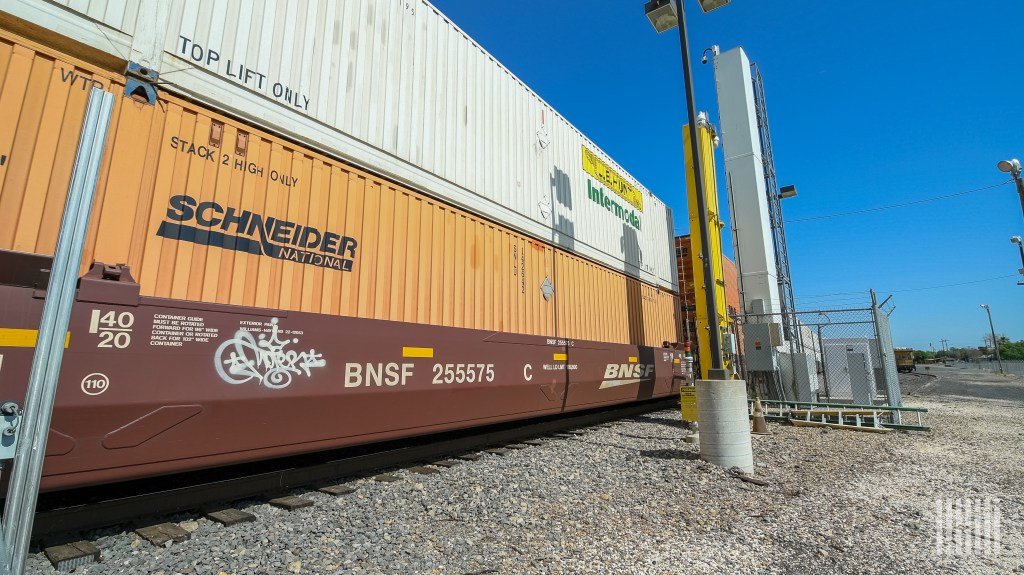
Intermodal rail usage has surged by 10% compared to 2025 levels, while long-haul truckload demand stagnates, signaling a strategic shift as shippers abandon expensive trucking lanes for rail alternatives.
The Divergence Between Rail and Road
Since mid-July, intermodal and long-haul tender volumes (LSTVI) have moved in opposite directions. While domestic-sized container usage (ORAILDOML) is climbing, long-haul tender volumes—defined as loads traveling over 800 miles—have remained flat. This trend raises a critical question: is this the beginning of the end for the current truckload upcycle?
Long-haul trucking is the segment most interchangeable with intermodal, and currently, it is where rail offers the most significant cost advantages. Total tender volumes are up 6% year-over-year, yet long-haul remains the only segment failing to show annual growth. Furthermore, the LSTVI has plummeted to its lowest point this year—a highly unusual occurrence for August, especially given the strength of imports arriving at California ports.
Import Dynamics and Geographic Growth
Long-haul trucking demand remains deeply tethered to imports, with 30-40% of overseas containers clearing through the Los Angeles and Long Beach port complexes. A significant portion of this freight travels to the East Coast, where the majority of the U.S. population resides.
While Los Angeles serves as the primary gateway, much of the freight is transloaded into domestic containers or trucks after moving inland. Chicago, the nation’s largest market for domestic container shipping, has seen a 9% growth rate compared to last year. Meanwhile, Atlanta—fed by containers from Savannah and Los Angeles—has experienced a staggering 20% growth in domestic container volumes, far outpacing Los Angeles’s modest 3% increase.
The Cost Catalyst
The primary driver behind this modal shift is the rapid escalation of truckload costs. Contract rates from Chicago to Elizabeth, New Jersey, have jumped 31% (including fuel), while intermodal rates on the same route rose only 5%. The disparity is even sharper for the Atlanta to Elizabeth lane, where trucking rates are up nearly 60% compared to just 6% for intermodal. For most shippers, these price gaps are impossible to ignore.
Sustainability and Future Risks
While the immediate cost savings are clear, these spreads are likely unsustainable given the inherent limitations of rail infrastructure. Intermodal carriers are almost certain to implement double-digit rate increases, as they have significant room to raise prices without losing business. However, a potential transcontinental merger could act as a temporary ceiling on these rates until a formal ruling is issued.
Capacity remains a concern. Although rails have managed the current volume spike, drayage constraints mirror the same bottlenecks affecting long-haul trucking. Additionally, the market has yet to hit the peak intermodal season in September and October.
A final variable is the return of supply chain urgency. With inventory levels at the downstream end tighter than in previous years, shippers remain vulnerable to unexpected demand shocks. Relying too heavily on a single mode of transportation carries significant risk, and as the freight market remains highly dynamic, shippers must balance immediate cost-cutting with long-term supply chain resilience.