
Categoria: news

  • Socket Mobile Q2 2026: Revenue Dips, Pivot to Industrial Sales

    Socket Mobile Q2 2026: Revenue Dips, Pivot to Industrial Sales

    Socket Mobile (SCKT) reported a decline in Q2 2026 revenue, driven largely by softening demand within its traditional retail sector, during its recent earnings call where leadership addressed financial stability and strategic shifts.

    Maintaining Shopify Ties Amid Retail Headwinds

    Addressing concerns regarding its partnership with Shopify, CEO David Holmes confirmed that Socket Mobile remains a preferred supplier. Despite a slump in retail-related revenue over recent quarters, the company’s status as a recommended hardware provider for the Shopify ecosystem remains intact and unchanged.

    Financial Health and Auditor Outlook

    CFO Lynn Zhao addressed liquidity concerns directly, confirming that auditors have not raised any “going concern” issues regarding the company’s financial status. While the company is actively managing its working capital, Zhao emphasized that Socket Mobile maintains access to untapped bank credit lines to support ongoing operations if necessary.

    Strategic Shift Toward Industrial Scanning

    Management acknowledged the inherent risks of a business model heavily reliant on software vendors to drive hardware sales. To mitigate this dependency, Socket Mobile is aggressively pursuing the industrial scanning market. By selling directly to enterprise customers, the company is diversifying its revenue streams; this segment already accounted for approximately 10% of total Q2 revenue.

    Industrial Market Adoption Gains Momentum

    Moving beyond the beta testing phase, Socket Mobile has secured actual commercial purchases within the industrial sector. CEO David Holmes highlighted that several clients are already in the second phase of product rollouts. These solutions, which leverage iOS and Apple platforms, are gaining traction due to the high level of user familiarity with Apple devices in workplace environments. Management expects this segment to show continued growth throughout the second half of the year.

    Future Financing Strategy

    Regarding capital structure, CFO Lynn Zhao stated that the company’s primary objective is to sustain operations through internally generated cash flow. While the board of directors has utilized convertible financing from the Chairman in the past, Zhao declined to comment on specific future financing plans, noting that such levers remain available to management should the need arise.

  • Blue Owl Tech Finance Q2: Earnings, Dividends and Growth

    Blue Owl Tech Finance Q2: Earnings, Dividends and Growth

    Blue Owl Technology Finance (NYSE:OTF) reported adjusted net investment income of $0.30 per share and a net asset value (NAV) of $16.48 per share for the second quarter, driven by portfolio expansion, increased leverage, and active share repurchases.

    Portfolio Resilience and Lending Environment

    The company maintains a robust credit profile, with non-accruals representing just 10 basis points of fair value at the end of the quarter. Management reports no material signs of distress among borrowers, who continue to show high-single-digit growth in both revenue and EBITDA. As capital availability tightens in the broader market, Blue Owl is capitalizing on an improved lending environment, securing wider spreads, stronger covenants, and more favorable documentation.

    Strategic Capital Deployment

    President Erik Bissonnette noted that the firm executed approximately $850 million in new commitments and funded $550 million during Q2, while sales and repayments reached $222 million. The company expects base dividends to be fully covered by mid-2025 as it continues to deploy capital and move leverage toward the midpoint of its target range.

    Focus on Software, Life Sciences, and Digital Infrastructure

    Software remains the core of the portfolio, accounting for 70% of total holdings. The firm prioritizes mission-critical applications and workflows likely to benefit from AI integration. Diversification efforts are also underway in life sciences—highlighted by a $700 million platform-wide loan for Caris—and digital infrastructure, where the firm sees significant demand for debt capital to support data-center and GPU buildouts.

    Credit Quality and Asset Structure

    Blue Owl’s internal ratings remain stable, with investments rated three through five decreasing to 7.6% of fair value. Senior secured loans make up over 80% of the portfolio, maintaining a weighted average loan-to-value ratio of 40%. Additionally, PIK (Payment-in-Kind) income accounted for 12.5% of total investment income, with 98% of these structures established at the time of origination.

    Dividends and Financial Strategy

    The board has declared a third-quarter base dividend of $0.35 per share, complemented by a final special dividend of $0.05 per share, totaling $0.40. CFO Jonathan Lamm highlighted that net leverage closed the quarter at 0.93x, well within the firm’s 0.9x to 1.25x target range. With $4.7 billion in investments currently priced below SOFR plus 500 basis points, the firm is well-positioned for yield improvement as borrowers refinance.

    Liquidity and Shareholder Returns

    Blue Owl bolstered its balance sheet through a $500 million unsecured bond issuance and a successful amendment of its $2.7 billion revolving credit facility. The firm holds over $2 billion in liquidity and has addressed all debt maturities through 2026. Furthermore, the company repurchased $55 million in stock during the quarter, bringing the total to $170 million over the last three periods, with $195 million remaining in its current authorization.

    Management confirmed that all lockup releases are now complete, with 100% of the float available for trading. Looking ahead, the firm remains committed to rotating non-income-producing equity into yield-generating assets and further diversifying its footprint in high-growth technology sectors.

  • DoubleVerify Shares Surge 13% on $2.15B Nielsen Acquisition

    DoubleVerify Shares Surge 13% on $2.15B Nielsen Acquisition

    Shares of digital ad verification firm DoubleVerify (NYSE:DV) surged 12.9% during afternoon trading today following the announcement that the company has agreed to be acquired by Nielsen Holdings in an all-cash deal valued at approximately $2.15 billion. Under the terms of the agreement, Nielsen—the media measurement giant taken private in 2022 for $16 billion—will acquire DoubleVerify at a price of $13.60 per share.

    Strategic Synergy in Media Measurement

    The acquisition aims to merge DoubleVerify’s MRC-accredited quality signals, which specialize in bot detection and traffic filtering, with Nielsen’s industry-standard cross-screen audience measurement. This integration is designed to establish a unified currency for scoring media, evaluating both audience reach and the quality of the advertising environment. The deal also marks the exit of Providence Equity Partners, which will conclude its 11.8% investment in DoubleVerify upon the transaction’s completion.

    Financial Performance and Market Impact

    The acquisition news arrived alongside DoubleVerify’s second-quarter earnings report, which revealed a 3% year-over-year revenue increase to $193.8 million. While DoubleVerify shares are historically volatile—having experienced 17 moves greater than 5% over the past year—today’s double-digit spike represents a significant shift in market sentiment toward the business.

    Contextualizing Recent Stock Volatility

    This rally follows a period of instability for the stock, including a 4% decline just 21 days ago. That dip was largely attributed to broader tech sector headwinds, characterized by shifting macroeconomic conditions and a reduction in retail leverage. Specifically, a renewed U.S. naval blockade on Iran triggered an oil shock, pushing Brent crude above $85 per barrel. This development fueled expectations that the Federal Reserve would maintain interest rates between 3.50% and 3.75%, increasing the cost of capital and prompting investors to scrutinize AI infrastructure spending more rigorously.

    Long-term Performance Overview

    Despite the current momentum, DoubleVerify’s long-term stock performance remains mixed. While the shares have gained 21.7% year-to-date, the current price of $13.22 remains 18.8% below the 52-week high of $16.27 reached in August 2025. Furthermore, the stock has struggled over a longer horizon: a $1,000 investment made five years ago would currently be valued at approximately $388.68.

  • Consensus Cloud Solutions Q2 Results: Growth and Buybacks

    Consensus Cloud Solutions Q2 Results: Growth and Buybacks

    Consensus Cloud Solutions (NASDAQ: CCSI) reported a strong second quarter, marked by a 25% year-over-year surge in free cash flow to $25.5 million and an expanded $200 million share-repurchase program, signaling robust operational health and management confidence.

    Strategic Growth and Government Expansion

    The company is aggressively targeting the public sector, forecasting that VA revenue will surpass $9 million by 2026. Management noted that current policy initiatives are unlocking significant opportunities with government contractors, suppliers, and various agencies. While these large-scale public-sector implementations require longer lead times to fully mature, they remain a cornerstone of the firm’s growth strategy.

    CEO Turicchi highlighted that a combination of sustained usage growth among existing clients, expansion into the public sector, and recent new customer acquisitions positions the company to potentially reach double-digit revenue growth, provided economic conditions remain stable.

    Financial Performance and Capital Allocation

    Consensus ended the quarter with $99 million in cash—an increase of $6.6 million over the previous quarter—and reaffirmed its full-year free cash flow guidance of approximately $106 million. Improved receivables management and reduced interest expenses were primary drivers of the quarterly cash flow performance.

    Shareholder returns remain a priority, with the company repurchasing 300,000 shares for $9.6 million during the quarter. The board has bolstered the total share-repurchase authorization to $200 million, with $118 million still available after having already deployed $82 million to retire 3 million shares.

    Debt Profile and Outlook

    At the close of the quarter, total debt stood at $558 million, consisting of $348 million in 6.5% high-yield notes, $146 million in term loans, and $64 million drawn on the revolver, resulting in a net debt-to-EBITDA ratio of 2.45x.

    Looking ahead, management expects full-year revenue to land between the midpoint and the high end of its guidance. Adjusted EBITDA and adjusted EPS are also projected to track slightly above their respective midpoints. The recent acquisition of doc.health is anticipated to contribute $1 million in annual revenue, with a minor impact on profitability, expected to reduce EBITDA by $0.6 million and EPS by approximately $0.02.

    About Consensus Cloud Solutions

    Consensus Cloud Solutions (NASDAQ: CCSI) provides specialized cloud consulting and managed services designed to accelerate digital transformation. The firm focuses on the design, deployment, and support of complex cloud architectures across IaaS, PaaS, and SaaS environments. Their comprehensive service model covers strategy, implementation, and ongoing optimization to align technology investments with core business objectives.

    The company’s primary service portfolio includes cloud migration, application modernization, advanced data analytics, and comprehensive cybersecurity solutions.

  • Anthropic Secures Massive $9.1B Cloud Deal With Riot

    Anthropic Secures Massive $9.1B Cloud Deal With Riot

    Anthropic PBC has finalized a $9.1 billion agreement with Bitcoin miner Riot Platforms Inc. to lease AI data center capacity, a strategic move by the Claude developer to secure the massive computational power required to meet surging enterprise demand.

    Scaling Infrastructure for AI Demands

    Riot Platforms confirmed on Monday that it has locked in a 20-year contract to supply 191 megawatts of computing power from its Rockdale, Texas, facility to a “leading frontier AI” firm. Sources familiar with the matter, speaking on condition of anonymity, identified the client as Anthropic. The power allocation is substantial, capable of supporting roughly 143,000 homes simultaneously.

    Following the announcement, Riot’s shares surged 25% to reach $24.40 in late trading.

    A Pattern of Aggressive Expansion

    This partnership is the latest in a series of high-stakes infrastructure deals orchestrated by Anthropic to address persistent shortages in computing resources. The company recently finalized a $10 billion agreement with infrastructure startup Volta Infra Holdings Ltd. and, in May, committed to nearly $45 billion in computing capacity from Elon Musk’s xAI.

    Contract Longevity and Financial Scope

    The agreement between Riot and the AI developer is set to run through June 2048, with Riot projecting $9.1 billion in total revenue from the base term. Furthermore, the contract includes two five-year extension options, which could potentially push the total value of the deal to $16.1 billion.

    Crypto Miners Pivot to AI

    Riot, which previously operated as a biotech diagnostic firm under the name Bioptix before pivoting to Bitcoin mining, exemplifies the growing trend of crypto companies repurposing their infrastructure for the AI sector. The company has also announced a separate collaboration with Advanced Micro Devices Inc. to develop further computing capabilities.

    Riot’s strategic shift is already yielding results; the company recently outperformed second-quarter sales expectations, driven in part by the rapid growth of its data center services division.

  • Black Hills (BKH) Stock: Are Higher Earnings Enough?

    Black Hills (BKH) Stock: Are Higher Earnings Enough?

    Black Hills Corporation (BKH) reported higher year-over-year earnings and maintained its quarterly dividend of $0.703, signaling a commitment to shareholder returns even as the utility faces significant capital expenditure demands for infrastructure and data center expansion projects.

    Evaluating the Utility Investment Thesis

    To maintain a position in Black Hills, investors must prioritize the stability of its regulated electric and gas utility model alongside the long-term potential of its capital projects. While the latest quarterly results demonstrate financial growth, they do not fundamentally alter the primary risks associated with the company: the pressure of heavy capital spending on cash flows and the necessity for successful cost recovery or sustained demand from large-load customers.

    Dividend Consistency and Operational Progress

    The decision to affirm the $0.703 quarterly dividend serves as a critical indicator of board confidence following the second-quarter results. By keeping payouts intact despite net income growth, the company provides a clearer picture of how it balances aggressive investment needs—such as the Ready Wyoming initiative and the Cheyenne data center build-out—with the requirement for consistent shareholder income.

    Capital Requirements and Market Volatility

    Despite the positive earnings trajectory, investors must carefully monitor how rising capital requirements interact with potential volatility in data center load demand. The ongoing grid and generation expenditure remains a central factor in assessing future cash flow resilience and the company’s long-term earnings power.

    Financial Projections and Valuation

    Black Hills’ internal projections target $3.6 billion in revenue and $578.3 million in earnings by 2029. Achieving these figures will require a 16.8% annual revenue growth rate and an earnings increase of approximately $290 million from current levels of $288.3 million.

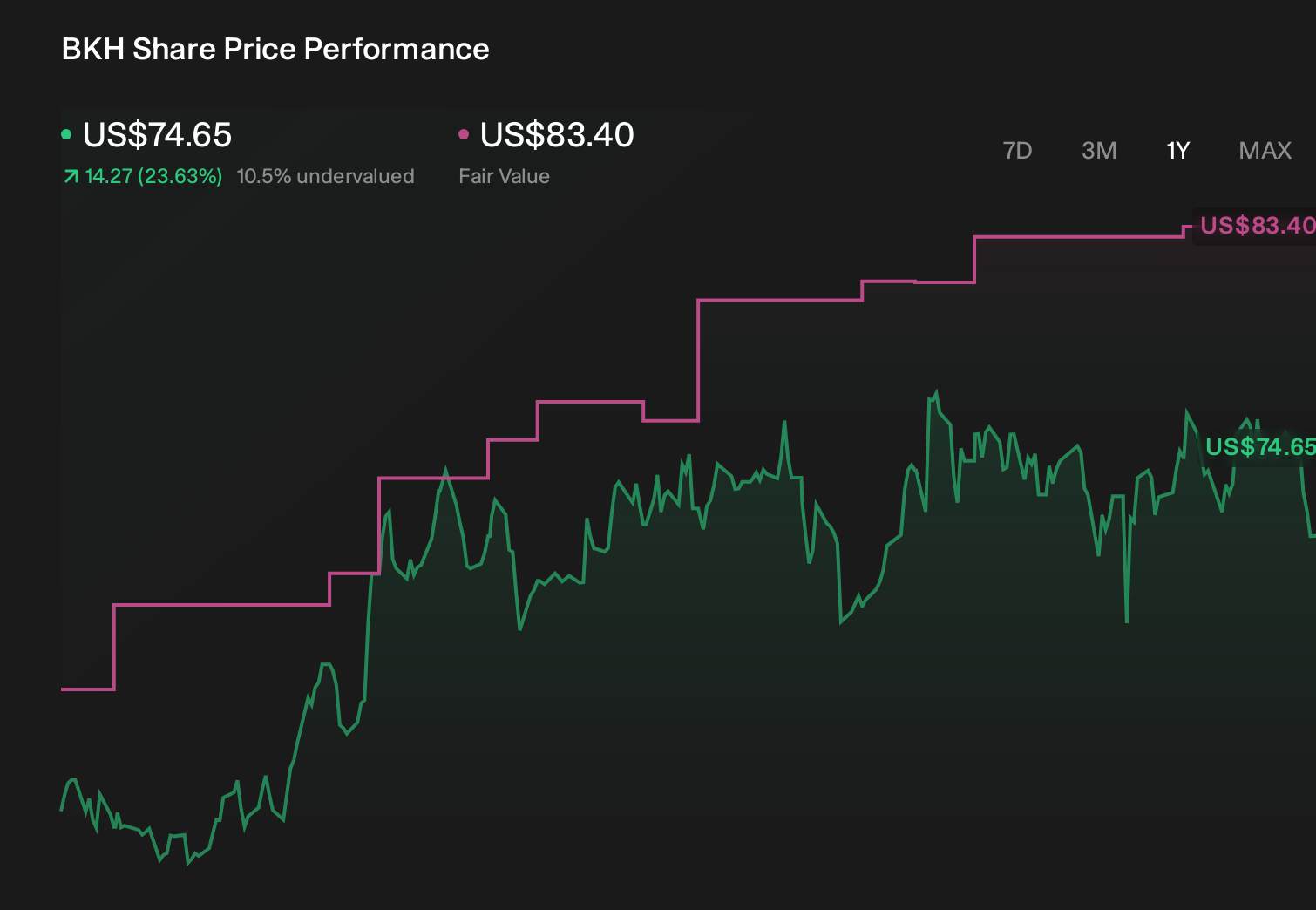
    Market analysts and community members currently place the fair value of BKH between $67.12 and $83.40. At the upper end of this valuation range, the stock suggests a potential 12% upside from current price levels. However, the heavy infrastructure spend mandates a cautious approach, as investors weigh these forecasts against the realities of capital-intensive utility operations.

  • Is McDonald’s US Menu Losing Its Edge to Burger King?

    Is McDonald’s US Menu Losing Its Edge to Burger King?

    McDonald’s is facing mounting pressure in the US quick-service market as disappointing same-store sales growth forces a critical re-evaluation of its menu appeal and competitive strategy. With the company posting a slim 0.8% comparable sales growth compared to Burger King’s robust 8.5%, investors are questioning if the “McDonald’s NEXT” strategy is enough to maintain dominance in a shifting consumer landscape.

    Financial Performance vs. Market Reality

    For the quarter ending June 30, 2026, McDonald’s reported revenue of US$7,099 million, up from US$6,843 million the previous year. Net income also saw a rise to US$2,362 million, with diluted EPS reaching US$3.32. Despite these solid earnings, the company continues to prioritize shareholder returns, repurchasing 3,000,000 shares for US$858 million during the quarter. While the business remains a cash-generation powerhouse, the disparity between its internal profit growth and sluggish US store traffic has become impossible to ignore.

    The Operational Pivot: Can Skye Anderson Deliver?

    The appointment of Skye Anderson as President of McDonald’s USA on August 4, 2026, signals a strategic shift toward operational excellence. Anderson, known for modernizing over 5,700 restaurants and driving unit cash flow, is tasked with stabilizing performance rather than reinventing the brand’s core narrative. The focus remains heavily on digital ordering, automation, and the efficiency of the “McDonald’s NEXT” framework.

    The Critical Test for US Growth

    The coming quarters will serve as a litmus test for McDonald’s leadership. Success will be measured by the ability to narrow the performance gap with rivals like Burger King and stabilize guest counts. Should US comparable sales remain stagnant at the 0.8% mark while competitors continue to capture market share, the company will face intense scrutiny regarding its current menu architecture, pricing power, and overall marketing effectiveness.

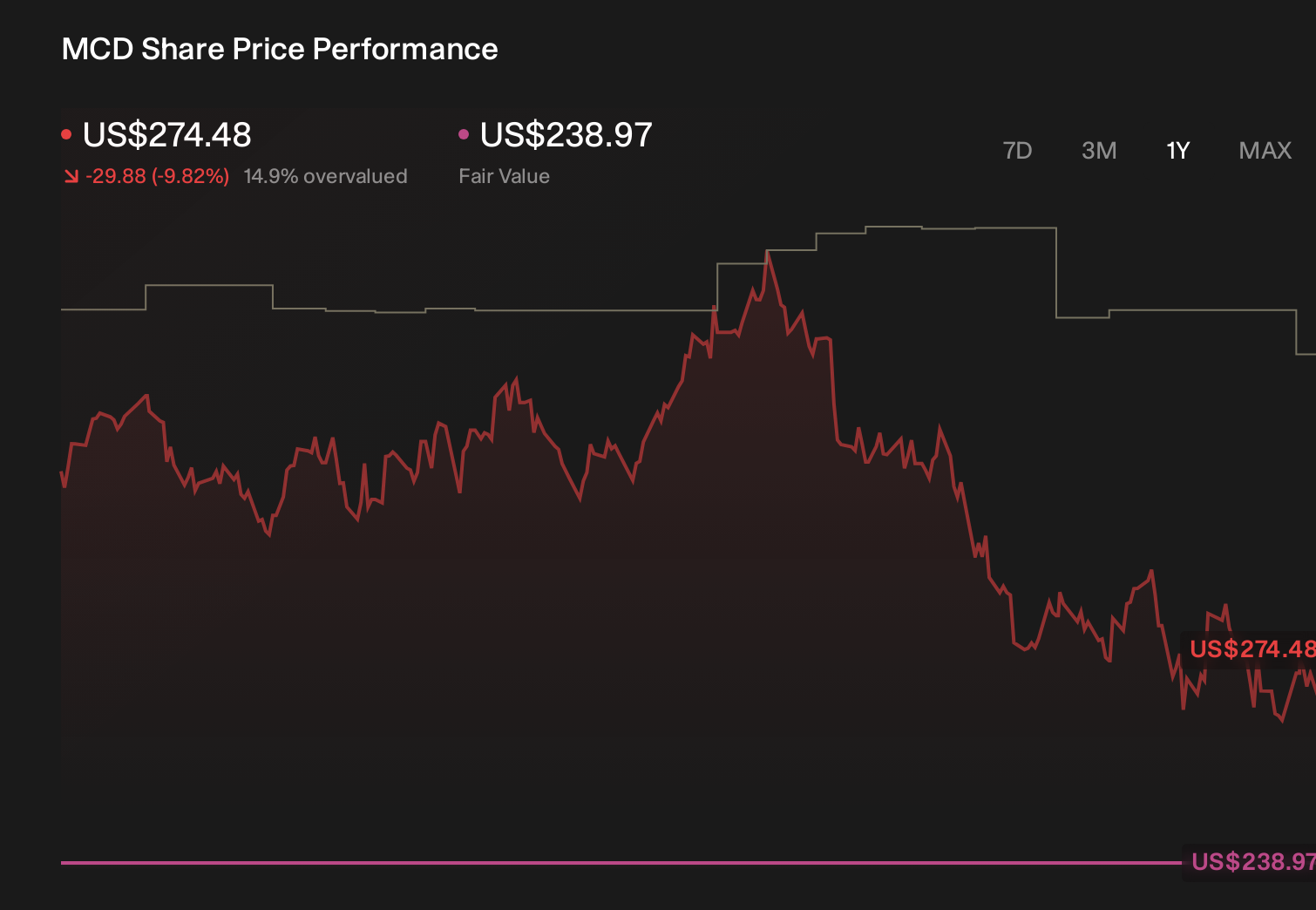
    McDonald’s currently trades at US$274.48. While it has delivered a 28.9% gain over the past five years, the recent decline in year-to-date returns underscores the volatility inherent in the current US market environment.

  • Tron Adds $2.2B in Stablecoins: Is It a Buy?

    Tron Adds $2.2B in Stablecoins: Is It a Buy?

    The Tron (CRYPTO: TRX) network successfully onboarded approximately $2.2 billion in stablecoins during the 30-day period ending August 4, bringing its total on-chain value to $91.6 billion. This growth stands in stark contrast to the broader stablecoin market, which contracted by $2.7 billion over the same timeframe.

    The Bullish Illusion

    While an asset gaining traction while its broader sector retreats often signals a bullish trend, the reality behind Tron’s performance requires a closer look. Despite the $2.2 billion influx representing a 2.4% increase from its previous $89.4 billion base, this growth is not necessarily transformative for the network’s long-term prospects or the investment thesis for its native token.

    Concentration Risks and Tether Dependency

    The primary concern regarding Tron’s recent inflows is the extreme concentration of its stablecoin base. Tether accounts for 97.9% of all stablecoin capital on the chain, creating a precarious dependency. Should Tether face insolvency—a persistent risk in the volatile stablecoin market—the Tron chain would likely face an existential threat, potentially causing the value of TRX to evaporate rapidly. While Tether’s latest quarterly attestation reported reserves exceeding liabilities by $4.1 billion, the lack of diversification remains a significant structural vulnerability.

    Lack of Retention Mechanics

    Beyond concentration risks, Tron lacks an on-chain economy or exit penalties designed to retain capital. There are currently no upcoming upgrades or strategic partnerships serving as catalysts to ensure this new liquidity remains on the network. Consequently, the long-term probability of Tron retaining these inflows, alongside its existing stablecoin capital, remains speculative and potentially poor.

    The Inflationary Challenge

    Investment in Tron is further complicated by its unique tokenomics. Unlike many blockchains that charge direct transaction fees, Tron utilizes two resource registers: bandwidth and energy. Users acquire these by staking TRX or, less frequently, by burning the token.

    However, the current burn rate is insufficient to offset the network’s supply inflation. During the first quarter of 2026, Tron minted approximately 352.3 million new TRX while burning only 281.8 million, resulting in a net supply increase of 70.5 million coins. For an investment in TRX to be viable, the network’s growth would need to consistently outpace this inflationary pressure—a milestone the chain has yet to achieve. Given these combined factors, the recent influx of stablecoin capital does not currently justify a bullish outlook on the token.

  • Roku Q2 Revenue Soars: Ad Spend Up 25% Amid Fox Merger Talks

    Roku Q2 Revenue Soars: Ad Spend Up 25% Amid Fox Merger Talks

    Roku reported a robust second quarter, marked by a 25% surge in advertising revenue to $672.8 million and a 26% increase in subscription revenue, reaching $548.2 million. These gains arrive as the streaming distributor navigates a pending $22 billion acquisition deal by Fox Corp., announced this past June.

    Financial Growth and Revenue Drivers

    Total company-wide revenue for Roku climbed 22% to $1.35 billion, with gross profit rising 35% to $674 million. The impressive growth in advertising is largely attributed to the adoption of higher-margin ad products, most notably the company’s new Roku Home Screen. Management has branded this interface as “one of the most valuable pieces of real estate in TV.”

    Outpacing the Digital Ad Market

    According to data from Guideline’s Standard Media Index, video advertising on the Roku platform has outpaced broader U.S. digital and connected TV (CTV) advertising markets. While analysts at Madison & Wall acknowledge this strong performance, they note that the SMI benchmark primarily tracks agency-directed spending.

    “Advertising budgets are increasingly flowing through direct channels that may bypass traditional agency buying systems, and these channels are growing faster than agency-directed spending,” the firm stated regarding the broader market landscape.

    User Engagement and Political Ad Spend

    Roku’s video ad success was bolstered by a 7% increase in total streaming hours, which hit 37.9 billion during the quarter. The company successfully capitalized on this higher volume through improved monetization of its inventory. Furthermore, political advertising served as a notable catalyst, with Q2 spend outperforming the same period during the 2024 U.S. Presidential election cycle.

    The Impact of the Fox Corp. Merger

    A potential merger with Fox Corp. would create a significant powerhouse in the media landscape. Data from Nielsen suggests a combined Fox/Roku entity would have captured a 10.2% share of monthly U.S. TV viewership in June, placing it third behind only YouTube and The Walt Disney Company. Projections indicate the combined entity could command $9 billion in annual advertising revenue, consisting of $6.5 billion from Fox and $2.5 billion from Roku.

    Following the report, Roku’s stock saw a positive reaction, closing Thursday’s trading session 2% higher at $150.07.

  • Xaar Hits First Profitability Milestone in Three Years

    Xaar Hits First Profitability Milestone in Three Years

    Xaar PLC (FRA:XAR) achieved a pivotal financial turnaround in the first half of 2026, posting its first profitable half-year period in at least three years despite persistent global economic headwinds. CEO John Mills and CFO Paul James confirmed an adjusted profit before tax of GBP 0.2 million, a marked improvement from the GBP 0.7 million loss recorded during the same period last year.

    Financial Performance and Revenue Growth

    The company reported a 9.2% increase in group revenue on a like-for-like basis, bolstered by a 5.5% rise in printhead revenue. Gross margins expanded by 220 basis points, a result of disciplined financial management and improved pricing power within emerging markets. This growth trajectory reflects the company’s ongoing efforts to streamline operations and enhance profitability.

    Strategic Shift: Desktop 3D and Market Positioning

    While the launch of the Desktop 3D product in collaboration with Flashforge has faced additional delays, management remains optimistic. CEO John Mills emphasized that the extra time is dedicated to ensuring an optimal customer experience. Pre-launch orders for the initial production batches are already secured, and three additional companies are currently developing similar products slated for release over the next 12 months.

    Addressing competition from industry giants like Epson, Ricoh, and Fuji, Xaar is doubling down on its unique technical edge: the ability to print complex fluids that competitors cannot handle. By diversifying into 21 different market sectors, the firm aims to minimize volatility and build long-term operational resilience.

    Liquidity, Cash Flow, and Operational Efficiency

    CFO Paul James addressed the adjusted free cash flow outflow of GBP 4.3 million, noting it is a temporary consequence of strategic inventory stockpiling to support the upcoming Desktop 3D launch. To maintain a robust financial position, the company has doubled its revolving credit facility from GBP 5 million to GBP 10 million and increased its invoice discounting capabilities.

    Operational expenditure saw a 5.7% increase in R&D and sales capabilities, signaling a commitment to innovation. Conversely, general and administrative expenses dropped by 1.6% due to a contraction in back-office roles, directly contributing to the improved bottom line.

    Future Outlook: Ceramics, Semiconductors, and Solar

    The legacy ceramics market, which experienced years of decline, has finally stabilized. For the first time in nearly seven years, Xaar is seeing growth in this sector, largely driven by new digital glaze technology. Furthermore, the company is making strategic inroads into high-growth sectors: five semiconductor firms are currently conducting trials, and inkjet technology is increasingly being adopted to streamline solar panel manufacturing processes.

    Looking ahead to the second half of 2026, leadership expects stronger year-over-year revenue performance. The primary focus remains on scaling the installed machine base, which is expected to create a steady, recurring revenue stream through the sale of replacement printheads and specialized fluids.