Blog

  • Energy Fuels Soars 10.3%: Betting Big on Rare Earths

    Energy Fuels Soars 10.3%: Betting Big on Rare Earths

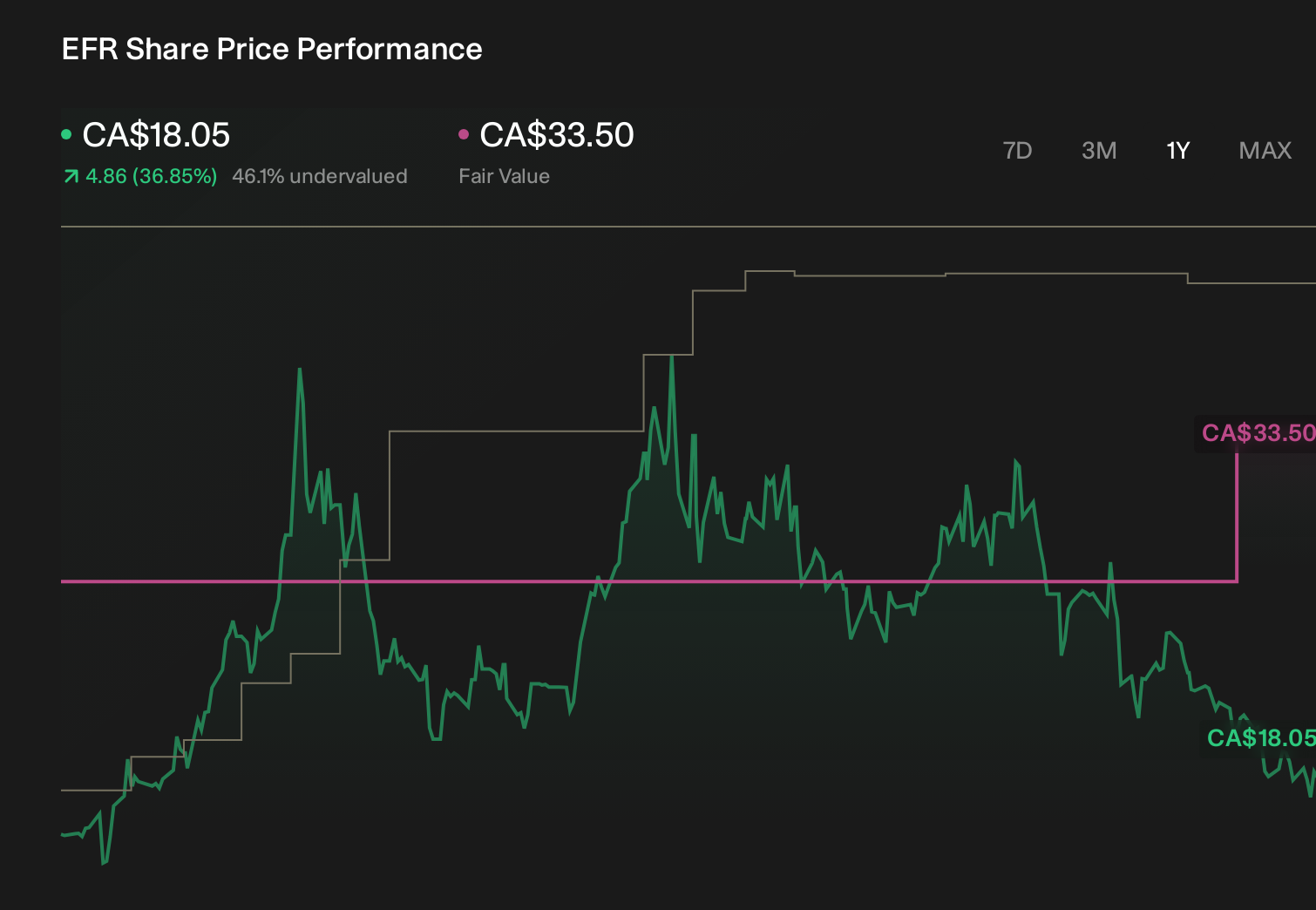
    Energy Fuels (TSX:EFR) shares surged 10.3% following the company’s latest quarterly report, which revealed rising revenues alongside widened losses as the firm doubles down on its high-stakes uranium and rare earth expansion strategy.

    The Balancing Act: Uranium vs. Rare Earths

    Investing in Energy Fuels currently requires a firm belief in the company’s ability to pivot its uranium and rare earth ambitions into long-term profitability. While management has reaffirmed its 2026 uranium production guidance, the path forward is marked by significant capital expenditure and execution risk. The immediate focus for investors remains the firm’s ability to meet production targets while successfully navigating the US$104 million expansion of the White Mesa facility.

    White Mesa: The Core of the Growth Strategy

    The construction phase for the heavy rare earth expansion at White Mesa marks a pivotal moment for the company. This project is the backbone of Energy Fuels’ “mine-to-magnet” vision, intended to secure high-margin revenue streams in the future. However, this expansion adds layers of financial risk to a business that is currently operating at a loss, making the funding and timeline of this project as critical as the company’s uranium ramp-up.

    Future Projections and Market Skepticism

    Energy Fuels is projecting a significant financial turnaround, forecasting $546.3 million in revenue and $194.8 million in earnings by 2029. Achieving these targets would require an aggressive 86.0% annual revenue growth rate and a swing from the current $70.2 million loss to a $265.0 million profit. These ambitious figures suggest a potential fair value of CA$41.12, implying a 128% upside from current price levels.

    Despite this optimism, market analysts remain divided. More conservative estimates suggest revenue closer to US$275.6 million with US$182 million in earnings by 2029. The latest quarterly results and the ongoing execution at White Mesa serve as key indicators that could force a reassessment of these divergent outlooks as the company maneuvers through its capital-intensive growth phase.

  • The Hidden Economic Tax of America’s Aging Crisis

    The Hidden Economic Tax of America’s Aging Crisis

    As the Baby Boomer generation enters its twilight years, America faces an invisible but devastating economic crisis: a lack of essential infrastructure to support aging, forcing families to pay a steep “tax” in lost productivity, financial security, and personal opportunity.

    The Growing Wealth Gap in Elder Care

    The burden of aging is far from equitable. Recent reports underscore a troubling reality where wealth dictates the quality of care. Families with significant financial resources can purchase professional guidance and high-quality care, effectively preserving their assets. Conversely, those with fewer resources are forced to shoulder the load themselves, often sacrificing career progression, retirement savings, and long-term financial stability to provide for aging loved ones.

    Aging: A Consumer and Economic Failure

    For too long, society has mislabeled aging as a private family struggle or a strictly medical issue. In reality, it is a systemic economic failure. While the U.S. has developed sophisticated frameworks for home buying, education financing, and retirement planning, it has failed to create a roadmap for the complex, often traumatic, transition into senior care.

    Data from CareScout’s Cost of Care reveals the staggering reality: median annual costs for assisted living now exceed $74,000, with private nursing home rooms nearing $130,000. These figures, however, only represent the surface. The true challenge lies in the fragmented, navigation-heavy system that families are forced to manage alone—juggling insurance, legal advice, and healthcare coordination during times of immense emotional distress.

    The Ripple Effect: Invisible Costs

    The consequences of this infrastructure gap extend far beyond individual households. While direct payments for home care or medical modifications are easily tracked, the “invisible costs” are often much higher. Millions of caregivers are forced to reduce their work hours, turn down promotions, or exit the workforce entirely. This results in direct losses for employers through absenteeism and decreased productivity, while government social programs face mounting, unsustainable pressure.

    A Call for Structural Reform

    The widening wealth gap in America is a symptom of this structural failure. As longevity increases, the cost of this inaction will continue to balloon. Addressing this crisis requires a multi-sector approach involving public policy, private sector innovation, and active roles from financial institutions and healthcare providers.

    Aging must no longer be viewed as “someone else’s problem.” Every American is a future consumer of these systems. Building a robust infrastructure for aging is not merely an option—it is a necessity to ensure that the generations who built this country are not left to navigate a broken, fragmented maze during their final years.

  • Humana Q2 2026: Margin Gains and Strategic Roadmap Ahead

    Humana Q2 2026: Margin Gains and Strategic Roadmap Ahead

    Humana (HUM) reported its second-quarter 2026 financial results on Wednesday, July 29, 2026, confirming that the company remains on track to meet its long-term financial commitments, including a sustainable 3% pretax margin by 2028. President and CEO Jim Rechtin emphasized that the firm’s current performance aligns with internal expectations, bolstered by significant progress in operational efficiency and clinical excellence.

    Navigating the Path to 2028

    Management underscored that the primary objective for 2027 Medicare Advantage (MA) bids is to secure margin progression. By adjusting plan designs and exiting underperforming markets, Humana aims to protect its high-value offerings. The company is preparing for a virtual investor update on December 10, where it will provide deeper insights into 2028 “Stars” bonus outcomes and 2027 membership projections.

    Operational Efficiency and Clinical Excellence

    Rechtin highlighted four core drivers of the business: product experience, clinical excellence, operational efficiency, and capital allocation. A major focus has been the centralization of operations, such as utilization management, which has already yielded hundreds of millions of dollars in savings in 2026. Furthermore, Humana is actively leveraging AI and automation to streamline workflows and reduce friction for both members and providers.

    Regarding “Stars” performance, Humana is moving away from the sole focus on the percentage of members in 4-plus star plans, shifting toward “Stars revenue per member per month” (PMPM). This metric is intended to better reflect competitive positioning in the marketplace. While the company maintains confidence in its operational progress, it remains subject to CMS threshold uncertainties.

    Capital Allocation and Market Expansion

    On the capital front, Humana is divesting noncore assets, including its minority interest in Gentiva, valued at approximately $900 million. These proceeds are largely earmarked to fund the recent acquisition of MaxHealth. Additionally, the company is set to enter the Illinois Medicaid market in January 2027, marking a significant expansion of its managed care footprint.

    The company also announced new additions to its Board of Directors: Paul Smith, Chief Commercial Officer at Anthropic, and Fred Crawford, a veteran financial executive with extensive experience in the insurance and banking sectors.

    Financial Performance and Cost Trends

    CFO Celeste Mellet reported that 2026 cost trends are currently tracking in the high single-digit range (7% to 8%), inclusive of medical and pharmacy costs. Notably, the company observed favorability in the inpatient space, particularly among members engaged with value-based care providers. The consolidated operating cost ratio saw a 120-basis-point improvement year-over-year, with a full-year target of 150 basis points.

    Addressing the 2027 bid strategy, Mellet noted that approximately 600,000 members will be impacted by planned market exits. However, the company intends to recapture a significant portion of this volume, similar to its strategy in 2025. Humana also pioneered a new contingent liquidity tool, utilizing $1.5 billion in pre-capitalized trust securities (P-Caps), to strengthen its balance sheet without increasing leverage.

    Looking Toward the Future

    During the Q&A session, leadership reiterated that value-based care remains a cornerstone of their medical cost management strategy. By aligning incentives between Humana and its provider partners, the company continues to see better health outcomes and lower cost trends compared to traditional fee-for-service models. As Humana approaches the December investor update, the firm remains committed to its existing strategy, focusing on sustainable growth and fulfilling the promises made to shareholders during its previous Investor Day.

  • Credit Card Stocks: Should You Pick Networks or Lenders?

    Credit Card Stocks: Should You Pick Networks or Lenders?

    Investors often group credit card companies into a single industry, yet the underlying business models for networks and lenders are vastly different. While consumers view the payment process as a seamless transaction, the distinct roles played by these financial entities dictate their long-term viability and risk profiles for any buy-and-hold portfolio.

    The Three Pillars of Digital Payments

    Every plastic card transaction relies on three distinct components to move money from the consumer to the merchant. The first is the hardware layer, where companies like Block (NYSE: XYZ) and Verifone provide the point-of-sale terminals. These businesses capture a small percentage of every transaction and often supplement revenue with subscription fees.

    At the opposite end of the spectrum are the card issuers, such as Bank of America (NYSE: BAC), Citigroup (NYSE: C), and JPMorgan Chase (NYSE: JPM). These institutions hold the consumer relationship and assume the primary risk associated with lending and potential defaults.

    The Vital Role of Payment Networks

    Bridging the gap between merchants and lenders are the payment network operators, most notably Visa (NYSE: V) and Mastercard (NYSE: MA). These companies act as the essential middlemen, managing the intricate communication between terminals and banks to ensure transaction approval. For this service, they collect a fraction of every dollar processed across their global networks.

    Some firms, like American Express (NYSE: AXP) and Capital One (NYSE: COF), occupy a hybrid space, operating as both payment networks and credit issuers, albeit on a smaller scale than the industry giants.

    Why Networks Often Win the Long-Term Bet

    When selecting a core holding for a portfolio, payment networks like Visa and Mastercard offer a compelling advantage over traditional lenders. While they may lack the aggressive growth potential of some credit issuers, they are insulated from the cyclical volatility of loan write-downs and credit defaults that plague banks during economic downturns.

    The financial consistency of these networks is striking. Aside from the unique disruption caused by the COVID-19 pandemic, neither Visa nor Mastercard has seen a decline in 12-month revenue or EBITDA over the past decade. This predictable performance is a hallmark of high-quality long-term investments.

    The Power of the Duopoly

    Beyond stability, Visa and Mastercard benefit from a powerful, entrenched duopoly that dominates the payment middleman sector. Their longevity allows them to continuously scale and integrate new profit centers, such as the customer engagement and merchant loyalty tools currently offered by Mastercard.

    While hybrid players like American Express and Capital One (through its Discover arm) maintain a presence in the network space, the massive infrastructure and brand penetration of Visa and Mastercard create a significant barrier to entry, keeping them well-positioned for sustained growth.

  • Cleveland Fed’s Hammack Calls for Multiple Rate Hikes

    Cleveland Fed’s Hammack Calls for Multiple Rate Hikes

    Cleveland Federal Reserve President Beth Hammack signaled on Monday that multiple interest rate hikes are likely necessary to curb inflation, urging the central bank to act preemptively to avoid more severe economic consequences.

    The Case for Sustained Action

    “I would say in general, one 25 basis point move probably doesn’t do a whole lot for the economy,” Hammack stated during an interview with Yahoo Finance. While she refrained from specifying an exact number of hikes, she emphasized that a series of adjustments is likely required to shift the current economic trajectory.

    Hammack argued that the current federal funds rate range of 3.5% to 3.75% is failing to provide significant restraint. “When I’m talking to businesses, I’m not hearing that they’re sensing any restraint from investments in growth based on where interest rates are,” she noted, reinforcing her belief that the time for policy tightening is now.

    Avoiding a Sudden “Jarring Stop”

    Drawing on a driving analogy, the Cleveland Fed President warned against the risks of delaying action. She suggested that waiting too long to address rising prices forces the central bank into a sudden, aggressive policy response, which could be far more disruptive than a gradual slowdown.

    “Nothing would make me feel better than to be wrong, that we need to change the stance of policy to help bring inflation back to target,” Hammack said. “But from where I sit, I just don’t see it coming back on its own.”

    Economic Indicators and Labor Market Stability

    The urgency of her position is underscored by persistent inflation data. The Federal Reserve’s preferred gauge, the Personal Consumption Expenditures (PCE) index, sat at 3.3% on a core basis in June, while core CPI reached 2.6%. Market participants are now closely watching for the upcoming July CPI report.

    Regarding the labor market, Hammack stated that the July jobs report—which reflected a loss of 23,000 positions—has not diverted her attention from the inflation mandate. She highlighted that monthly job growth has remained steady in the 20,000-to-25,000 range over the past year, and she views the 4.1% unemployment rate as consistent with full employment.

    A Consistent Dissent

    Hammack’s recent comments align with her stance during the Federal Open Market Committee’s (FOMC) July meeting. She was one of three regional Fed presidents—alongside Neel Kashkari of Minneapolis and Lorie Logan of Dallas—who dissented against the committee’s 9-3 vote to hold rates steady, favoring a quarter-point increase instead.

    In her post-meeting justification, Hammack expressed concern over inflation’s prolonged duration above the 2% target, which has now lasted more than five years. She remains unconvinced that price stability will be restored without deliberate, proactive policy tightening from the committee.

  • Reynolds Q2 2026 Earnings: Pricing Power Drives Growth

    Reynolds Q2 2026 Earnings: Pricing Power Drives Growth

    Reynolds Consumer Products (REYN) reported its second-quarter 2026 financial results on Wednesday, July 29, 2026, showcasing resilience in a challenging retail landscape. Despite persistent inflationary pressures and a cautious consumer, the company successfully leveraged strategic pricing and supply chain productivity to drive earnings growth.

    Operational Highlights and Market Performance

    During the earnings call, CEO Scott Huckins highlighted that Reynolds maintained or grew market share across most categories. A significant driver of this performance was the company’s ability to execute pricing actions while achieving substantial manufacturing efficiencies. The Hefty brand, in particular, saw strong traction, with Hefty Ultra Strong trash bags ranking among the top five products on Amazon Prime Day.

    The company noted that its e-commerce strategy is yielding results, with Hefty food bags growing online sales by approximately 30% compared to the previous year. These digital gains, paired with distribution wins in both the Waste & Clean-Up and Storage & Organization segments, helped offset earlier losses from private label competition.

    Financial Discipline Amid Commodity Volatility

    CFO Nathan Lowe provided a detailed breakdown of the quarter’s financials, noting that adjusted EBITDA rose to $171 million, an increase of approximately 5% year-over-year. This marks the third consecutive quarter of EBITDA growth. Revenue reached $944 million, up 1% compared to Q2 2025, driven largely by successful price increases and volume performance that outperformed the broader category.

    Gross margin improved by 200 basis points, building on the momentum from the first quarter. However, the company has updated its outlook on commodity headwinds, now expecting an annualized impact of $400 million, up from the $200 million estimate provided in April. Despite this, Reynolds confirmed its full-year guidance, projecting adjusted EBITDA in the range of $660 million to $675 million.

    Strategic Outlook for the Second Half of 2026

    Looking ahead, management emphasized that the consumer environment remains pressured, with households continuing to make deliberate, value-oriented purchasing decisions. Reynolds intends to remain agile, focusing on:

    • Capturing growth opportunities through innovation and digital expansion.
    • Monitoring the impact of recent pricing actions on consumer elasticity.
    • Driving continued productivity improvements across its manufacturing operations to protect margins.

    Addressing Consumer Behavior and Pricing

    Responding to analyst questions regarding pricing in the foil and waste categories, CEO Scott Huckins noted that the company’s approach involves smaller, frequent price adjustments rather than large, sudden hikes. This strategy appears to be working, as consumers continue to prioritize the reliability and functionality of Reynolds and Hefty products over lower-cost alternatives.

    The company remains focused on maintaining a constructive price gap against private label products, which currently remains under $1. By staying nimble and responsive to weekly retail data, management believes they are well-positioned to navigate the volatility expected in the remainder of the year.

  • VSE Stock Soars 17.7% Following Upgraded 2026 Guidance

    VSE Stock Soars 17.7% Following Upgraded 2026 Guidance

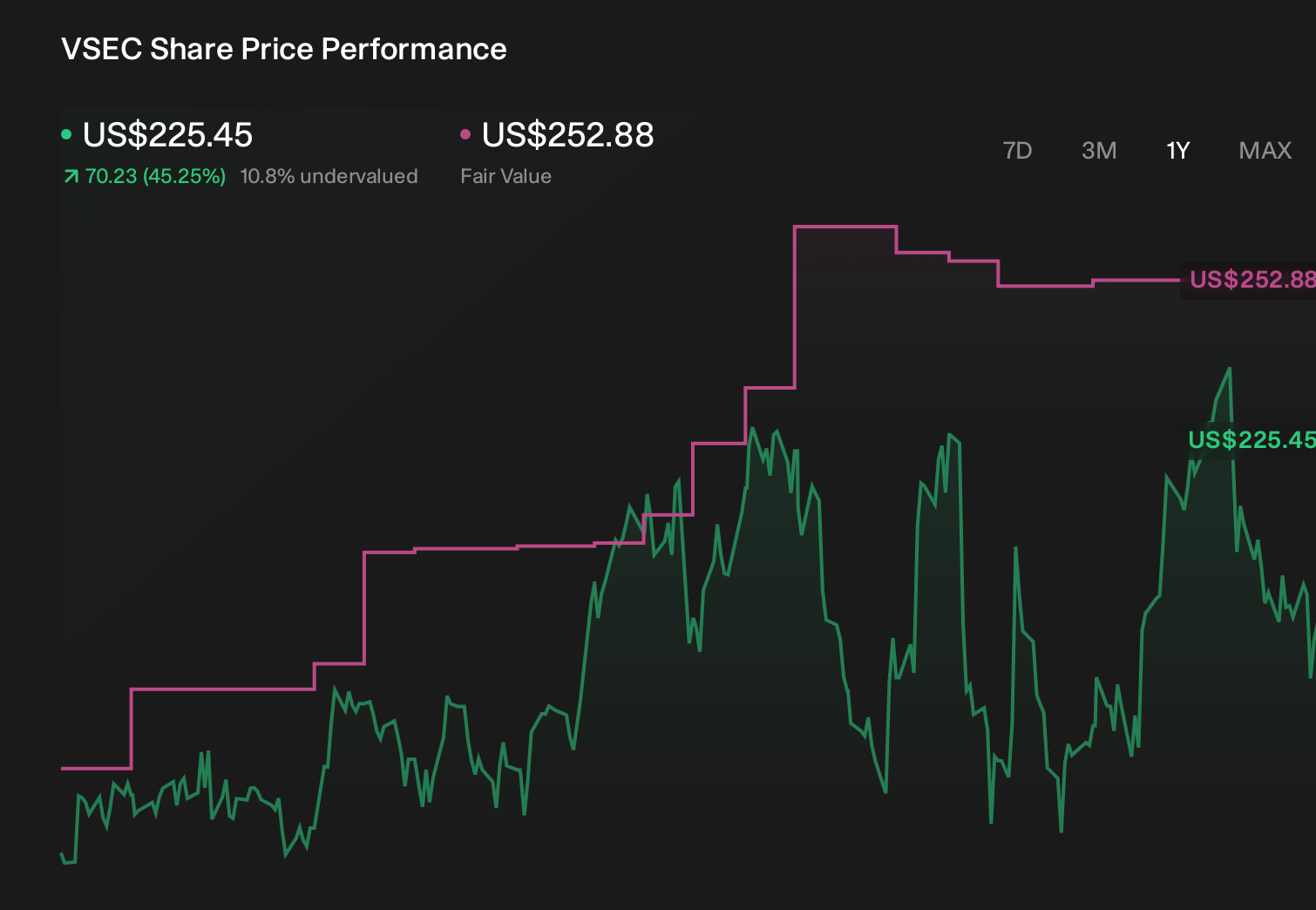
    VSE Corporation (VSEC) shares surged 17.7% after the company raised its 2026 revenue growth guidance to a range of 61% to 64%, driven by successful integration of recent acquisitions and a strategic pivot toward the aviation aftermarket sector.

    Strategic Shift to Aviation Aftermarket

    The core thesis for owning VSE today rests on its transformation into a specialized aviation aftermarket business. This shift is designed to translate higher volumes into sustainable margin expansion, despite the inherent volatility of aviation market cycles. While the Q2 2026 earnings beat and the upward revision of revenue targets provide a clear near-term catalyst, investors must weigh these gains against the risks of increased financial leverage and the company’s concentrated exposure to the aviation industry.

    Analyzing the Growth Catalyst

    The recent August 5 guidance upgrade builds upon previous adjustments made in May, largely fueled by the strategic acquisition of PAG. This move reinforces the company’s ability to leverage broader aftermarket coverage to drive revenue conversion. However, the market is closely watching how management balances this aggressive, acquisition-driven growth strategy with the reality of higher debt levels and the potential for a softening demand environment.

    Long-Term Projections and Valuation

    VSE’s internal growth narrative projects revenue reaching $2.4 billion with earnings of $223.5 million by 2029. Achieving these figures requires a consistent 26.2% annual revenue growth rate and a significant earnings expansion from the current $68.6 million baseline.

    Market Sentiment and Fair Value Estimates

    Valuation remains a point of debate among market participants. Current fair value estimates from the Simply Wall St community range from approximately US$252.88 to US$358.21 per share. This wide disparity highlights the uncertainty surrounding how aviation cyclicality and the company’s current leverage profile will impact long-term performance. Investors are encouraged to weigh these varying perspectives when evaluating the stock’s potential 12% upside relative to its current pricing.