
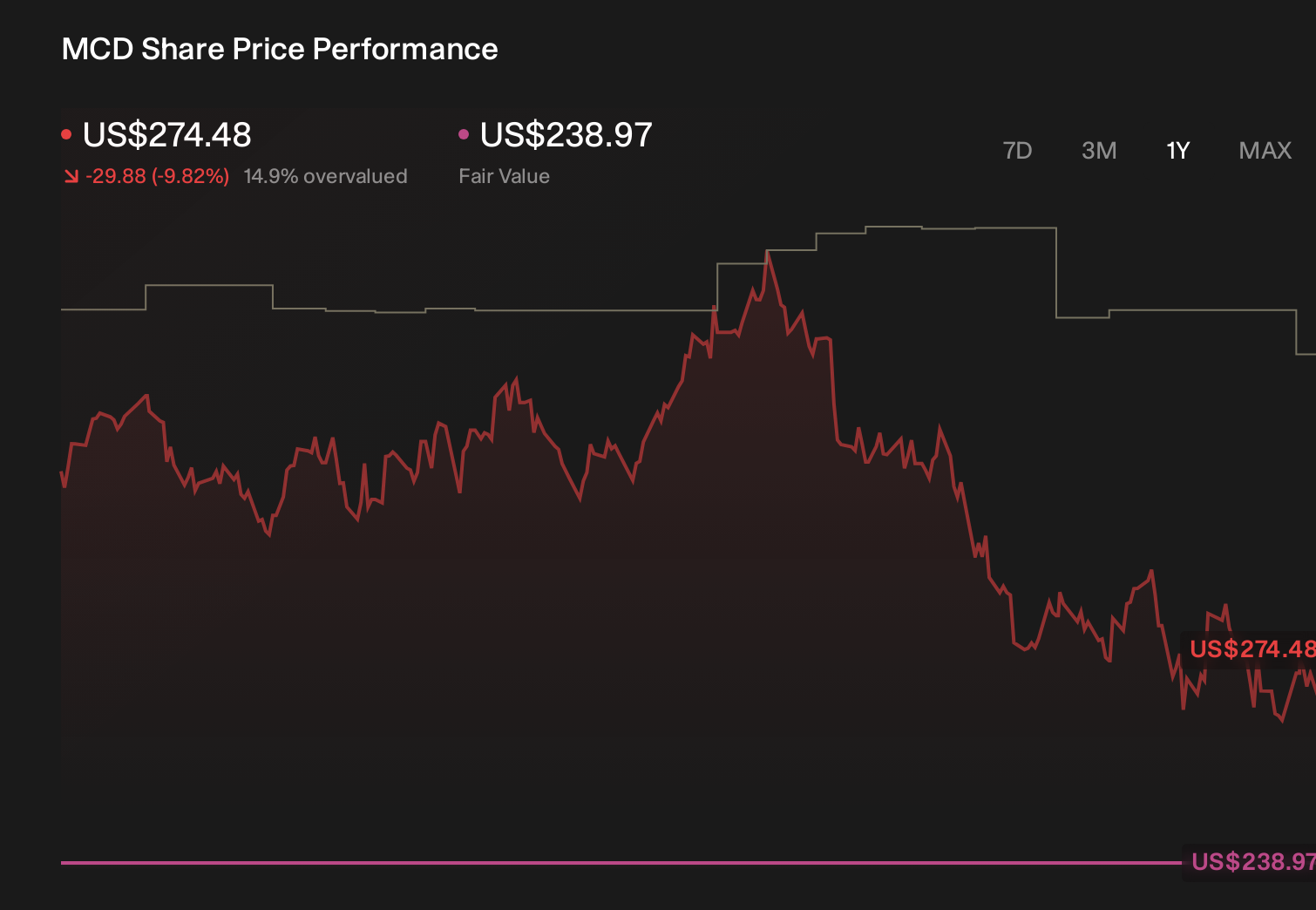
McDonald’s is facing mounting pressure in the US quick-service market as disappointing same-store sales growth forces a critical re-evaluation of its menu appeal and competitive strategy. With the company posting a slim 0.8% comparable sales growth compared to Burger King’s robust 8.5%, investors are questioning if the “McDonald’s NEXT” strategy is enough to maintain dominance in a shifting consumer landscape.
Financial Performance vs. Market Reality
For the quarter ending June 30, 2026, McDonald’s reported revenue of US$7,099 million, up from US$6,843 million the previous year. Net income also saw a rise to US$2,362 million, with diluted EPS reaching US$3.32. Despite these solid earnings, the company continues to prioritize shareholder returns, repurchasing 3,000,000 shares for US$858 million during the quarter. While the business remains a cash-generation powerhouse, the disparity between its internal profit growth and sluggish US store traffic has become impossible to ignore.
The Operational Pivot: Can Skye Anderson Deliver?
The appointment of Skye Anderson as President of McDonald’s USA on August 4, 2026, signals a strategic shift toward operational excellence. Anderson, known for modernizing over 5,700 restaurants and driving unit cash flow, is tasked with stabilizing performance rather than reinventing the brand’s core narrative. The focus remains heavily on digital ordering, automation, and the efficiency of the “McDonald’s NEXT” framework.
The Critical Test for US Growth
The coming quarters will serve as a litmus test for McDonald’s leadership. Success will be measured by the ability to narrow the performance gap with rivals like Burger King and stabilize guest counts. Should US comparable sales remain stagnant at the 0.8% mark while competitors continue to capture market share, the company will face intense scrutiny regarding its current menu architecture, pricing power, and overall marketing effectiveness.
McDonald’s currently trades at US$274.48. While it has delivered a 28.9% gain over the past five years, the recent decline in year-to-date returns underscores the volatility inherent in the current US market environment.