Bank of America economists are sounding the alarm on the Federal Reserve’s current communication strategy, arguing that the lack of clear forward guidance from Chair Kevin Warsh is creating unnecessary market volatility and acting as a hidden tax on the broader economy.
The “3D Chess” Theory Under Fire
Since the Federal Reserve’s July 29 meeting, where policymakers held the federal funds rate steady at 3.50%-3.75%, Wall Street has been obsessed with a single question: Was the bond market doing the Fed’s tightening for it?
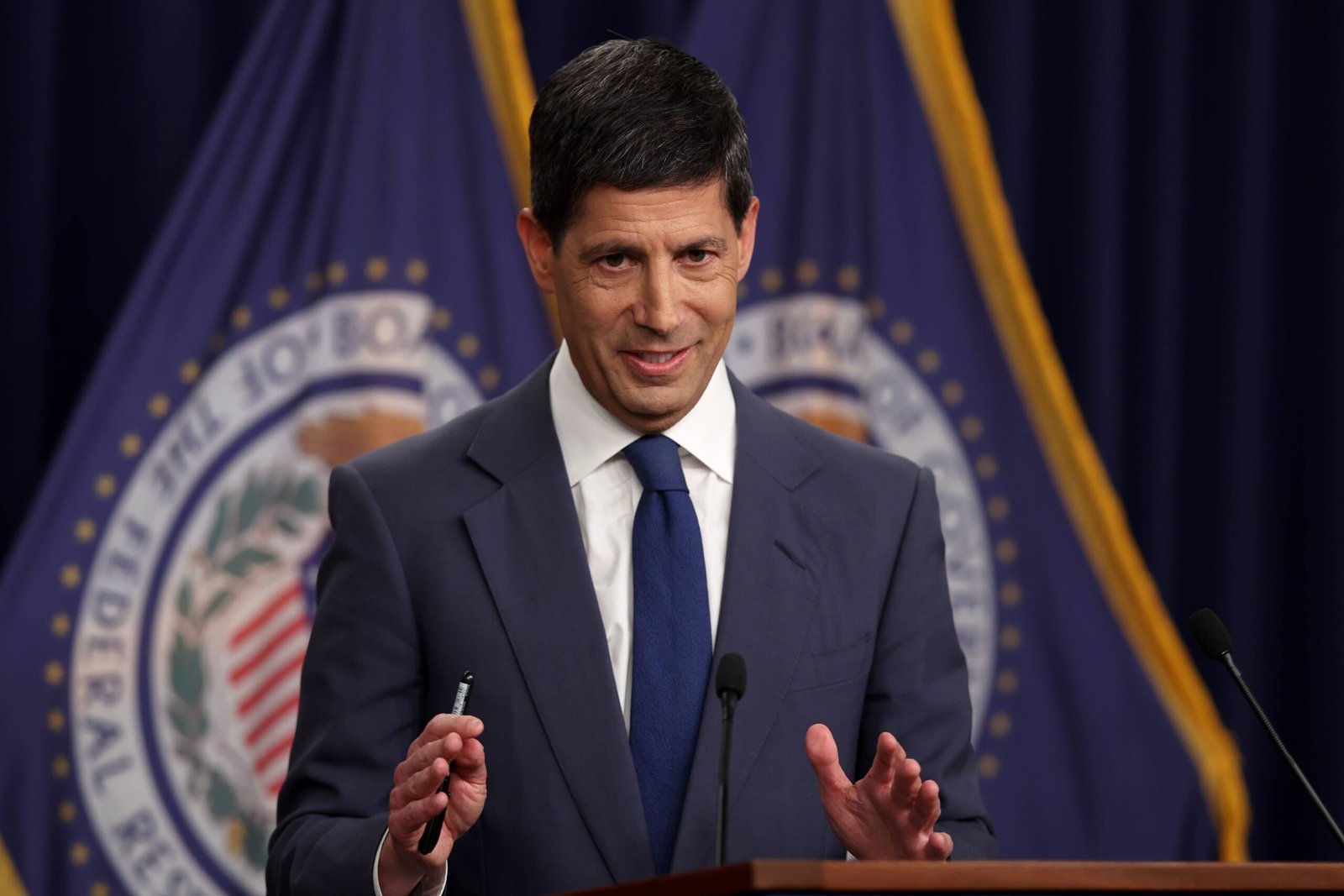
Fed Chair Kevin Warsh noted that Treasury yields had surged despite the pause in rate hikes. This fueled a “3D chess” theory suggesting the Fed was deliberately allowing long-term rates to climb to cool demand without needing further immediate hikes. However, Bank of America economists Aditya Bhave and Mark Cabana are challenging this narrative, noting that the market reaction has been anything but orderly.
Why Market Uncertainty Functions as a Tax
The core issue, according to BofA, is not necessarily the Fed’s decision to withhold specific future rate promises, but its failure to clarify its “reaction function”—the framework that dictates how and when policy will change. This ambiguity is forcing investors to demand a higher risk premium, which BofA warns “works like a tax on the economy.”
As this uncertainty trickles down through Treasury yields, it directly inflates borrowing costs, mortgages, and financing for businesses. This lack of transparency is particularly concerning given the rise in inflation expectations observed following Warsh’s July press conference.
Credibility and the Inflation Challenge
Todd Campbell, former sell-side analyst and TheStreet’s Co-Editor-in-Chief, highlights the historical shift in policy communication: “Warsh is rolling back decades of transparency. We got immediate post-decision statements in 1994, and Greenspan started giving forward guidance in 2003. Investors hate uncertainty. And businesses and consumers tap brakes when higher yields flow into bank lending rates.”
BofA argues that while the market doesn’t require a crystal ball for every future meeting, it desperately needs evidence of a coherent plan to return inflation to the 2% target. Without this, the recent jump in yields—driven by inflation expectations and term premiums rather than confidence in the Fed—signals deeper skepticism about the central bank’s policy path.
Economic Resilience vs. Sticky Inflation
Despite the communication hurdles, Bank of America maintains that the U.S. economy is not on the brink of collapse. The bank forecasts 75 basis points of rate hikes throughout 2026, targeting a federal funds rate of 4.25% to 4.50%, where it expects rates to remain through 2028.
Growth is expected to average nearly 2.5% in the latter half of 2026, supported by robust consumer spending and sustained AI investment. The labor market also appears stable, with unemployment projected to hover around 4.2% by year-end.
However, the inflation battle remains the primary obstacle. While headline inflation is expected to ease as oil shocks subside, core PCE is forecast to remain stubbornly above 3% this year. This creates an uncomfortable reality for the Fed: an economy strong enough to absorb tighter policy, coupled with inflation persistent enough to mandate it.
What Lies Ahead for Fed Policy
As the market awaits upcoming CPI and employment reports, the pressure on the Fed to provide clarity is mounting. Bank of America suggests that if inflation data remains firm, Chair Warsh may adopt a more hawkish tone at Jackson Hole.
The irony is profound: while Warsh seeks to diminish the influence of Fed communication, the combination of sticky inflation and policy uncertainty has made every word from the Fed Chair more market-moving than ever before.