
Categoria: news

  • Travel + Leisure CEO Sells Stock: What Investors Must Know

    Travel + Leisure CEO Sells Stock: What Investors Must Know

    Travel + Leisure Co. (NYSE:TNL) CEO Michael Dean Brown sold 4,150 shares of company stock on August 5, according to a recent SEC Form 4 filing. The transaction was executed at a weighted average price of $79.24 per share.

    Understanding the Executive’s Move

    While insider sales often trigger investor concern, the context here is critical. The shares sold were part of an equity grant dating back to 2019, which fully vested in 2023. Brown executed this transaction via a pre-established plan set the previous November, rather than making an opportunistic move based on current market sentiment. Furthermore, Brown retains a significant stake of over 487,000 shares, underscoring that the sale represents only a fraction of his total holdings.

    Financial Performance and Growth Outlook

    Travel + Leisure remains a major player in the global hospitality sector, boasting a $4.7 billion market capitalization and $4.1 billion in TTM revenue. The company’s stock has seen approximately 30% appreciation over the past year, reflecting robust investor confidence in its recovery strategy. Recent performance supports this optimism: the company reported a 4% increase in second-quarter revenue to $1.06 billion and subsequently raised its full-year profit guidance.

    Strategic Risks for Long-Term Investors

    The company’s expansion, bolstered by two recent resort acquisitions that added over 100,000 owners to its portfolio, is a key growth driver. However, investors should monitor the company’s timeshare financing model closely. Because Travel + Leisure provides financing for its own buyers, free cash flow has experienced a sharp decline due to heavy capital allocation into lending and inventory. While this financing arm is essential for fueling sales, it introduces a layer of risk should the credit quality of vacation buyers deteriorate in the future.

  • PubMatic Stock Fair Value Jumps to $17.20 After Q2 Surge

    PubMatic Stock Fair Value Jumps to $17.20 After Q2 Surge

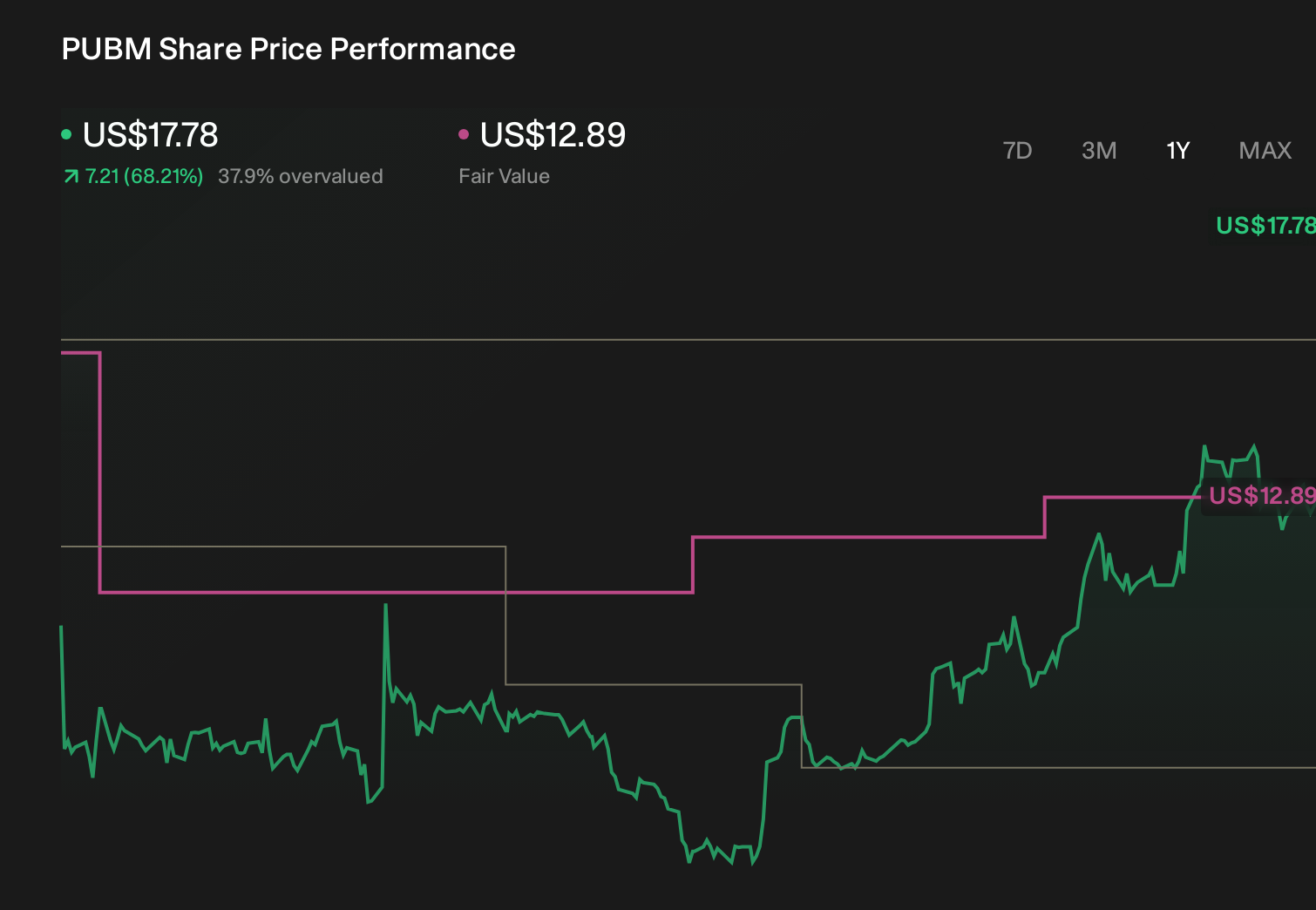
    PubMatic (PUBM) has seen its fair value estimate surge from US$12.89 to US$17.20, following a robust second-quarter performance that signals an accelerated return to growth for the digital advertising company.

    Driving Factors Behind the Valuation Upgrade

    The significant upward revision in fair value reflects a shift in analyst modeling, fueled by a Q2 report that exceeded expectations. Key to this momentum is a strategic evolution in the company’s revenue mix, which is increasingly dominated by mobile app inventory and high-growth emerging advertising formats. This pivot has strengthened investor confidence in the company’s ability to capture market share in a competitive ad-tech landscape.

    Monitoring the Evolving PubMatic Narrative

    Market narratives are essential for connecting PubMatic’s business performance to earnings assumptions, risk profiles, and valuation estimates. As new data and industry developments emerge, these models are updated to provide a coherent view of how product launches and guidance impact the company’s trajectory.

    Risk Assessment and Investor Perspective

    While the outlook remains positive, analysts have flagged two specific risks for PubMatic that could impact future investment performance. Investors are encouraged to monitor these variables closely to understand how they may influence the stock’s long-term potential.

    This analysis is based on historical data and analyst forecasts using an unbiased methodology. It does not constitute financial advice, nor does it serve as a recommendation to buy or sell any stock. All investment decisions should account for individual financial objectives and risk tolerance.

  • Embraer Hits Record Q2 Revenue: Guidance Raised After Surge

    Embraer Hits Record Q2 Revenue: Guidance Raised After Surge

    Embraer (EMBJ) delivered its strongest second-quarter revenue in history, backed by a 16-year high in quarterly deliveries and a record-breaking backlog for the seventh consecutive quarter. During the Q2 2026 earnings call, CEO Francisco Gomes Neto confirmed that the company’s operational discipline and production ramp-up have prompted a formal increase in its full-year 2026 financial guidance.

    Operational Milestones and Business Unit Growth

    The company’s growth was broad-based across all segments. Commercial Aviation saw a 5% year-over-year increase in deliveries, bolstered by a significant order from Azorra for 15 E195-E2 jets. Notably, the E2 program officially surpassed the milestone of 500 firm orders during the quarter.

    Executive Aviation achieved record-breaking performance, with an 18% increase in deliveries compared to the previous year, supported by robust market demand and the triple certification of the Praetor 500E and 600E models. Meanwhile, Defense and Security secured a landmark deal with the UAE for 10 C-390 aircraft—the largest international order for the platform to date and its first entry into the Middle East market.

    Financial Performance and Margin Expansion

    Consolidated net revenues climbed 23% to $2.2 billion in the second quarter. CFO Felipe Santana highlighted that adjusted EBIT margins reached 10.6% (excluding extraordinary items), significantly outperforming the five-year average by 5.5 percentage points.

    Key financial takeaways include:

    • Commercial Aviation: Revenues rose 8% to $625 million.
    • Executive Aviation: Revenues surged 32% to $725 million.
    • Defense and Security: Revenues jumped 38% to $304 million.
    • Service and Support: Revenues grew 24% to $565 million, driven by new maintenance contracts, including support for the Brazilian Air Force’s KC-390 fleet.

    The company recorded $8 million in U.S. import tariffs alongside a $68 million extraordinary tax credit. Excluding these impacts, the underlying profitability of the business remains on a strong upward trajectory, leading to an increase in the adjusted EBIT margin guidance to a range of 10%–10.6%.

    Strategic Outlook and Future Production

    Embraer maintains its delivery guidance of 80–85 commercial jets and 160–170 executive jets for the full year. The company is also raising its adjusted free cash flow guidance to $400 million or higher, reflecting strong first-half cash generation.

    Regarding the eVTOL subsidiary, Eve, management confirmed that the flight testing campaign is progressing as planned, with the team transitioning from hover flights to transition flights. Looking toward 2030, Embraer is actively exploring opportunities to expand its global footprint. This includes potential production collaborations in India for both commercial jets and the C-390, as well as ongoing discussions regarding a potential U.S.-based assembly line for the C-390, depending on future order sizes.

    “We have started the third quarter with strong momentum,” said CEO Francisco Gomes Neto. “Our performance reflects the discipline, focus, and commitment of our people, ensuring we deliver strong results today while investing in the technologies that will drive our future growth.”

  • Stanley Black & Decker Beats Q2 Earnings; Growth Strategy Pays Off

    Stanley Black & Decker Beats Q2 Earnings; Growth Strategy Pays Off

    Stanley Black & Decker (SWK) reported a robust second quarter for 2026, with adjusted earnings per share of $1.57, exceeding the midpoint of its guidance by $0.37. Driven by disciplined strategic execution, the company achieved 3% organic revenue growth and significant margin expansion, keeping its full-year targets firmly on track.

    The company confirmed that total revenue remained consistent with the previous year, with strong volume demand across the U.S. retail and industrial channels providing a necessary boost. Adjusted gross margins reached 33.7%, a 620 basis point year-over-year increase, bolstered by productivity gains, favorable product mix, and net tariff refunds.

    Driving Growth Through Operational Discipline

    CEO Christopher Nelson highlighted the success of the company’s “Tools & Outdoor” segment, which generated $3.6 billion in revenue. “Through disciplined execution of our strategy, we are delivering profitable organic growth,” Nelson stated. The segment saw a 3% organic revenue increase, with power tools performing particularly well—posting 8% growth—thanks to strong market activation and the performance of core brands DEWALT, STANLEY, and CRAFTSMAN.

    The company is aggressively pursuing its goal of becoming the “partner of choice” for professional end-users. A key element of this strategy includes strengthening the U.S. commercial and industrial channel, where the company expects annual sales to approach 10% of total Tools & Outdoor revenue in 2026. By deploying “project solution managers” directly to large construction sites, Stanley Black & Decker is ensuring its integrated hardware and software solutions meet the demanding timelines of modern infrastructure projects.

    Financial Outlook and Capital Allocation

    CFO Patrick Hallinan outlined the company’s updated 2026 guidance, which now targets adjusted EPS between $5.20 and $5.80. This revision reflects both below-the-line benefits, such as lower interest expenses, and the strategic reinvestment of tariff refunds.

    The company has utilized proceeds from the sale of its aerospace fasteners business to reduce debt by $1.7 billion and execute $250 million in share repurchases. “We are continuing to advance our strategy with a focused portfolio, balance sheet strength, and a thoughtful approach to capital allocation,” Hallinan noted. The company remains committed to maintaining an investment-grade rating while prioritizing growth investments and dividend support.

    Strategic Investments and Market Expansion

    A significant portion of the recent tariff-related benefits is being funneled into growth initiatives. The company plans to accelerate investments in trade schools, such as the “DEWALT Grow the Trades” program, which has committed to investing $60 million by 2030 to address the global shortage of skilled labor. This initiative is seen not only as a social responsibility but as a synergistic move to ensure a well-trained workforce capable of utilizing advanced industrial tools.

    Looking toward the second half of 2026, the management team maintains conviction in reaching an adjusted gross margin of 34% to 35%. Despite ongoing geopolitical uncertainties and inflationary pressures on raw materials like tungsten and battery metals, the company believes its current strategic pivot and focus on high-growth verticals—such as automotive and data center infrastructure—position it well for sustained long-term value creation.

  • Meta Ordered to Pay $942M in Landmark Child Safety Ruling

    Meta Ordered to Pay $942M in Landmark Child Safety Ruling

    A New Mexico judge ordered Meta to pay $942 million in total damages on Thursday, following a two-phase trial that concluded the company failed to protect minors on its platforms and violated state consumer protection laws.

    The Breakdown of the $942 Million Penalty

    Judge Bryan Biedscheid mandated a $567 million abatement fund, building upon the $375 million in civil penalties previously assessed by a jury in March. The court deemed this fund “necessary, due to the wide-ranging impacts of the harm and the complex nature of the remedy.”

    According to the Associated Press, $420 million of the abatement fund is specifically designated for youth treatment services. The remaining balance will be allocated over a five-year period to support prevention initiatives, awareness campaigns, and screening services.

    Mandatory Platform Overhauls

    Beyond the financial penalties, the ruling forces Meta to implement significant structural changes. The company must now introduce on-platform screens that clearly outline safety tools and protective features. Furthermore, Meta is required to hide “like” counts on photos for underage users by default and provide public disclosures regarding platform risks on its website.

    Regarding age verification, the court acknowledged that federal children’s privacy laws limit the use of certain tools for children under 13. Consequently, the judge ordered Meta to enhance its existing age-assurance technology—including AI-driven age estimation—and to develop a specialized model for identifying underage users within the next two years.

    Operational Compliance and Accountability

    Meta must now collaborate with schools or child safety organizations to establish a portal where educators can report suspected underage accounts. The company is also mandated to purge any personal information collected from users under 13 and provide biannual compliance updates to the court.

    In response to the ruling, a Meta spokesperson stated, “We disagree with the ruling and will appeal.”

    Legal Precedent and Origins of the Case

    The lawsuit was initiated by New Mexico Attorney General Raúl Torrez in 2023. The investigation involved state agents who created a fictitious profile impersonating a 13-year-old girl to test the platform’s safeguards. A March jury verdict found that Meta willfully violated the state’s Unfair Trade Practices Act on 37,500 counts, resulting in the maximum penalty of $5,000 per violation. A subsequent bench trial in May focused on whether the platforms constituted a public nuisance and determined appropriate corrective measures.

    The New Mexico Department of Justice notes that this is the first instance in which a state has successfully taken a major technology company to trial over child safety claims. Attorney General Torrez hailed the decision as “a victory for every parent who has worried about what social media is doing to their child.”

    While over 40 states have filed lawsuits against Meta regarding child safety, New Mexico remains the only jurisdiction to have brought its case to trial, according to The Wall Street Journal. Legal proceedings continue elsewhere, with a trial currently active in Tennessee and jury selection for a separate case involving four state attorneys general scheduled to begin in Oakland next week.

  • Voyager Stock Soars 70% on Explosive Q2 Growth

    Voyager Stock Soars 70% on Explosive Q2 Growth

    Voyager Technologies (NYSE: VOYG) saw its stock price climb approximately 70% this past week after the aerospace firm reported robust second-quarter growth metrics that significantly outperformed market expectations.

    Record-Breaking Revenue and Backlog

    The company’s financial momentum is clear: Voyager’s revenue surged 51% sequentially, reaching $52.7 million. This growth is underpinned by record quarterly bookings of $113 million, which pushed the company’s total backlog to $335.5 million as of June 30.

    Strategic Drivers: Defense and Acquisitions

    A primary catalyst for this expansion is the Trump Administration’s “Golden Dome” missile defense project. Voyager secured $84 million in Golden Dome-related awards across various technology platforms and customers. Furthermore, the recent acquisition of Astrobotic has deepened the company’s integration with NASA and its critical lunar lander initiatives.

    “Few companies can claim what Voyager occupies today: meaningful participation across defense technology, national security, and the rapidly expanding space economy,” said CEO Dylan Taylor.

    Path to Profitability and Future Outlook

    Despite the revenue spike, Voyager remains pre-profit as it prioritizes heavy investment in advanced propulsion, resilient space architectures, and sophisticated electronics. The company reported an adjusted loss of $41 million, or $0.70 per share—a figure that notably beat Wall Street’s anticipated loss of $0.91 per share.

    Looking ahead, Voyager has issued optimistic full-year guidance, projecting revenue growth of 66% to 84%, targeting between $275 million and $305 million for 2026.

    Strengthening Defense Partnerships

    Voyager’s positioning within the defense sector continues to solidify. On Thursday, the company announced a new contract with defense titan RTX to provide propulsion technology for the Standard Missile-3 (SM-3) and the next-generation interceptor program, further cementing its role in national security infrastructure.

  • Stepan Q2 2026 Earnings: Profits Surge 102% Amid Growth

    Stepan Q2 2026 Earnings: Profits Surge 102% Amid Growth

    Stepan Company (SCL) reported a robust second quarter for 2026 on Wednesday, July 29, with net income soaring 102% to $22.9 million, or $1.00 per diluted share, compared to $11.3 million in the same period last year.

    Operational Performance and Strategic Growth

    Stepan’s leadership attributed the strong quarterly results to broad-based volume growth, effective margin recovery, and the successful implementation of “Project Catalyst.” Adjusted EBITDA reached $74 million, a 45% increase year-over-year. Organic volume grew by 6%, with gains across all primary end markets, while net sales climbed 15% to $684 million.

    President and CEO Luis Rojo highlighted that the company achieved its strongest safety performance on record over the last 12 months. “The second quarter was a strong quarter of execution for Stepan,” said Rojo, noting that the firm is successfully capturing market share in strategic segments.

    Project Catalyst and Workforce Adjustments

    The company remains on track with its Project Catalyst initiative, a two-year plan designed to optimize assets and improve organizational agility. The program aims for $100 million in pre-tax savings, with 60% expected within 2026. As part of this efficiency drive, Stepan announced a reduction of approximately 100 salaried positions to be implemented in the third quarter.

    Restructuring costs for the full year are projected between $75 million and $80 million. These costs are linked to the closure of the Fieldsboro, New Jersey facility and the decommissioning of specific assets at the Millsdale, Illinois and Stalybridge, UK sites.

    Segment Breakdown: Surfactants and Polymers

    The Surfactants segment saw net sales rise 18% to $484 million. Organic volume grew by 7%, driven by strong demand in industrial cleaning, laundry, construction, and oil field applications. Meanwhile, the Polymers segment recorded a 9% increase in net sales to $178 million, fueled by a double-digit surge in rigid polyols and spray foam product lines in North America.

    CFO Ruben Velasquez noted that while the company saw significant volume growth, $5 million to $10 million of the quarterly EBITDA was likely influenced by customer “pre-buying” in response to geopolitical and raw material uncertainties. The company ended the quarter with a net leverage ratio of 2.5 times, down from 2.7 times in the first quarter.

    Outlook for the Second Half of 2026

    Looking ahead, Stepan remains focused on cash generation and balance sheet deleveraging. While the company faces ongoing market uncertainties, management expressed confidence in delivering full-year adjusted EBITDA growth and maintaining positive free cash flow. The ramp-up of the Pasadena, Texas facility continues to serve as a critical driver for future growth in specialty alkoxylates, with the site currently operating at approximately 75% to 80% capacity.

  • Halozyme (HALO) Soars 25% on Revenue Hike and Buybacks

    Halozyme (HALO) Soars 25% on Revenue Hike and Buybacks

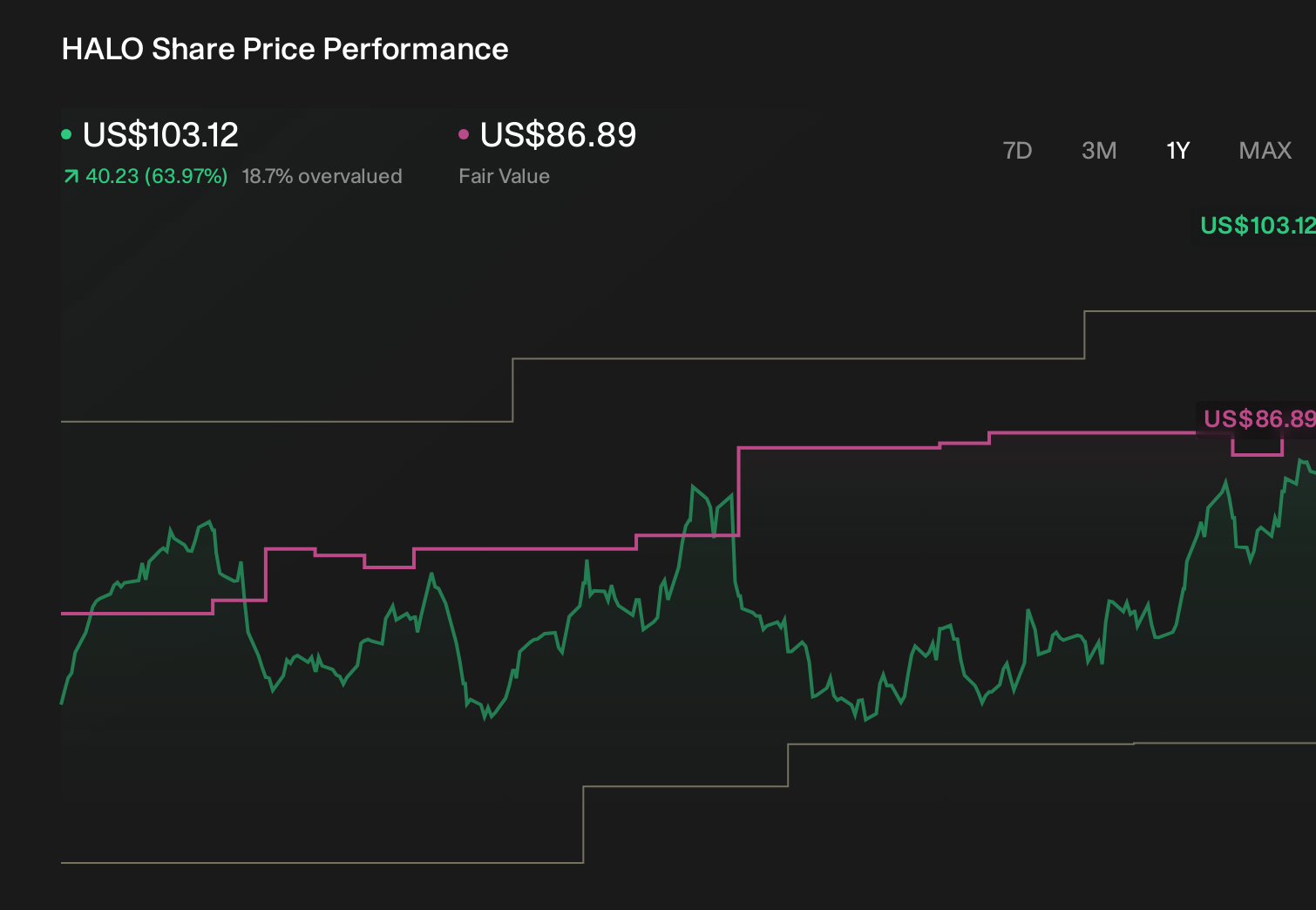
    Halozyme Therapeutics (HALO) shares surged 24.9% following the company’s decision to raise its 2026 revenue guidance and aggressively increase share buybacks, signaling confidence in the long-term scalability of its proprietary ENHANZE technology.

    The ENHANZE Revenue Engine

    To maintain a position in Halozyme, investors must weigh the potential of the ENHANZE royalty model—which converts partner drug launches into high-margin cash flows—against persistent regulatory, legal, and partner concentration risks. While the upgraded 2026 revenue outlook provides a clear near-term catalyst for growth, the company remains heavily reliant on a select group of major products to drive the majority of its earnings and royalties.

    Aggressive Capital Allocation

    A major driver of recent investor optimism is the completion of US$750 million in buybacks under the 2024 program, supplemented by an additional US$175.01 million authorization for 2026. These substantial repurchases, paired with increased revenue guidance, highlight the company’s commitment to shareholder returns. However, this strategy places greater emphasis on the resilience of ENHANZE-driven streams, as any disruption to key partnerships or legal protections could have a more pronounced impact on per-share value.

    Navigating Legal and Patent Hurdles

    Despite a strong quarterly performance, legal and patent challenges surrounding the ENHANZE platform remain a critical area that requires careful investor scrutiny. These unresolved issues continue to cast a shadow over the company’s long-term operational stability.

    Future Projections and Valuation

    Halozyme’s internal projections target US$2.1 billion in revenue and US$1.1 billion in earnings by 2029. While some optimistic analysts previously modeled figures as high as US$2.3 billion in revenue and US$1.2 billion in earnings by 2029, the recent guidance hike serves as a double-edged sword: it may validate the durability of the ENHANZE model or heighten concerns regarding the dependency of these targets on favorable litigation and patent outcomes.

  • Liberty Latin America Q2 2026: AI, M&A and Strategic Growth

    Liberty Latin America Q2 2026: AI, M&A and Strategic Growth

    Liberty Latin America (LILA) executives addressed key operational shifts during their Q2 2026 earnings call, highlighting a major AI partnership with Amdocs and a disciplined approach to portfolio optimization and capital allocation.

    Strategic AI Integration and Operational Efficiency

    CEO Balan Nair detailed the company’s new partnership with Amdocs, a domain-specific AI transformation initiative designed to replace legacy systems. The project is set to begin in Q4 2026, aiming to derisk operations and guarantee significant cost savings, with benefits expected to materialize immediately upon implementation.

    Puerto Rico Market Dynamics and Portfolio Strategy

    Addressing the competitive landscape in Puerto Rico, Nair attributed recent postpaid growth to reengineered sales channels, talent acquisition, and targeted network investments. These efforts have resulted in positive port-in ratios against major competitors like T-Mobile and Claro. Regarding the broader portfolio, Nair emphasized that “everything is for sale at the right price,” reinforcing a commitment to market rationalization. He added that a potential spin-off for the Puerto Rican business remains a key option under consideration, with the unit currently self-funding its own operations.

    Liberty Networks: Growth and Expansion

    Nair expressed a bullish outlook for the Liberty Networks business, noting that it warrants a higher multiple due to exceptional cash conversion rates. The company is actively pursuing both organic and inorganic growth, with new infrastructure builds underway in Colombia, Mexico, El Salvador, and Venezuela. According to leadership, these new routes offer superior returns compared to the consumer business, as they provide high operating contribution margins without significant increases in operating expenses.

    Starlink and Competitive Positioning

    When asked about the threat of satellite providers, Nair positioned Starlink as a complementary “add-on” rather than a replacement for LILA’s services. He noted that Liberty Latin America’s markets are “ring-fenced” by strong local employment ties and deep-rooted government relationships, rendering satellite operators a fill-in-the-blank solution rather than a wholesale market disruption.

    Financial Outlook and Capital Allocation

    CFO Chris Noyes provided insight into free cash flow (FCF) trends, noting that while the first half of the year was strong due to improved working capital, the second half is expected to be less robust than the same period last year. This variance is largely attributed to the $81 million weather derivative receipt in Q4 2025 and planned vendor financing paydowns.

    Regarding capital allocation, Nair reaffirmed a disciplined and opportunistic approach to share buybacks, emphasizing that the company currently views its own stock as the best value proposition available. Any potential M&A activity will remain strictly focused on assets that are accretive to free cash flow and offer clear synergy potential.

    Recovery in Jamaica

    The company reported a steady recovery in Jamaica following recent weather events. The mobile business, including ARPU and market share, has shown improvement. While the fixed-line business has not yet reached full pre-hurricane run rates, it is trending toward recovery with B2B segments largely stabilized. Furthermore, the company has secured parametric insurance for the upcoming season at cost-effective rates, ensuring financial protection against future environmental risks.

  • Instacart Q2 Surge: GTV Hits $10.3B Amid AI Expansion

    Instacart Q2 Surge: GTV Hits $10.3B Amid AI Expansion

    Maplebear (NASDAQ: CART), the parent company of Instacart, reported robust growth for the second quarter of 2026, with Gross Transaction Value (GTV) climbing 14% year-over-year to $10.35 billion. This performance, driven by a 9% increase in order volume and a 4% rise in average order value, highlights the company’s expanding influence across its marketplace, enterprise, and advertising segments.

    Financial Performance and Cash Flow Metrics

    Total revenue reached $1.04 billion, a 14% increase, while the advertising and other revenue segment surged 16% to $297 million. CEO Chris Rogers noted that the company has accelerated its growth over the past three quarters, bolstered by its strongest rate of net new customer activations since 2022.

    While GAAP net income settled at $111 million—a 4% year-over-year decline attributed to shifts in stock-based compensation vesting schedules—adjusted EBITDA demonstrated strength, rising 19% to $313 million. Furthermore, operational efficiency gains were evident as operating cash flow jumped 143% to $493 million, and free cash flow increased by 156% to $480 million. CFO Emily Reuter confirmed that the company remains committed to returning the majority of its free cash flow to shareholders, having repurchased $325 million in shares during the quarter.

    Technological Innovation: AI and Computer Vision

    Instacart is doubling down on its data and fulfillment infrastructure, which currently supports a catalog of over 2 billion products and generates 10 million daily inventory signals. The company’s recent acquisition of Arpalis, a computer-vision specialist, is expected to enhance shelf-availability intelligence and AI-powered shopping experiences.

    In the coming weeks, the company plans to launch a new AI assistant across its North American marketplace. The tool leverages purchase history, real-time inventory, and dietary preferences to streamline the shopping experience, with early tests showing larger basket sizes compared to traditional orders. Additionally, the company is integrating with major AI platforms, including Google Gemini, OpenAI, and Anthropic, to explore new demand channels.

    Enterprise Expansion and International Growth

    The company’s B2B offerings continue to gain traction. The Storefront solution now powers over 380 grocery websites, with new partners like Calgary Co-op and Dierbergs joining the platform. Meanwhile, specialized technologies such as Caper smart carts and Foodstorm—now utilized by Costco for nationwide catering orders—are seeing widespread adoption.

    Internationally, Instacart is pursuing an “enterprise-first” strategy. By deploying proven North American technologies to markets in France, Spain, and the U.K. (via a partnership with Morrisons following the Instaleap acquisition), the company aims to scale its e-commerce and fulfillment capabilities without requiring overly customized market solutions.

    Advertising Strategy and Future Outlook

    Advertising revenue continues to outpace overall GTV growth, supported by new tools in Ads Manager. Recent rollouts include AI-powered creative recommendations, an “Immersive Feed” for shoppable vertical video, and new objectives designed to increase customer lifetime value.

    Looking ahead to the third quarter of 2026, management forecasts GTV between $10.3 billion and $10.55 billion. Adjusted EBITDA is projected to reach between $320 million and $340 million, representing a 19% growth trajectory at the midpoint. The company expects advertising and other revenue to maintain its momentum, with a forecasted increase of 15% to 18%.