
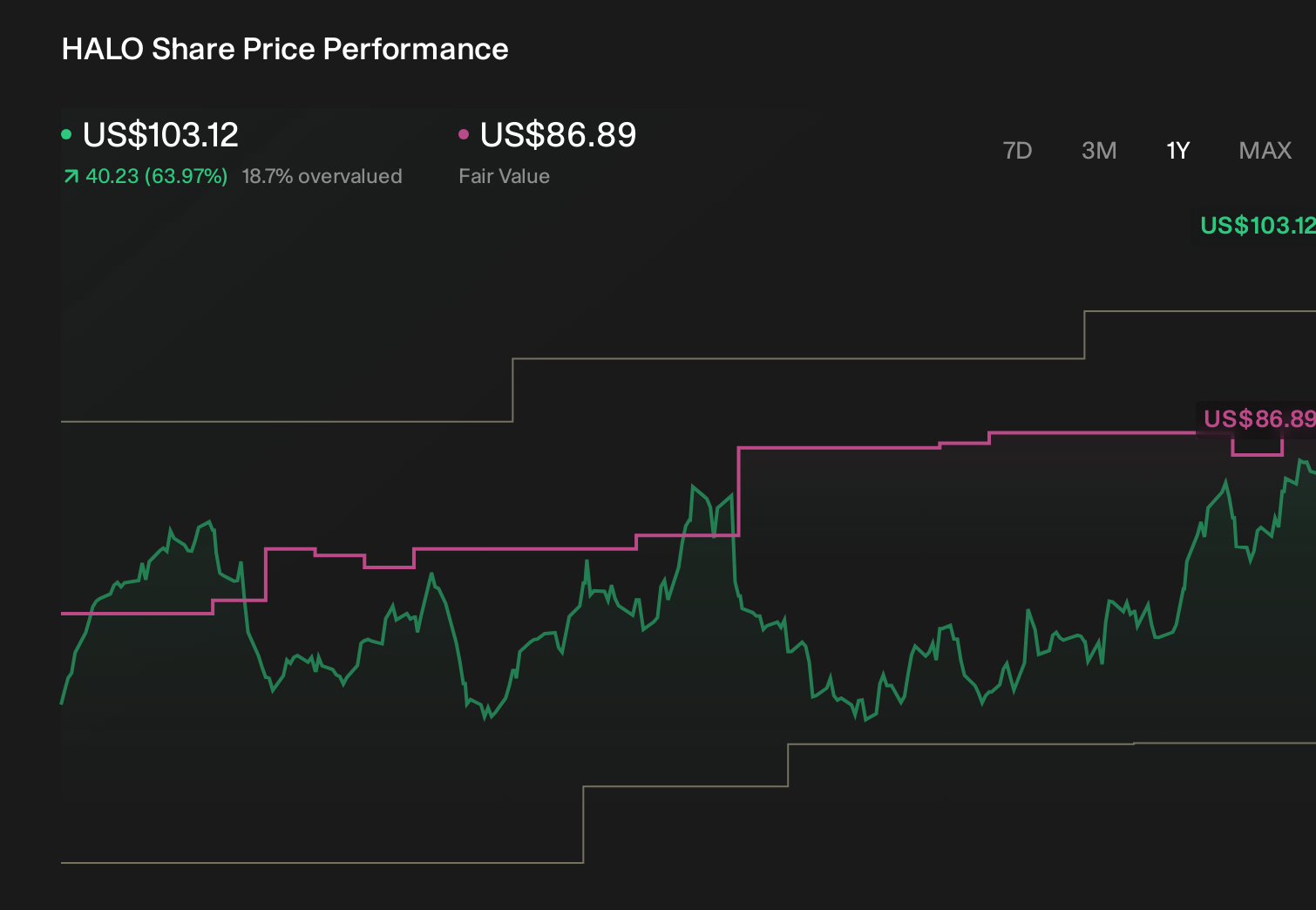
Halozyme Therapeutics (HALO) shares surged 24.9% following the company’s decision to raise its 2026 revenue guidance and aggressively increase share buybacks, signaling confidence in the long-term scalability of its proprietary ENHANZE technology.
The ENHANZE Revenue Engine
To maintain a position in Halozyme, investors must weigh the potential of the ENHANZE royalty model—which converts partner drug launches into high-margin cash flows—against persistent regulatory, legal, and partner concentration risks. While the upgraded 2026 revenue outlook provides a clear near-term catalyst for growth, the company remains heavily reliant on a select group of major products to drive the majority of its earnings and royalties.
Aggressive Capital Allocation
A major driver of recent investor optimism is the completion of US$750 million in buybacks under the 2024 program, supplemented by an additional US$175.01 million authorization for 2026. These substantial repurchases, paired with increased revenue guidance, highlight the company’s commitment to shareholder returns. However, this strategy places greater emphasis on the resilience of ENHANZE-driven streams, as any disruption to key partnerships or legal protections could have a more pronounced impact on per-share value.
Navigating Legal and Patent Hurdles
Despite a strong quarterly performance, legal and patent challenges surrounding the ENHANZE platform remain a critical area that requires careful investor scrutiny. These unresolved issues continue to cast a shadow over the company’s long-term operational stability.
Future Projections and Valuation
Halozyme’s internal projections target US$2.1 billion in revenue and US$1.1 billion in earnings by 2029. While some optimistic analysts previously modeled figures as high as US$2.3 billion in revenue and US$1.2 billion in earnings by 2029, the recent guidance hike serves as a double-edged sword: it may validate the durability of the ENHANZE model or heighten concerns regarding the dependency of these targets on favorable litigation and patent outcomes.