HF Sinclair (DINO) has delivered an impressive 224.8% total return over the past five years, yet recent market data suggests the stock remains undervalued, prompting investors to weigh whether the current price accounts for the company’s future growth or leaves room for further upside.
Valuation Analysis: Why DINO Trades at a Discount
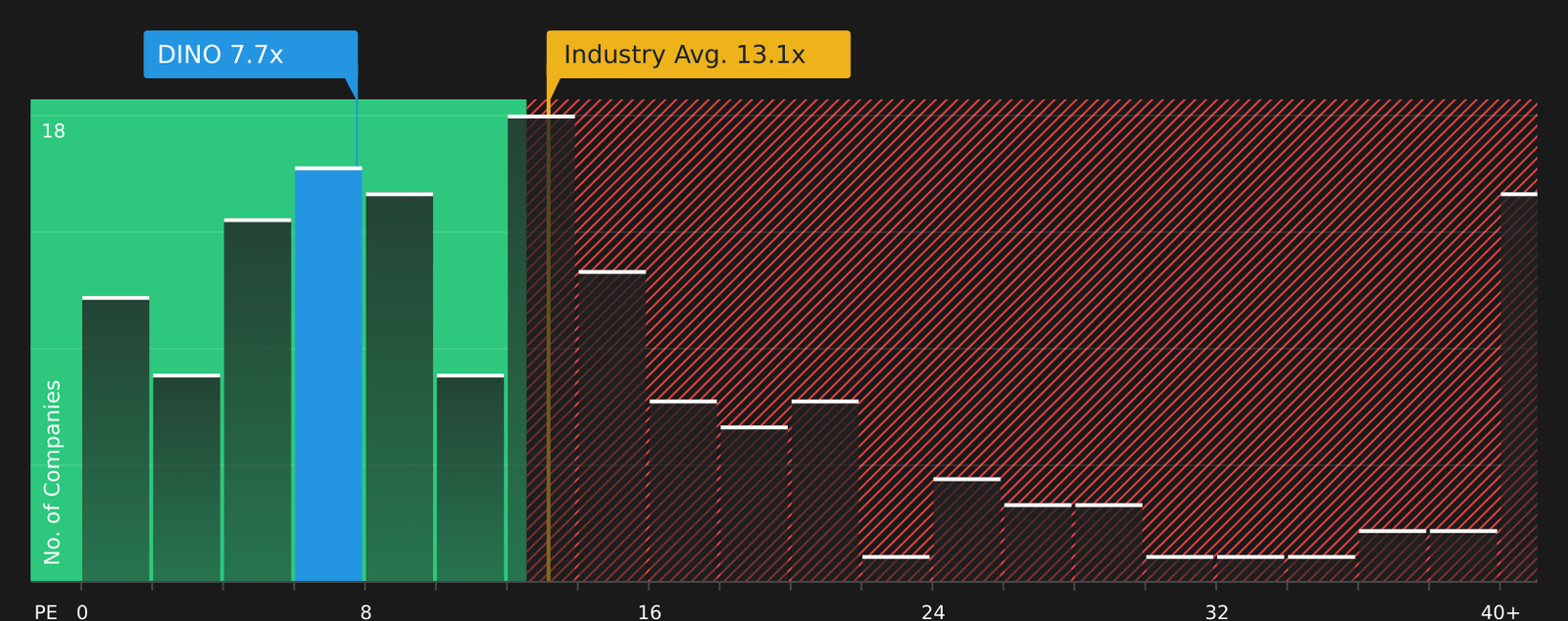
The core of the current investment debate lies in how the market prices HF Sinclair’s earnings potential. Currently, the company trades at a P/E ratio of approximately 7.7x, significantly lower than the Oil and Gas industry average of 13.1x and the broader peer group average of 17.4x.
When applying the Fair Ratio model—which adjusts for the company’s specific size, risk profile, and profit margins—a P/E of 9.9x emerges as a more accurate benchmark. This suggests that despite the planned separation of the Lubricants & Specialties segment and the strategic closure of the Mississauga refinery, the stock continues to trade at a material discount compared to its fundamental value.
Strategic Shifts and Market Sentiment
The company is currently undergoing a significant portfolio transformation, reshaping its earnings mix through asset divestitures and refinery rationalization. Investors are split on the outlook: proponents point to robust refining economics and aggressive capital returns as catalysts for growth, while cautious market participants highlight concerns regarding long-term fuel demand, regulatory pressures, and the execution risks associated with the upcoming Lubes spinout.
Assessing the Investment Case
For those analyzing the stock’s future, the primary question is whether the current discount represents a genuine mispricing by the market or a “value trap” reflecting inherent sector risks. The company’s trajectory will likely depend on its ability to execute its restructuring plans effectively, potentially narrowing the gap between its current low valuation and its calculated fair value.
To help investors navigate these variables, detailed breakdowns of the company’s growth, profitability, and risk factors—including both the Bull Case and Bear Case—are available for deeper examination. These insights provide a framework for tracking how shifts in refinery economics and corporate strategy may impact the stock’s performance moving forward.