Blog

  • Cleveland Fed’s Hammack Calls for Multiple Rate Hikes

    Cleveland Fed’s Hammack Calls for Multiple Rate Hikes

    Cleveland Federal Reserve President Beth Hammack stated on Monday that multiple interest rate hikes will be necessary to combat what she describes as persistent, broadening inflation.

    Why Single Rate Moves Aren’t Enough

    “I would say in general, one 25 basis point move probably doesn’t do a whole lot for the economy,” Hammack said in an interview with Yahoo Finance. “So it’s probably some number of [movements]. But I don’t want to prejudge what that number is going to be.” She added, “I don’t know exactly where we will end.”

    Hammack notably dissented during the Fed’s July policy meeting when the Federal Open Market Committee opted to hold rates steady, as she advocated for a quarter-percentage-point increase. She maintains that the current interest rate range of 3.5% to 3.75% is not “meaningfully restricting” the economy.

    Business Sentiment and Economic Restraint

    “When I’m talking to businesses, I’m not hearing that they’re sensing any restraint from investments in growth based on where interest rates are,” Hammack explained. “So to me that says that now is the time to act.”

    She warned that delaying policy adjustments increases the risk of inflation becoming entrenched, making it harder to return to the Fed’s 2% target. Hammack compared the strategy to braking before a stop sign, suggesting the Fed should gently ease into policy restraint rather than slamming on the brakes later.

    Inflation Data and the Labor Market

    The Fed’s preferred inflation gauge, the Personal Consumption Expenditures (PCE) index, sat at 3.3% core in June. While the Consumer Price Index (CPI) was 2.6% for the same period, economists anticipate a slight decline in the upcoming Wednesday report. If core CPI meets expectations, it would signal two consecutive months of cooling inflation.

    “Nothing would make me feel better than to be wrong, that we need to change the stance of policy to help bring inflation back to target,” Hammack said. “But from where I sit, I just don’t see it coming back on its own.”

    Regarding the labor market, Hammack remains unfazed by the recent July jobs report, which showed a loss of 23,000 jobs. She highlighted that payrolls have grown by an average of 20,000 to 25,000 over the past year and views the 4.1% unemployment rate as consistent with full employment. “I’m still not seeing a problem with the job market,” she noted.

    Fed Credibility and Market Expectations

    Addressing concerns regarding market confusion over Fed strategy—specifically following Chairman Kevin Warsh’s comments on bond yields—Hammack emphasized that markets are a “complement” to the Fed, not a substitute. “We have to stand behind our words with our actions when appropriate,” she asserted.

    Hammack believes the Fed’s credibility is forged through transparency and a clear explanation of its “reaction function.” By being explicit about how incoming data impacts decision-making, the Fed helps businesses and individuals plan more effectively. Ultimately, she reiterated that the central bank’s primary objective remains the firm commitment to a 2% inflation target, regardless of external market uncertainty.

  • Xaar Hits First Profitability Milestone in Three Years

    Xaar Hits First Profitability Milestone in Three Years

    Xaar PLC (FRA:XAR) achieved a pivotal financial turnaround in the first half of 2026, posting its first profitable half-year period in at least three years despite persistent global economic headwinds. CEO John Mills and CFO Paul James confirmed an adjusted profit before tax of GBP 0.2 million, a marked improvement from the GBP 0.7 million loss recorded during the same period last year.

    Financial Performance and Revenue Growth

    The company reported a 9.2% increase in group revenue on a like-for-like basis, bolstered by a 5.5% rise in printhead revenue. Gross margins expanded by 220 basis points, a result of disciplined financial management and improved pricing power within emerging markets. This growth trajectory reflects the company’s ongoing efforts to streamline operations and enhance profitability.

    Strategic Shift: Desktop 3D and Market Positioning

    While the launch of the Desktop 3D product in collaboration with Flashforge has faced additional delays, management remains optimistic. CEO John Mills emphasized that the extra time is dedicated to ensuring an optimal customer experience. Pre-launch orders for the initial production batches are already secured, and three additional companies are currently developing similar products slated for release over the next 12 months.

    Addressing competition from industry giants like Epson, Ricoh, and Fuji, Xaar is doubling down on its unique technical edge: the ability to print complex fluids that competitors cannot handle. By diversifying into 21 different market sectors, the firm aims to minimize volatility and build long-term operational resilience.

    Liquidity, Cash Flow, and Operational Efficiency

    CFO Paul James addressed the adjusted free cash flow outflow of GBP 4.3 million, noting it is a temporary consequence of strategic inventory stockpiling to support the upcoming Desktop 3D launch. To maintain a robust financial position, the company has doubled its revolving credit facility from GBP 5 million to GBP 10 million and increased its invoice discounting capabilities.

    Operational expenditure saw a 5.7% increase in R&D and sales capabilities, signaling a commitment to innovation. Conversely, general and administrative expenses dropped by 1.6% due to a contraction in back-office roles, directly contributing to the improved bottom line.

    Future Outlook: Ceramics, Semiconductors, and Solar

    The legacy ceramics market, which experienced years of decline, has finally stabilized. For the first time in nearly seven years, Xaar is seeing growth in this sector, largely driven by new digital glaze technology. Furthermore, the company is making strategic inroads into high-growth sectors: five semiconductor firms are currently conducting trials, and inkjet technology is increasingly being adopted to streamline solar panel manufacturing processes.

    Looking ahead to the second half of 2026, leadership expects stronger year-over-year revenue performance. The primary focus remains on scaling the installed machine base, which is expected to create a steady, recurring revenue stream through the sale of replacement printheads and specialized fluids.

  • Pampa Energia Unveils Latin America’s Largest Fertilizer Plant

    Pampa Energia Unveils Latin America’s Largest Fertilizer Plant

    Pampa Energia (NYSE:PAM) officially approved the development of Latin America’s largest urea plant this quarter, while simultaneously reporting a robust $415 million in adjusted EBITDA for Q2, fueled by record-breaking oil and gas output and strengthened power-market margins.

    A Strategic Expansion into Fertilizers

    The company is venturing into the fertilizer sector with a massive $2.7 billion turnkey project in Bahía Blanca. Designed to produce 2.1 million tons of granular urea annually, the facility is slated for completion by the end of 2029. According to Investor Relations and Sustainability Officer Lida Wang, this move is designed to monetize Pampa’s Vaca Muerta shale gas resources by pivoting toward higher-value industrial output. The facility will leverage the company’s own natural gas and electricity, which account for roughly 70% of urea production costs.

    Located near the Port of Bahía Blanca, the plant will integrate directly with existing Vaca Muerta pipelines and Pampa’s own thermal and renewable generation assets. It is expected to consume 3.3 million cubic meters of gas and 75 megawatts of power daily. Pampa targets the Brazilian market—which imports between 7 and 8 million tons of urea annually—as a primary buyer, with the project expected to contribute approximately $1 billion in annual foreign-currency revenue.

    Regulatory Framework and Financing

    Pampa is currently awaiting the formal publication of its approval under Argentina’s RIGI investment-incentive regime. CFO Adolfo Zuberbühler noted that the company is also seeking provincial benefits in Buenos Aires to complement federal incentives. The project is structured with a 60% debt and 40% equity split, with financing expected to close in Q4. While equity contributions begin this year, the bulk of capital expenditure is forecasted for 2028.

    Record-Breaking Oil and Gas Performance

    Operational success defined the quarter, with record production reaching 107,500 barrels of oil equivalent per day. The Rincón de Aranda development was the primary driver, with crude production tripling year-over-year. Despite temporary output reductions in late Q2 to accommodate infrastructure completions, management remains firm on a 28,000-barrel-per-day exit rate target for this year, aiming for a 45,000-barrel-per-day plateau once the Vaca Muerta Sur oil pipeline is operational.

    Efficiency gains were significant, as oil lifting costs dropped 28% year-over-year to $15 per barrel. Management anticipates this cost will fall to $10 per barrel by the end of the year and further to $5 per barrel by Q2 2025 as permanent facilities come online. Although hedging positions impacted realized crude prices—averaging $59 per barrel compared to an unhedged $91—Pampa intends to maintain its current hedge strategy through Q1 of next year.

    Power Generation and Financial Outlook

    The power generation segment delivered $155 million in adjusted EBITDA, a 39% increase from the previous year, bolstered by favorable spot margins and new regulatory frameworks for LNG procurement. While the maturity of certain contracts and wind farm underperformance provided headwinds, Pampa continues to maintain 88% generation availability.

    Looking ahead, the company projects power-generation EBITDA of approximately $600 million for 2026. Despite a negative free cash flow of $128 million this quarter, Pampa maintains a solid liquidity position with $1.3 billion in cash and equivalents. Net leverage is expected to fluctuate between 1.5x and 2x over the next three years as the company accelerates its ambitious investment program.

  • Wall Street Rallies as Weak Jobs Report Dims Fed Hike Hopes

    Wall Street Rallies as Weak Jobs Report Dims Fed Hike Hopes

    Wall Street is betting that a dismal July jobs report will force the Federal Reserve to abandon plans for interest rate hikes, fueling a surge in stock prices.

    Labor Market Stagnation Sparks Economic Concern

    The Bureau of Labor Statistics’ July report revealed a loss of 23,000 jobs, significantly missing expectations. Simultaneously, the unemployment rate dipped to 4.1%, while labor force participation plummeted to levels not seen since the height of the pandemic.

    “The report suggests that the economy is seemingly slipping back toward the ‘no hire, no fire’ narrative that characterized the labor market through much of 2025,” noted Jim Baird, chief investment officer at Plante Moran Financial Advisors.

    A Downward Trend in Job Growth

    The data highlights a concerning cooling trend in hiring. Ameriprise chief economist Russell Price pointed out that the three-month rolling average of job gains has slumped to just 20,000, with the six-month average weakening to 44,000.

    “There were many moving parts, but very little to like about this report,” Price stated. “If the job market falters, consumers and the economy might not be far behind.”

    Fed Policy and Treasury Yields

    Treasury yields tumbled on Friday in response to the report, effectively reversing gains from earlier in the week when market sentiment suggested the Fed might be trailing behind in its inflation battle. With wage growth coming in softer than anticipated, strategists believe the weak labor numbers provide the Fed sufficient cover to maintain current rates.

    “To the point of the wage inflation, I think this really solidifies our view that the Fed is going to stay on hold this year,” said UBS’s Leslie Falconio.

    Market Reaction and the AI Trade

    Following the release, implied odds of a Fed rate hike in 2026 dropped to 56% on Polymarket, down from 63%. This shift in expectations provided a boost to equities, with the Dow, S&P 500, and Nasdaq all securing weekly gains. Large-cap tech stocks led the charge, led by Nvidia (NVDA) with a 10% weekly surge, while Microsoft (MSFT) and Meta (META) rose 8% and 7%, respectively.

    “In terms of what this does to the stock market, it’s probably positive in that it reduces the probability of a rate hike in September,” explained Amber Fairbanks, portfolio manager at Impax Asset Management.

    While Fairbanks remains optimistic about the AI sector, she urges investors to practice caution. “I think AI is still an attractive trade, but we have to be a little bit more picky in those companies that are really benefiting from a fundamental perspective, not just to benefit from a narrative perspective.”

    Future Projections

    Despite the labor market cooling, Yardeni Research remains bullish, projecting that strong earnings will drive the S&P 500 to 8,200 by year-end, representing a potential 5.6% gain from current levels.

  • Proficient Auto Logistics Reports Q2 Results and Major Merger

    Proficient Auto Logistics Reports Q2 Results and Major Merger

    Proficient Auto Logistics (NASDAQ:PAL) posted a decline in second-quarter 2026 revenue and adjusted EBITDA compared to the previous year, while signaling a positive sequential trend and announcing a definitive agreement to acquire Hansen & Adkins.

    Q2 Financial Performance Breakdown

    Total operating revenue for the second quarter of 2026 reached $109.4 million, representing a 5.3% decrease from the same period in 2025. Vehicle deliveries dropped 8% year-over-year to 580,962 units, though the company managed a 2.9% increase in revenue per unit. Adjusted EBITDA fell to $7.6 million, down from $11.3 million in the prior year.

    Chief Financial Officer Brad Wright noted that while results improved compared to the first quarter, they did not reach the record highs of Q2 2025. Profitability was pressured by elevated fuel costs and higher driver payments, both for company employees and sub-haulers. Wright explained that these costs were incurred ahead of the customer payment cycle, which temporarily increased accounts receivable and reduced cash balances, though he noted the imbalance "self-corrected during July."

    Market Conditions and Operational Improvements

    CEO Rick O’Dell observed that industry conditions stabilized during the second quarter following a turbulent first quarter. Despite ongoing challenges such as driver shortages and constrained carrier capacity, the company saw steady improvements. Proficient secured better fuel-surcharge coverage and implemented rate adjustments throughout the quarter, leading to a monthly operating ratio of 95.7% in June—the company’s best performance of 2026 so far.

    "These trends give us increasing confidence that the industry is moving toward a more balanced and sustainable operating environment," O’Dell stated.

    President and COO Amy Rice added that the company utilized short-term incentives and surge-rate discussions to address capacity constraints, finding that targeted rate support effectively improves service levels. Looking ahead, management expects the market environment to remain stable, positioning the company for improved pricing and cost dynamics as they head into 2027.

    Strategic Acquisition of Hansen & Adkins

    Proficient has entered a definitive agreement to acquire Hansen & Adkins, an auto-hauling firm with operations across the United States and Canada. Over the 12 months ending in March, Hansen & Adkins generated over $400 million in revenue and more than $27 million in EBITDA.

    This merger is set to make the combined entity the largest auto hauler in North America. The integration provides Proficient with entry into the Canadian market, which accounts for roughly 13% of the target company’s revenue. On a trailing-12-month basis, the combined business is expected to generate over $800 million in revenue and approximately $60 million in adjusted EBITDA.

    The deal creates a balanced operational model, shifting the company toward a 50-50 mix of company-owned assets and sub-haul capacity. Management anticipates synergies through improved geographic density, maintenance insourcing, and procurement leverage. The integration is expected to span the next six months.

    Transaction Terms and Future Outlook

    The acquisition carries an upfront enterprise value of $130 million, comprised of $75 million in equipment financing and $55 million in consideration to sellers. At closing, Proficient intends to pay $52 million in cash and $3 million in common shares.

    To support the acquisition, Proficient is restructuring its debt, including a $120 million syndicated equipment-financing facility and the issuance of a $75 million convertible bond. As of June 30, the company maintained a net-debt leverage ratio of 2.1 times trailing-12-month adjusted EBITDA.

    For the second half of 2026, Proficient forecasts revenue between $350 million and $370 million, with an operating ratio near 97% and EBITDA margins between 8% and 9%. The company expects acquisition-related synergies to begin contributing significantly to performance starting in 2027.

  • Vulcan Materials Q2 2026: Profitability Grows Amid Inflation

    Vulcan Materials Q2 2026: Profitability Grows Amid Inflation

    Vulcan Materials (VMC) reported a resilient second quarter for 2026, delivering adjusted EBITDA of $654 million despite significant energy-related headwinds of approximately $40 million. CEO Ronnie Pruitt and CFO Mary Andrews Carlisle confirmed the company’s ability to maintain growth through operational efficiency and disciplined pricing strategies, reaffirming their full-year adjusted EBITDA guidance of $2.4 billion to $2.6 billion.

    Operational Resilience and Pricing Power

    Despite facing $26 million in diesel cost headwinds, Vulcan’s commercial and operating teams successfully expanded their aggregates cash gross profit per ton, which topped $12—an increase of $0.14 compared to the previous year. Shipments rose 1% year-over-year, with mix-adjusted average selling prices improving by 5% across the company’s footprint. The “Vulcan Way of Operating” and “Vulcan Way of Selling” disciplines were cited as key factors in offsetting inflationary pressures and managing costs during a quarter marked by wet weather disruptions in several regions.

    Strategic Portfolio Expansion

    Vulcan continues to prioritize its aggregates-led business through strategic divestitures and acquisitions. During the second quarter, the company finalized the sale of concrete operations in California and non-core assets in the U.S. Virgin Islands. These proceeds were redeployed to acquire Brannan Sand & Gravel, a move that expands Vulcan’s presence into Southern Colorado and strengthens its distribution network within the Dallas-Fort Worth market.

    Market Demand and Infrastructure Outlook

    Management remains optimistic about the demand environment, citing strong public activity and a robust pipeline of private projects. While residential construction continues to face challenges due to affordability issues, the company is well-positioned to benefit from long-term housing recovery. Public infrastructure awards in Vulcan markets are currently outperforming non-Vulcan regions, with highway and public infrastructure contracts up double digits and 20% year-over-year, respectively.

    Federal Funding and Legislative Developments

    Regarding federal highway funding, the company anticipates a transition to a continuing resolution as Congress works toward finalizing new legislation. The House Transportation and Infrastructure Committee’s “BUILD America 250 Act” has received significant bipartisan support, with management noting that its formula-based distribution approach is highly beneficial to Vulcan’s aggregate-intensive business model compared to previous programs.

    Updates on Mexico Arbitration

    Addressing the ongoing arbitration against Mexico regarding the illegal seizure of its Calica operations, CEO Ronnie Pruitt stated that while the tribunal unanimously agreed that Mexico’s actions were arbitrary, unjust, and violated NAFTA, the majority awarded only immaterial damages. Despite this, Pruitt emphasized that Vulcan has grown its EBITDA by over 50% since the 2022 takeover and remains focused on serving its Gulf Coast customers through its established, high-quality distribution network.

    Capital Allocation and Future Growth

    CFO Mary Andrews Carlisle highlighted the company’s strong balance sheet, with a net debt to adjusted EBITDA leverage ratio of 1.7x. In the first half of 2026, Vulcan invested $370 million in capital projects, completed a strategic acquisition, and returned over $500 million to shareholders, including $400 million in share repurchases. The company remains committed to disciplined capital allocation and continues to seek out acquisition opportunities that align with its core aggregates-focused strategy.

  • Portillo’s Slashes Corporate Workforce by 18% Amid Sales Slump

    Portillo’s Slashes Corporate Workforce by 18% Amid Sales Slump

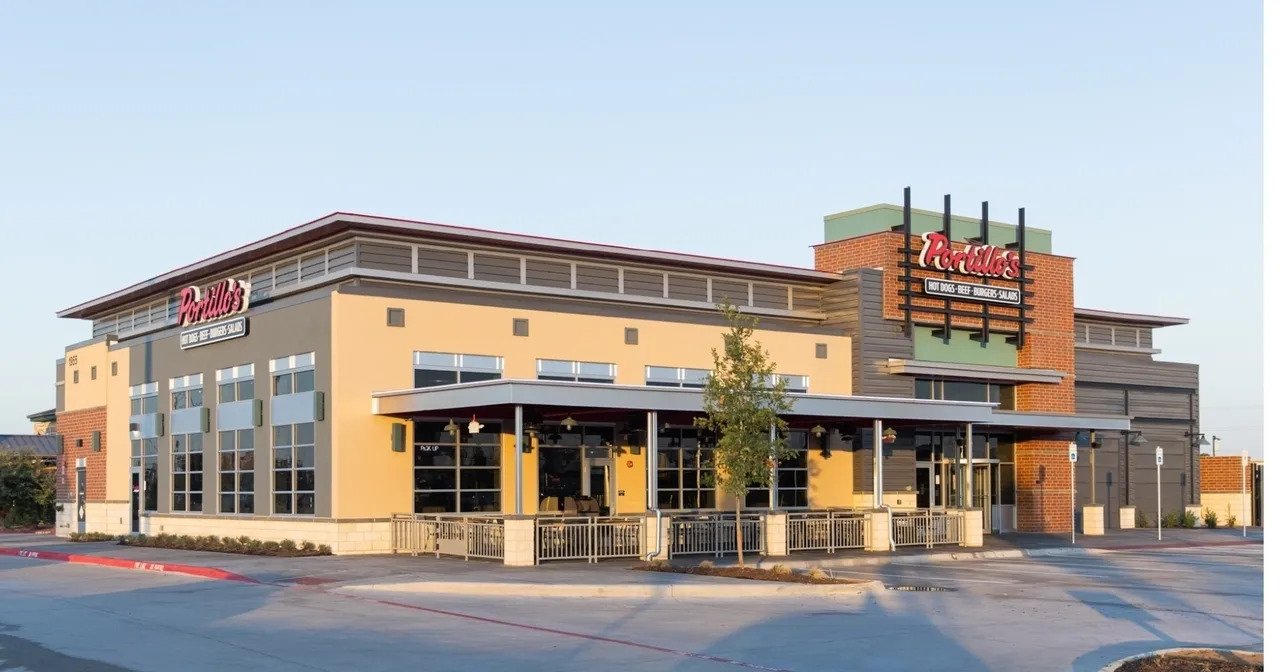
    Portillo’s confirmed on Wednesday that it has reduced its corporate headquarters and field management staff by approximately 18% to streamline operations and refocus its long-term growth strategy.

    Inside the Corporate Restructuring

    The workforce reduction took effect on July 31, specifically targeting the Chicago headquarters and a select number of field management positions. The company clarified that restaurant-level team members remain unaffected by these changes, though the exact number of positions eliminated was not disclosed.

    “While never an easy decision, it is imperative that we examine areas of the business where we can operate more efficiently and ensure our resources and future investments are directed at the right priorities,” said Brett Patterson, Portillo’s CEO, in an official statement. “These actions, along with other efficiencies, will support our long-term growth strategy.”

    Q2 Performance and Sales Challenges

    The layoffs coincide with a challenging second quarter for the Chicago-based chain, which saw a reversal in momentum after experiencing near-positive traffic during the first quarter. Same-store sales dipped 1.2% for the period ending June 28, driven by a 3.4% decline in transactions. This drop was partially masked by higher average check sizes, largely a result of menu price increases.

    During the quarter, menu prices rose by approximately 2.6%, though this was slightly offset by a 0.4% decrease in product mix. Despite these hurdles, Patterson characterized the period as being “highlighted by resilient underlying sales performance despite difficult promotional comparisons.”

    Strategic Pivot and Future Roadmap

    Patterson noted that the company has taken “decisive actions to simplify the business to better support our priority of running great restaurants.” The chain has now completed comprehensive brand and consumer research aimed at defining its future trajectory. “We look forward to sharing that roadmap soon,” Patterson added.

    Since assuming leadership earlier this year, Patterson has spearheaded major studies into customer segmentation, brand positioning, and menu satisfaction to better understand the brand’s position in the current market.

    Expansion Slowdown and Financial Results

    Portillo’s is simultaneously recalibrating its expansion strategy. After an aggressive push into the Sun Belt, the company announced a strategic reset last year as traffic and sales trends turned negative. While total revenue for the second quarter reached $199 million—a 5.6% increase from $188.5 million the previous year—this growth was primarily fueled by the addition of seven new locations in the first half of the year.

    The chain currently operates 109 restaurants, including one joint venture. All seven openings this year have occurred in Texas, including the brand’s debut at the Dallas-Fort Worth International Airport. Looking ahead, the company plans to open one more location in Chicago later this year, followed by a site in Wrigleyville near Wrigley Field in 2025. Meanwhile, net income for the company saw a significant decline, falling nearly 29% to $7.2 million.

  • Microvast Q2 Revenue Dips: Tariff Refunds and Costs Hit Profits

    Microvast Q2 Revenue Dips: Tariff Refunds and Costs Hit Profits

    Microvast (NASDAQ: MVST) reported second-quarter revenue of $87.3 million, a 4.5% decline compared to the same period in 2025, driven by lower U.S. sales and a significant $2.7 million tariff refund issued to a customer.

    Profitability Pressures and Financial Performance

    CFO Rodney Worthen noted that the $4.1 million year-over-year revenue drop was largely impacted by the tariff refund, which was recorded as a reduction in current-period revenue. Gross profit for the quarter landed at $25.8 million, resulting in a gross margin of 29.5%, down from 34.7% in the previous year. This contraction was attributed to elevated raw-material costs and lower production utilization, which hampered fixed-cost absorption.

    The company recorded a GAAP net loss of $12 million for the quarter. On an adjusted basis, the net loss reached $5.3 million, a sharp reversal from the $16.3 million profit reported a year prior. Furthermore, non-GAAP adjusted EBITDA fell to $3.6 million, down significantly from $25.9 million in Q2 2025.

    Rising Operating Expenses

    Operating expenses grew by 16.1% year-over-year, totaling $27.5 million. A major contributor was a 24.2% increase in general and administrative expenses, fueled by $2.6 million in additional legal and professional-service fees. Research and development spending also rose by $1.1 million (14.8%) due to expanded product development and labor costs, while selling and marketing expenses climbed 38.5% amid customer-retention initiatives.

    Regional Sales and Six-Month Performance

    For the first half of 2026, revenue dropped 28.8% to $60 million, primarily due to a 24.3% decrease in sales volumes—falling to 717 megawatt-hours from 947 megawatt-hours. Regionally, Europe emerged as a bright spot, with sales rising 35% in the second quarter to account for 61% of total revenue. Conversely, U.S. sales struggled under the weight of tariff-related impacts, and Asia-Pacific sales plummeted 23% during the quarter, reflecting geopolitical shifts and a preference for lower-cost products in India.

    Cash Flow and Liquidity

    Net cash used in operating activities reached $33.3 million for the first half of 2026, compared to $44.3 million generated in the first half of 2025. Microvast ended the quarter with $143.1 million in cash equivalents and restricted cash, after accounting for capital expenditures related to the Huzhou Phase 3.2 expansion and the acquisition of a U.S. office building.

    Operational Outlook and Solid-State Innovation

    CEO Yang Wu confirmed that equipment installation for the Huzhou Phase 3.2 expansion is complete, with production expected to ramp up in 2026 and eventually add 2 gigawatt-hours of annual capacity. Meanwhile, the company is making strides in its solid-state battery program, successfully testing a 17-layer monolithic stack that produced approximately 72 volts without liquid electrolyte.

    Microvast’s solid-state architecture is currently focused on robotics, aiming to reduce the need for heavy electronics. Early prototypes have demonstrated promising stability, with one cell showing no signs of ignition or smoke during hot-box testing up to 200 degrees Celsius. Additionally, an all-solid-state silicon-sulfur prototype achieved a specific capacity exceeding 1,000 milliamp-hours per gram.

    Looking ahead, the company prioritizes the Huzhou expansion and the start of pack-line assembly in Clarksville, Tennessee, by year-end. However, full-scale construction of the Tennessee facility remains subject to securing additional financing or strategic partnerships.

  • Is Odyssey Therapeutics (ODTX) Overvalued After Recent Gains?

    Is Odyssey Therapeutics (ODTX) Overvalued After Recent Gains?

    Odyssey Therapeutics (ODTX) reported a widening net loss for the second quarter of 2026, yet the company’s stock continues to gain momentum following a strategic R&D partnership with Evotec.

    Q2 2026 Financial Performance Breakdown

    For the quarter ending June 30, 2026, Odyssey Therapeutics posted a net loss of US$52.79 million, an increase from the US$41.24 million loss reported in the same period last year. The basic and diluted loss per share from continuing operations was US$1.74, a significant improvement from the US$29.54 loss per share recorded in the prior year.

    On a six-month basis, the company recorded a total net loss of US$91.05 million, compared to US$79.67 million in the first half of 2025. Basic and diluted loss per share for this period reached US$5.05, down from US$67.11 a year earlier.

    Market Sentiment and Momentum

    The latest earnings release, coupled with the new R&D collaboration with Evotec, has triggered a shift in investor sentiment. Odyssey Therapeutics has seen its share price climb by 4.72% over the last day, contributing to a substantial year-to-date return of 35.02%. This upward trend indicates that market confidence remains robust despite the company’s ongoing operational losses.

    Valuation Concerns: Is the Upside Limited?

    With the stock closing at US$22.17, investors are scrutinizing whether the recent rally has already priced in the company’s potential. A critical metric in this assessment is the price-to-book (P/B) ratio of 2.5x.

    As a clinical-stage biopharmaceutical firm—reporting US$160.03 million in losses and minimal revenue of US$99,000—Odyssey Therapeutics is valued primarily on its asset backing rather than current profitability. A P/B ratio of 2.5x positions the company as expensive relative to the broader US biotech industry average, yet it remains at a discount when compared to its immediate peer group, which trades at approximately 4.5x.

    Risks and Future Outlook

    While the P/B ratio suggests the stock is currently trading within a reasonable range compared to its sector, the company faces inherent challenges. The primary risks for investors include sustained heavy losses and the execution uncertainty typical of a firm managing a clinical-stage drug pipeline.

    The current valuation suggests that while the market has rewarded Odyssey for its recent developments, the company remains in a high-risk, early-stage phase that lacks significant current revenue, necessitating a cautious approach to long-term growth expectations.

  • Interfor (TSX:IFP) Fair Value Climbs 19% Amid Analyst Caution

    Interfor (TSX:IFP) Fair Value Climbs 19% Amid Analyst Caution

    Interfor (TSX:IFP) has seen its fair value estimate jump to CA$15.17, up from the previous CA$12.75, as updated valuation models reflect a 19% shift in the company’s underlying financial projections.

    Valuation Shift Meets Market Neutrality

    Despite the upward adjustment in the company’s intrinsic valuation, broader Wall Street sentiment remains largely balanced. Current analyst ratings for Interfor continue to cluster around Neutral and Hold positions, signaling a cautious approach from the investment community.

    Price targets currently range between CA$10 and CA$13, highlighting a persistent blend of skepticism and measured optimism regarding the company’s near-term performance. This discrepancy between the rising fair value model and conservative price targets underscores the complexity of the current market narrative surrounding the stock.

    Key Drivers and Risk Factors

    The evolution of Interfor’s valuation is closely tied to shifting business assumptions, including updated forecasts and risk assessments. Financial models are dynamic, adjusting in real-time as new data points enter the equation. Investors are currently monitoring three specific risks flagged for Interfor that could significantly impact future investment outcomes.

    Understanding these variables is critical for those looking to align their personal investment thesis with the broader market. The current narrative suggests that while the fundamental valuation has improved, external pressures and sector-specific challenges continue to dictate the cautious stance held by many analysts.

    Monitoring the Narrative

    Analyst price targets often provide only a partial view of a company’s potential. To gain a deeper understanding of Interfor’s trajectory, investors are looking toward fundamental data and long-term business assumptions rather than relying solely on short-term market sentiment.

    Staying informed requires tracking how these moving parts—from financial forecasts to risk mitigation—interact to shape the stock’s future. By focusing on the underlying business story, market participants can better evaluate whether the current “Hold” consensus accurately reflects the company’s long-term value proposition.