
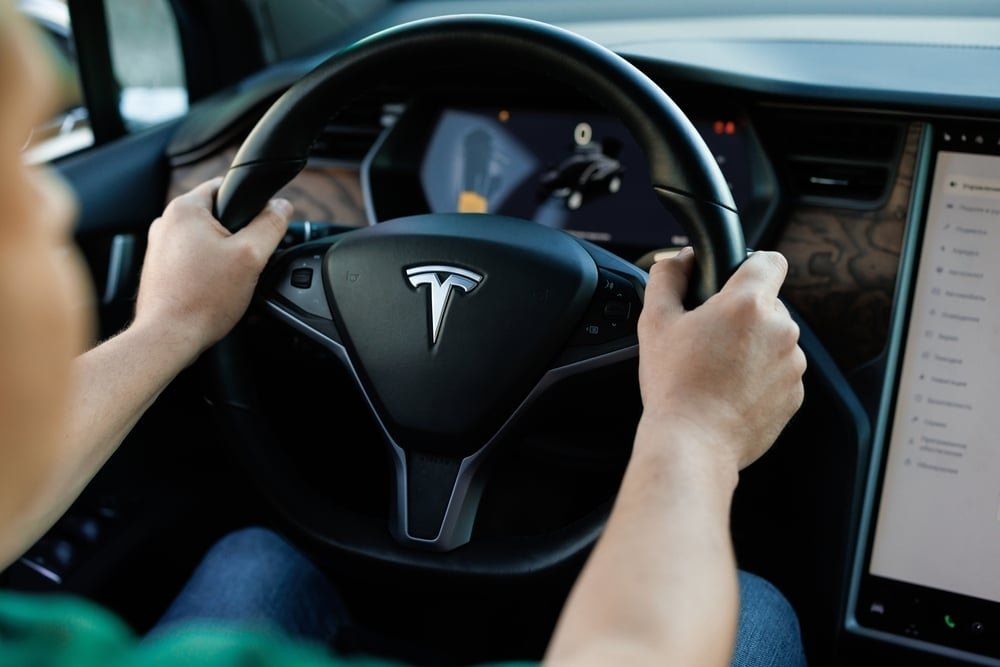
Tesla is pivoting its growth strategy toward a high-margin software ecosystem, as the company seeks to monetize its existing fleet of vehicles while its Robotaxi service faces temporary hurdles in total paid mileage.
The Robotaxi Reality Check
While Elon Musk remains focused on transforming Tesla (NASDAQ: TSLA) into an autonomous-driving powerhouse, the company’s Robotaxi service reported approximately 700,000 paid miles in the second quarter. This figure represents a 36% decline compared to the 1.1 million miles recorded in the first quarter. Despite this dip, the service has expanded into new U.S. metropolitan areas, gathering critical driving data to refine the purpose-built Cybercab for future mass deployment.
Scaling an autonomous fleet is a complex process that demands rigorous safety validation and navigation of evolving regulatory landscapes. Consequently, investors may need to exercise patience before autonomous rides become a primary revenue driver for the company.
Monetizing the Existing Fleet
While the Robotaxi business experiences growing pains, Tesla is successfully leveraging its massive base of millions of existing customers to drive revenue. Data from Similarweb indicates that Tesla’s mobile app reached 10.8 million monthly active users in July, marking a 36.8% increase year-over-year and a 16.5% jump from June.
The app is evolving into a central hub for the company’s software ecosystem. Recent updates have introduced enhanced vehicle controls, self-driving statistics, and the integration of xAI’s Grok assistant. This allows drivers to manage climate and media settings via voice commands, effectively increasing the utility and value of vehicles that are already on the road.
Software as a Service (SaaS) Growth
Tesla’s ability to generate recurring revenue without selling a single new unit is becoming its most compelling growth story. By the end of the second quarter, the company boasted 1.48 million active Full Self-Driving (FSD) customers—a 56% increase from the previous year. Notably, over 55% of new Tesla deliveries in North America now include the FSD package, cementing the company’s transition toward a software-centric business model.
This strategic focus is reflected in the bottom line: “Services and other revenue” reached $4.58 billion in the second quarter, a 50% year-over-year increase, accompanied by record gross profit and margins.
Ultimately, the long-term value proposition for Tesla lies not just in manufacturing, but in its capacity to maintain and expand revenue streams from its active fleet through software, subscriptions, and digital services. While the Robotaxi remains a significant prize, maximizing the value of the current fleet serves as a robust and immediate path for growth.