Categoria: news

  • Can USAC’s Q2 Surge Sustain Its Growth Narrative?

    Can USAC’s Q2 Surge Sustain Its Growth Narrative?

    USA Compression Partners (USAC) reported a robust second quarter for 2026, posting US$342.15 million in revenue and US$45.65 million in net income, sparking a debate on whether the firm can balance aggressive fleet expansion with its significant debt load.

    Evaluating the Growth-Debt Balancing Act

    To maintain a bullish outlook on USA Compression Partners, investors must trust that the demand for its natural gas compression fleet will remain resilient enough to sustain high utilization rates and consistent distributions. While the recent quarterly performance signals a positive trend, the partnership faces ongoing pressure to manage heavy capital expenditure requirements and a complex balance sheet.

    Financial Performance and Strategic M&A

    The latest earnings report highlights a clear year-over-year revenue increase, providing management with the necessary capital to fund planned horsepower additions and potential accretive acquisitions. However, this growth-oriented strategy places a spotlight on the company’s ability to maintain leverage control. While improved profitability offers a cushion, the firm remains vulnerable to the capital-intensive nature of the compression industry and specific customer concentration risks.

    Projecting Future Value and Market Divergence

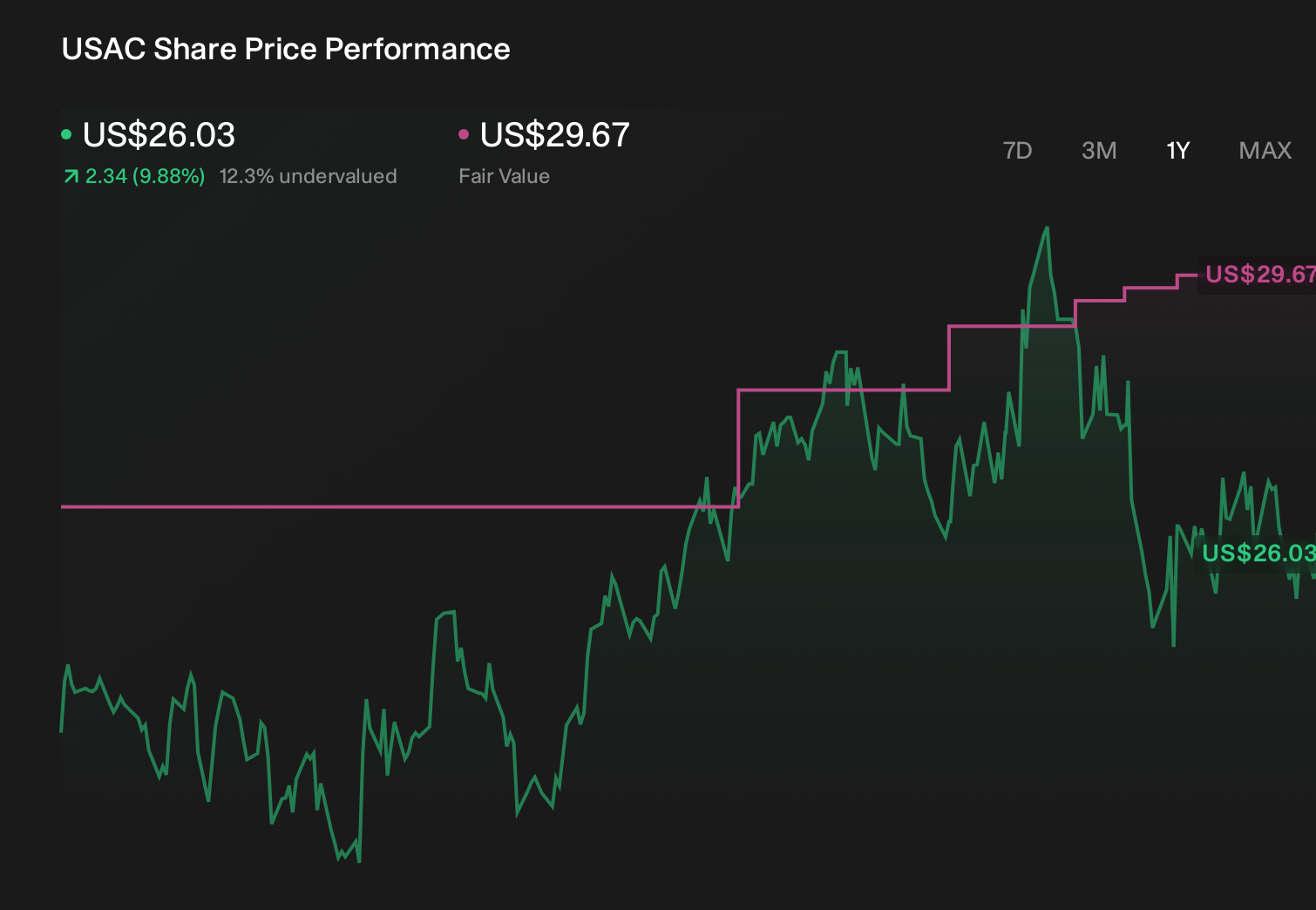
    The current narrative for USA Compression Partners projects revenue reaching US$1.5 billion and earnings of US$271.6 million by 2029. Despite these ambitious targets, market sentiment remains divided. Fair value estimates from the investment community currently range from US$21.57 to US$29.67 per share, reflecting a significant gap in how analysts perceive the partnership’s future resilience.

    For those weighing these contrasting expectations, the core issue remains whether USAC can successfully scale its compression fleet without compromising its financial stability. Investors are encouraged to look beyond the ticker symbol, scrutinizing the underlying data to determine if the potential 14% upside to the US$29.67 fair value outweighs the risks posed by rising costs and evolving contract terms.

  • Aon Q2 2026: Strategy and AI Drive Strong Performance

    Aon Q2 2026: Strategy and AI Drive Strong Performance

    Aon plc delivered a resilient second quarter in 2026, reporting 5% organic revenue growth and a 9% increase in adjusted earnings per share, according to the company’s earnings call held on Wednesday, July 29, 2026. CEO Gregory C. Case and CFO Edmund J. Reese highlighted that the firm’s “Aon United” strategy, fueled by the 3×3 Plan and significant investments in AI-enabled technology, has allowed the company to meet growing client demand amidst geopolitical uncertainty, cyber threats, and complex workforce transformations.

    Driving Growth Through Integrated Risk Capital

    Aon’s leadership emphasized that their organizational structure—uniting risk capital, human capital, and Aon Business Services (ABS)—is a key differentiator. By leveraging proprietary data and AI-enabled tools like the Aon Claims Copilot, the firm is addressing the increasing complexity faced by large and middle-market clients. The expansion of Claims Copilot across North America, Asia Pacific, and EMEA has bolstered Aon’s ability to generate actionable insights, contributing to over $10 billion in financial value recovered for clients through advocacy over the past decade.

    Aon United Strategy Overview

    Technology Investments and Market Expansion

    The company continues to capitalize on the digital infrastructure boom. Aon recently increased its data center lifecycle insurance program capacity to $5 billion, reflecting high demand from major technology companies. Furthermore, the firm is expanding its addressable market by connecting private equity firms and other capital providers with uncorrelated risk streams. In the Talent Solutions segment, Aon’s AI-sensitivity tools and the Aon Activate platform are helping organizations navigate workforce shifts and total rewards strategies with greater precision.

    Financial Performance and 2026 Outlook

    CFO Edmund J. Reese reported that organic revenue growth was broad-based, with all four solution lines achieving 5% growth. Adjusted operating margins expanded by 70 basis points to 28.9%, driven by operating leverage from the ABS platform and disciplined expense management. The company generated $483 million in free cash flow during the quarter, despite tax impacts from the NFP wealth sale.

    Q2 2026 Financial Highlights

    “Our results reflect the durability of our business model across market cycles,” said Reese. “We are generating sustainable organic revenue growth through consistent new business generation and high retention, translating that growth into strong earnings.” Aon reaffirmed its full-year 2026 guidance, targeting mid-single-digit or greater organic revenue growth and double-digit free cash flow expansion.

    Strategic Capital Allocation

    Aon remains focused on a disciplined capital allocation strategy. In the first half of 2026, the company deployed $1.1 billion toward share repurchases, signaling confidence that the firm’s share price remains below its intrinsic value. While continuing to invest in “tuck-in” acquisitions for its middle-market platform, management emphasized that they maintain significant financial flexibility to pivot toward the highest-return opportunities, whether through M&A or continued shareholder returns.

    As the firm moves into the second half of the year, leadership remains optimistic about the trajectory of the business. By focusing on integrated solutions that address risk, capital, and people, Aon expects to continue delivering value through complex market environments, regardless of fluctuations in traditional pricing cycles.

  • Ardelyx Shares Plunge 19.7% Despite Upgraded Revenue Outlook

    Ardelyx Shares Plunge 19.7% Despite Upgraded Revenue Outlook

    Ardelyx (ARDX) shares tumbled 19.7% today, as investors reacted to a combination of raised revenue guidance for IBSRELA and narrowing company losses, highlighting persistent concerns over the firm’s concentrated product portfolio.

    Commercial Execution vs. Portfolio Concentration

    To maintain a long-term position in Ardelyx, investors must weigh the potential of its gastrointestinal and kidney franchise to transition from narrowing losses to sustainable profitability. While the upward revision of IBSRELA revenue guidance underscores a strong near-term catalyst for commercial execution, it fails to mitigate the primary risk facing the company: a heavy reliance on tenapanor-based products. This concentration remains particularly vulnerable to ongoing reimbursement hurdles and legal uncertainties, specifically regarding XPHOZAH and Medicare access.

    Tracking Guidance and Revenue Milestones

    The company’s February 2026 outlook for IBSRELA and XPHOZAH serves as a critical benchmark for stakeholders. By upgrading IBSRELA revenue expectations while reiterating XPHOZAH targets, Ardelyx has provided a clearer framework for investors to evaluate whether execution across these two core products is sufficient to offset the inherent risks of a narrow product base.

    Long-Term Projections and Market Skepticism

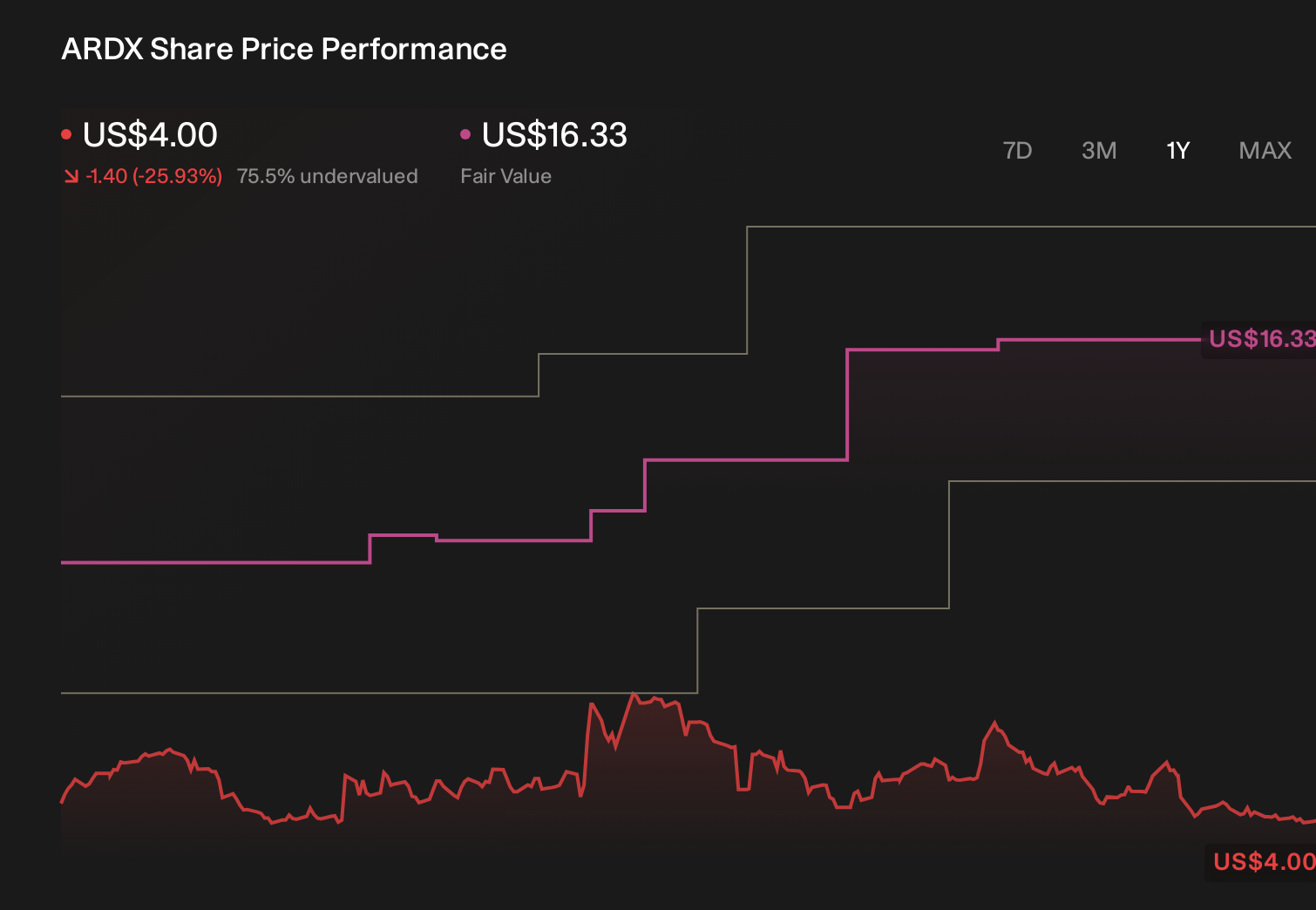
    Despite the optimistic IBSRELA outlook, the market remains cautious about the firm’s exposure to tenapanor-related headwinds. Current internal projections for Ardelyx estimate revenues reaching US$1.0 billion with earnings of US$317.0 million by 2029. However, some analysts maintain a more conservative outlook, suggesting that even with improved guidance, the company could face significant challenges if reimbursement setbacks continue to plague its limited portfolio. These analysts note that previous forecasts—which projected US$935.2 million in revenue and US$186.3 million in earnings by 2029—may require substantial revisions following the latest financial results.

  • OpenAI Completes $7 Billion Employee Stock Tender Offer

    OpenAI Completes $7 Billion Employee Stock Tender Offer

    OpenAI has successfully closed a $7 billion employee tender offer, allowing staff to cash out portions of their equity as the artificial intelligence giant continues to navigate its path toward a potential public market debut.

    Strategic Implications of the Tender Offer

    While the company filed confidentially with the Securities and Exchange Commission in June to lay the groundwork for a possible IPO later this year, the completion of this tender offer signals that a public listing may not be imminent. In an era where tech companies frequently choose to remain private for extended periods, private tenders have become a standard mechanism. This approach enables firms to offer employees liquidity and realize the value of their stock compensation without the rigorous regulatory and operational burdens associated with an immediate public offering.

    OpenAI did not respond to requests for comment regarding the transaction prior to publication.

    Financial Performance and Future Outlook

    The move comes amid a period of introspection for the company. Last month, CEO Sam Altman acknowledged recent hurdles, stating, “we did not have our best 12 months ever, which is mostly my fault, but we are about to have our best 12 months to date.” Historically, companies seeking an IPO aim to demonstrate robust financial health to attract institutional investors; however, reports from The Wall Street Journal in April indicated that OpenAI had previously fallen short of its internal financial targets.

    Competitive Pressure and Strategic Shifts

    Despite its explosive growth and market-leading products, OpenAI faces mounting pressure to optimize its operations. The potential public debut of competitor Anthropic—which reportedly achieved profitability earlier this year—provides additional incentive for OpenAI to refine its financial narrative. The latest tender offer may indicate that the company intends to delay its IPO to allow its new strategic direction, which emphasizes narrowing its focus and expanding its enterprise business, to gain further market traction.

  • Tesla’s Secret Growth Engine: Why Software Beats Car Sales

    Tesla’s Secret Growth Engine: Why Software Beats Car Sales

    Tesla is pivoting its growth strategy toward a high-margin software ecosystem, as the company seeks to monetize its existing fleet of vehicles while its Robotaxi service faces temporary hurdles in total paid mileage.

    The Robotaxi Reality Check

    While Elon Musk remains focused on transforming Tesla (NASDAQ: TSLA) into an autonomous-driving powerhouse, the company’s Robotaxi service reported approximately 700,000 paid miles in the second quarter. This figure represents a 36% decline compared to the 1.1 million miles recorded in the first quarter. Despite this dip, the service has expanded into new U.S. metropolitan areas, gathering critical driving data to refine the purpose-built Cybercab for future mass deployment.

    Scaling an autonomous fleet is a complex process that demands rigorous safety validation and navigation of evolving regulatory landscapes. Consequently, investors may need to exercise patience before autonomous rides become a primary revenue driver for the company.

    Monetizing the Existing Fleet

    While the Robotaxi business experiences growing pains, Tesla is successfully leveraging its massive base of millions of existing customers to drive revenue. Data from Similarweb indicates that Tesla’s mobile app reached 10.8 million monthly active users in July, marking a 36.8% increase year-over-year and a 16.5% jump from June.

    The app is evolving into a central hub for the company’s software ecosystem. Recent updates have introduced enhanced vehicle controls, self-driving statistics, and the integration of xAI’s Grok assistant. This allows drivers to manage climate and media settings via voice commands, effectively increasing the utility and value of vehicles that are already on the road.

    Software as a Service (SaaS) Growth

    Tesla’s ability to generate recurring revenue without selling a single new unit is becoming its most compelling growth story. By the end of the second quarter, the company boasted 1.48 million active Full Self-Driving (FSD) customers—a 56% increase from the previous year. Notably, over 55% of new Tesla deliveries in North America now include the FSD package, cementing the company’s transition toward a software-centric business model.

    This strategic focus is reflected in the bottom line: “Services and other revenue” reached $4.58 billion in the second quarter, a 50% year-over-year increase, accompanied by record gross profit and margins.

    Ultimately, the long-term value proposition for Tesla lies not just in manufacturing, but in its capacity to maintain and expand revenue streams from its active fleet through software, subscriptions, and digital services. While the Robotaxi remains a significant prize, maximizing the value of the current fleet serves as a robust and immediate path for growth.

  • CleanSpark Bets Big: $11.6B Shift to Data Centers

    CleanSpark Bets Big: $11.6B Shift to Data Centers

    CleanSpark (NASDAQ:CLSK) reported fiscal third-quarter revenue of $138 million—a 1% sequential increase—while officially pivoting its long-term strategy from pure Bitcoin mining toward large-scale digital infrastructure via a massive data center lease in Georgia.

    A Multi-Billion Dollar Infrastructure Play

    CEO Matthew Schultz announced the company’s most significant transaction to date: a 20-year triple-net lease for its Sandersville, Georgia campus with a major, undisclosed global technology firm. The deal encompasses nearly 250 megawatts of gross capacity and 175 megawatts of critical IT load.

    The contract is valued at approximately $6.6 billion in initial revenue. With two five-year extension options, the total value could climb to $11.6 billion over three decades. CleanSpark projects an average annual net operating income of $330 million, with the tenant assuming responsibility for taxes, insurance, and maintenance costs.

    Sandersville Development Timeline

    The company expects the first data hall at the Sandersville site to go live in the fourth quarter of 2027. Site preparation on the 122-acre greenfield parcel has been underway for months, operating independently from the firm’s existing Bitcoin mining infrastructure in the region.

    Chief Business Officer Harry Sudock noted that while the existing energized substation offers some utility, the development is primarily a greenfield project. CleanSpark has already ordered and prepaid for essential long-lead equipment to ensure the facility meets its “ready-for-service” deadline.

    Capital Strategy and Financial Health

    CFO Gary Vecchiarelli estimates capital expenditures for the Sandersville expansion will range between $10 million and $12 million per megawatt, totaling roughly $1.75 billion to $2.1 billion. The company intends to utilize project-based debt financing for the majority of the build-out, having already secured the necessary equity portion.

    Crucially, management confirmed that CleanSpark will not dilute shareholders to fund the Sandersville project. As of June 30, the company maintained a strong liquidity position of $917 million, comprising $200 million in cash and nearly 14,000 Bitcoin.

    Mining Operations and Digital Asset Strategy

    During the third quarter, CleanSpark recorded an average revenue of approximately $72,000 per Bitcoin mined. While this reflects a 5% dip from the previous quarter, overall revenue growth was sustained by higher hash rates and increased uptime.

    The company continues to treat its Bitcoin holdings as a strategic capital asset. Through digital asset management, CleanSpark generated $8.6 million in cash during the quarter, often selling production at prices 7% above spot. Management maintains the flexibility to use these holdings for derivative strategies, collateralized borrowing, or reinvestment into accretive projects.

    Expansion Outlook in Texas

    CleanSpark’s Texas portfolio—comprising the Sealy and Brazoria campuses—remains under an exclusivity agreement with the same counterparty involved in the Georgia lease. While discussions are ongoing, regulatory delays regarding large-load interconnection projects in Texas have slowed progress.

    The company is awaiting a Public Utility Commission of Texas hearing on August 20 to clarify the status of its “Batch Zero” projects. Despite these regulatory hurdles, CleanSpark remains optimistic, reporting 1.8 gigawatts of contracted capacity and high confidence in surpassing 2.1 gigawatts as the ERCOT review process concludes.

    The Role of Bitcoin in Infrastructure

    CleanSpark views Bitcoin mining as a strategic bridge. It allows the firm to monetize power loads quickly while long-term data center projects are under development. At Sandersville, mining will continue until the data center cutover, utilizing modular, immersion-cooled equipment that can be redeployed elsewhere once the transition is complete.

  • Par Pacific Q2 Profits Surge: Refining Gains Drive Results

    Par Pacific Q2 Profits Surge: Refining Gains Drive Results

    Par Pacific (NYSE:PARR) reported a robust second quarter, achieving an adjusted net income of $499 million, or $10.10 per share, driven by strong refining margins, high throughput, and strategic commercial execution during a period of market volatility.

    Financial Performance and Refining Growth

    CFO Shawn Flores confirmed that adjusted EBITDA reached $571 million for the quarter. The refining segment was a primary engine for this growth, with adjusted EBITDA climbing to $552 million, a significant increase from the $69 million reported in the first quarter. This surge was largely supported by supply disruptions in crude and refined products that tightened market conditions.

    The company’s combined refining index averaged approximately $33 per barrel, significantly outpacing the 2025 full-year average of $12.40 per barrel. System-wide refining capture hit 125%, or 112% after normalizing for Hawaii price-lag effects and Wyoming FIFO impacts.

    Market Dynamics and Operational Efficiency

    CEO Will Monteleone noted that refined-product cracks remained well above historical norms. He credited this favorable environment to reduced exports from the Persian Gulf and Russia, combined with conservative refining runs in Asia and restrictive trade policies that kept global inventories lean.

    Operational highlights included:

    • Hawaii: Throughput reached 73,200 barrels per day with production costs of $6.43 per barrel. Capture was 124%, bolstered by a $77 million net price-lag benefit.
    • Tacoma, Washington: The refinery achieved a production record of 41,200 barrels per day at 98.1% utilization, with production costs at $4.21 per barrel.
    • Montana: Throughput averaged 53,000 barrels per day. The facility successfully completed an April crude-unit outage, with performance reaching 62,000 barrels per day in May and June.
    • Wyoming: Throughput was 14,000 barrels per day, impacted by an April outage, while maintaining a margin capture of 118%.

    Turnaround Impact and Future Outlook

    The Hawaii refinery initiated a plant-wide turnaround in late June. EVP of Refining and Logistics Richard Creamer confirmed that the project was completed safely and within budget. While the financial impact of this maintenance is expected to weigh on third-quarter results, the company has proactively built inventory to mitigate supply disruptions.

    For the third quarter, Par Pacific projects a consolidated throughput midpoint of 182,000 barrels per day. The company is also scaling its renewable diesel business, which reached 3,000 barrels per day in June, marking the beginning of its commercial ramp-up.

    Balance Sheet and Capital Allocation

    Par Pacific strengthened its financial position during the quarter by completing a $500 million senior unsecured notes offering. This move allowed for a reduction in gross term debt by over $130 million and a decrease in asset-based lending by $78 million, resulting in a total net debt reduction of more than $220 million.

    As of June 30, the company held approximately $1.4 billion in total liquidity. Regarding future capital allocation, Monteleone emphasized a dynamic approach, prioritizing debt reduction while continuing to evaluate internal growth projects and potential share repurchases. The company also expects to utilize a significant portion of its $700 million net operating loss balance throughout 2026, potentially shifting to a standard federal tax position by 2027.

  • Corsair Q2 Earnings: Record Margins and Raised 2026 Outlook

    Corsair Q2 Earnings: Record Margins and Raised 2026 Outlook

    Corsair Gaming (NASDAQ:CRSR) reported a robust second quarter for 2026, characterized by record-high gross margins, a return to profitability, and a strengthened full-year outlook. Despite ongoing market pressure on DIY PC components due to elevated memory prices, the company’s expansion in the Gamer and Creator Peripherals segment—bolstered by its sim racing and creator product lines—effectively offset these headwinds.

    Financial Performance and Tariff Windfalls

    Revenue for the second quarter reached $314.3 million. While this represents a 2% dip year-over-year, it successfully outperformed the midpoint of the company’s own guidance. Notably, gross profit surged 21% to $104.3 million, with gross margins hitting a company-record 33.2%—an expansion of 640 basis points.

    The bottom line saw a significant turnaround, with GAAP net income reaching $9.1 million ($0.06 per diluted share), compared to a $20.3 million loss in the same period last year. Adjusted EBITDA climbed to $30.8 million, up from $8.1 million.

    CFO Gordon Mattingly attributed a portion of this success to a $15.6 million refund of previously paid tariffs under the International Emergency Economic Powers Act. Excluding this one-time benefit, the company would have still outperformed its previous guidance, signaling organic operational strength.

    Expansion in Sim Racing and Elgato

    The Gamer and Creator Peripherals segment remains a vital engine for growth, with revenue rising 13% to $115.9 million and gross margins reaching 44.9%. CEO Thi La highlighted the Fanatec sim racing brand as a primary driver, fueled by new product releases and direct-to-consumer sales.

    Strategic growth continued with the acquisition of Trak Racer, a hardware brand specializing in cockpits and accessories. Corsair plans to integrate Trak Racer’s mechanical products under the Fanatec umbrella, with a more significant financial impact expected in 2027. Additionally, a new licensing partnership with Nissan Motor further cements Fanatec’s premium market position.

    Meanwhile, the Elgato brand saw massive engagement, with Marketplace revenue and transactions doubling in the first half of 2026. A minority investment in Bitfocus, a professional show-control software firm, is set to further integrate Elgato into the live-event and broadcast sectors.

    Market Dynamics: DIY PC and AI Workstations

    The Gaming Components and Systems segment generated $198.5 million, a 9% decline as customers delayed DIY PC builds in response to memory pricing. However, Corsair views this demand as deferred rather than lost. Management noted that channel inventories have normalized, and run rates began to improve toward the end of the quarter.

    Memory revenue itself grew 17%, driven by strong North American market share. Looking ahead, Corsair is also positioning itself for the $22 billion desktop AI PC market. While the segment is in its early stages due to tight GPU allocations, Corsair is targeting prosumers and small businesses, anticipating revenue growth from this sector starting in late 2027.

    Operational Efficiency and 2026 Guidance

    Operational discipline remains a priority. Operating expenses dropped by $6.1 million year-over-year, and cash provided by operating activities soared 148% to $74.8 million. Remarkably, Corsair generated more operating cash in the first half of 2026 than in the entirety of 2024 and 2025 combined.

    Reflecting this momentum, Corsair raised its full-year 2026 guidance:

    • Revenue: $1.4 billion to $1.47 billion.
    • Adjusted EBITDA: $121 million to $131 million.
    • Non-GAAP Diluted EPS: $0.85 to $0.94.

    Management anticipates a strong second half, citing the upcoming launch of Grand Theft Auto VI as a potential catalyst for holiday sales, alongside continued gains in memory market share and the expansion of the Fanatec and Elgato ecosystems.

  • Teva Q2 2026: Innovative Growth Drives Financial Pivot

    Teva Q2 2026: Innovative Growth Drives Financial Pivot

    Teva Pharmaceutical Industries reported a robust second quarter for 2026, characterized by significant growth in its innovative portfolio and a successful shift in its core financial strategy. During the earnings call held on Wednesday, July 29, 2026, at 8:00 a.m. ET, the company highlighted how high-performing brands—AUSTEDO, AJOVY, and UZEDY—are successfully offsetting headwinds from generic REVLIMID losses and positioning the firm for long-term value creation.

    Driving Growth Through Innovation

    CEO Richard Francis emphasized that the “Pivot to Growth” strategy, launched in 2023, is delivering tangible results. The innovative portfolio grew by 43% year-over-year, with AUSTEDO up 40%, UZEDY up 43%, and AJOVY up 56%. Consequently, Teva has raised its full-year revenue guidance for these key assets.

    AUSTEDO remains a primary growth driver, with U.S. revenue reaching $676 million. The company is confident in its path to exceeding $3 billion in peak sales. Meanwhile, UZEDY has established itself as a leader in long-acting injectables for schizophrenia, capturing significant market share. Building on this momentum, Teva is preparing for the Q4 launch of its olanzapine long-acting injectable, targeting a massive unmet need in the schizophrenia treatment market.

    Pipeline Expansion and Clinical Milestones

    The company’s R&D division, led by Dr. Eric Hughes, is executing on eight major pipeline milestones this year. A key development is the inclusion of ecopipane for Tourette syndrome, which is currently under FDA review with a potential launch in the first half of 2027.

    Furthermore, Teva announced two new indications for its pipeline asset duvaqitub: hidradenitis suppurativa and fibrosthenotic Crohn’s disease. These additions are expected to significantly broaden the drug’s therapeutic impact. Dr. Hughes also shared promising proof-of-concept data for the anti-IL-15 program in vitiligo, noting that 75% of patients reported improvements in facial appearance after just two doses.

    Financial Transformation and Market Positioning

    CFO Eli Kalif highlighted that Teva’s financial profile is fundamentally changing. Despite the impact of generic REVLIMID, the company’s underlying business remains stable. Notable financial achievements include:

    • An 80-basis-point increase in non-GAAP gross margins.
    • A 31% increase in free cash flow.
    • An upgrade to investment grade by Fitch, validating the company’s disciplined capital allocation.

    The company’s commitment to its “Pivot to Growth” strategy is further evidenced by its focus on biosimilars, where it now has 15 products on the market and 14 in the pipeline. With a target of exceeding $800 million in biosimilar revenue by 2027, Teva is solidifying its role as a key player in the biopharma space.

    Looking Ahead: Strategic Focus

    Teva is moving toward a direct ordinary share listing on the New York Stock Exchange, expected in September, to enhance accessibility for a broader range of investors. As the company continues to execute its strategy, it remains focused on reaching its 30% operating margin target by 2027, driven by a portfolio increasingly weighted toward high-value innovation.

  • PLBY Group Returns to Profitability in Strong Q2 Report

    PLBY Group Returns to Profitability in Strong Q2 Report

    PLBY Group (NASDAQ: PLBY) posted a significant financial turnaround in the second quarter of 2025, reporting revenue growth, a return to operating profitability, and positive operating cash flow. The company’s performance was driven by the sustained momentum of its Honey Birdette brand, expanded licensing deals, and early traction in its media and experience-based initiatives.

    Financial Performance and Operational Turnaround

    Quarterly revenue reached approximately $31.2 million, marking a 10.9% increase compared to $28.1 million in the same period last year. Adjusted EBITDA climbed to $7 million—up from $3.5 million a year ago—representing a 22% margin and the company’s sixth consecutive quarter of positive adjusted EBITDA.

    The bottom line saw a major shift, with operating income reaching $3 million, a stark contrast to the $5.9 million operating loss reported in the prior-year period. Net income hit approximately $200,000 (break-even per share), moving away from the $7.7 million net loss, or $0.08 per share, recorded previously. Additionally, the firm generated roughly $2 million in positive operating cash flow.

    Honey Birdette Growth Trajectory

    The Honey Birdette lingerie brand remains a cornerstone of growth, with revenue rising 18% year-over-year to $19.5 million. The brand achieved 15% total comparable sales growth, fueled by a 13% increase in retail and a 16% surge in online sales. According to CFO and COO Marc Crossman, this marks seven consecutive quarters of double-digit growth in brick-and-mortar comparable store sales.

    Crossman attributed these results to full-price selling strategies and improved product margins. While the company is exploring new physical store locations, CEO Ben Kohn noted a selective approach due to high rent costs, emphasizing that e-commerce remains a capital-efficient avenue for future expansion.

    Licensing Strategy and Future Media Projects

    Licensing revenue grew to $11.2 million, supported by high-profile partnerships including a sold-out Supreme collaboration and an expanding relationship with Missguided. Although transitionary shifts in the Chinese market—where partner UTG is moving to an owner-operator structure—had a minor impact, the company maintains over $320 million in contracted, unrecognized licensing revenue.

    Kohn highlighted that future licensing growth will target “white space” in categories like gaming. Simultaneously, the company is pivoting toward digital media to build recurring revenue, having signed its first sponsorship agreements for short-form video content, which will reflect in third-quarter results.

    Engagement remains high; a recent model search contest with Honey Birdette drew nearly 50,000 contestants, generating 2.5 times the revenue of the previous iteration. A follow-up, the “Great Playmate Search,” is slated for later this year.

    Debt Reduction and Strategic Outlook

    PLBY Group ended the quarter with $37.1 million in cash. Total debt now stands at $144.9 million, down from $159.9 million at the end of 2025, following a $15 million repayment. Management anticipates that remaining UTG proceeds will bring gross debt down to approximately $108 million by January 2028, with leverage expected to drop below three times.

    Furthermore, the company has initiated a share repurchase program to buy back 16.6 million shares—nearly 15% of outstanding stock—for $17 million total. To bolster its leadership, PLBY also appointed former 2K and Golden State Warriors CFO Jennifer Cabalquinto as an independent director while continuing to advance plans for a new flagship Playboy Club in Miami.