Mexico currently faces a significant energy gap, consuming roughly 9 billion cubic feet per day (bcfd) of natural gas while importing 6.5 bcfd—or 75% of its total demand—via pipelines from the United States. Observing the massive success of U.S. shale production, the Mexican government has appointed a commission to evaluate how to unlock its own domestic potential and reduce this heavy reliance on imports.
The Road to 2030: Pemex and Power Expansion
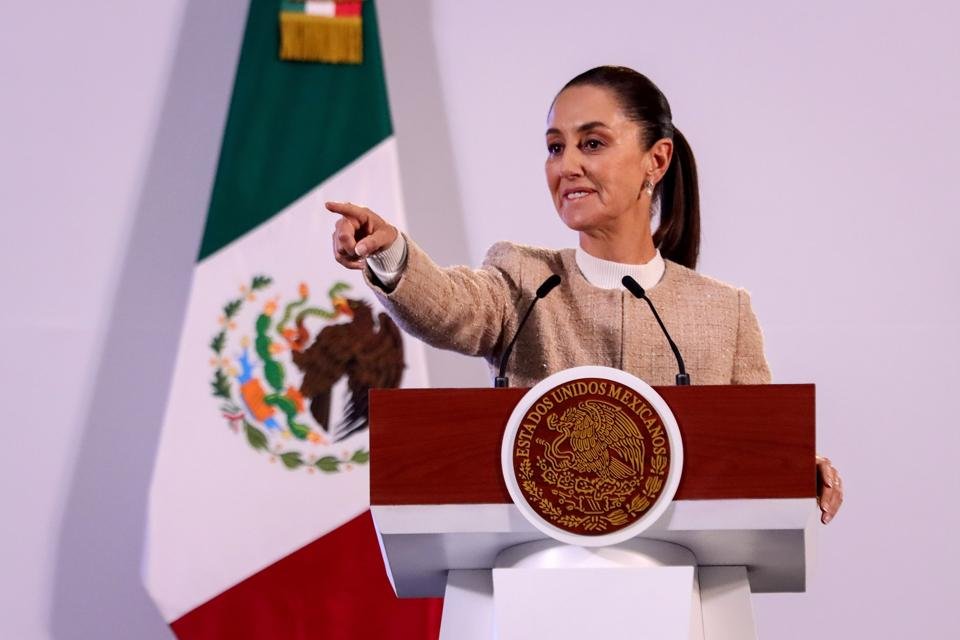
State-owned oil company Pemex aims to boost domestic production to 4 bcfd by 2030. While this marks a clear step forward, it remains insufficient to bridge the supply deficit entirely. Simultaneously, Mexico has unveiled an ambitious $42 billion investment plan to increase power capacity by 32 gigawatts (GW) by 2030. This strategy includes the construction of five combined-cycle gas plants and a major push toward renewables, with President Claudia Sheinbaum targeting an increase in renewable energy from 24% to 38% of total power generation.
Untapped Potential: Northern vs. Southern Basins
Mexico holds over 140 trillion cubic feet (Tcf) of unconventional gas resources, primarily located in northern shale and tight sand basins. While significant, this pales in comparison to the 281 Tcf found in the U.S. Delaware Basin—the most documented oil and gas deposit by the USGS. The proximity of the Delaware Basin suggests that the technical blueprint for success is already available just across the border.
Table: Unconventional gas plays in Mexico.
Development in the north faces unique hurdles. The Burgos basin, geologically linked to the highly productive Eagle Ford play in Texas, is hampered by security risks related to organized crime. Meanwhile, the Sabinas-Burro-Picachos play remains underdeveloped due to regulatory friction with opposition-led state governments.
The Tampico-Misantla Fracking Ban
The southern Tampico-Misantla basin contains 20 Tcf of unconventional gas and, more importantly, 35 billion barrels of unconventional crude oil. Despite its value, the government commission has advised against fracking here. The region is densely populated, home to indigenous tribes opposed to the practice, and sits atop critical freshwater aquifers essential for agriculture and drinking water.
President Sheinbaum has solidified this stance, declaring that unconventional exploitation in these areas is off the table unless deep saline reservoirs can be confirmed. Furthermore, any future projects must include an independent monitoring system for aquifer integrity, environmental impact, and seismic activity. These mandates add significant financial pressure to Pemex, which already carries one of the largest debt loads of any national energy company globally.
Environmental Risks and Technical Solutions
Water management remains a primary concern. Fracking a single horizontal well can require up to 20 million gallons of water. Additionally, the handling of produced wastewater—which often requires expensive reinjection or surface treatment—poses the risk of induced seismicity, a phenomenon observed in Oklahoma and the Permian Basin.
Moving forward, the government is focusing on northern basins that contain saltwater rather than freshwater, making them more viable for current fracking technology. Success will depend on the cost-effectiveness of treating this saltwater for industrial use. By adopting horizontal drilling techniques and “stacked pay” designs perfected in the U.S. Delaware Basin, Mexico hopes to leverage established expertise to finally secure its energy future.