Blog

  • Voyager Stock Soars 70% on Explosive Q2 Growth

    Voyager Stock Soars 70% on Explosive Q2 Growth

    Voyager Technologies (NYSE: VOYG) saw its stock price climb approximately 70% this past week after the aerospace firm reported robust second-quarter growth metrics that significantly outperformed market expectations.

    Record-Breaking Revenue and Backlog

    The company’s financial momentum is clear: Voyager’s revenue surged 51% sequentially, reaching $52.7 million. This growth is underpinned by record quarterly bookings of $113 million, which pushed the company’s total backlog to $335.5 million as of June 30.

    Strategic Drivers: Defense and Acquisitions

    A primary catalyst for this expansion is the Trump Administration’s “Golden Dome” missile defense project. Voyager secured $84 million in Golden Dome-related awards across various technology platforms and customers. Furthermore, the recent acquisition of Astrobotic has deepened the company’s integration with NASA and its critical lunar lander initiatives.

    “Few companies can claim what Voyager occupies today: meaningful participation across defense technology, national security, and the rapidly expanding space economy,” said CEO Dylan Taylor.

    Path to Profitability and Future Outlook

    Despite the revenue spike, Voyager remains pre-profit as it prioritizes heavy investment in advanced propulsion, resilient space architectures, and sophisticated electronics. The company reported an adjusted loss of $41 million, or $0.70 per share—a figure that notably beat Wall Street’s anticipated loss of $0.91 per share.

    Looking ahead, Voyager has issued optimistic full-year guidance, projecting revenue growth of 66% to 84%, targeting between $275 million and $305 million for 2026.

    Strengthening Defense Partnerships

    Voyager’s positioning within the defense sector continues to solidify. On Thursday, the company announced a new contract with defense titan RTX to provide propulsion technology for the Standard Missile-3 (SM-3) and the next-generation interceptor program, further cementing its role in national security infrastructure.

  • Stepan Q2 2026 Earnings: Profits Surge 102% Amid Growth

    Stepan Q2 2026 Earnings: Profits Surge 102% Amid Growth

    Stepan Company (SCL) reported a robust second quarter for 2026 on Wednesday, July 29, with net income soaring 102% to $22.9 million, or $1.00 per diluted share, compared to $11.3 million in the same period last year.

    Operational Performance and Strategic Growth

    Stepan’s leadership attributed the strong quarterly results to broad-based volume growth, effective margin recovery, and the successful implementation of “Project Catalyst.” Adjusted EBITDA reached $74 million, a 45% increase year-over-year. Organic volume grew by 6%, with gains across all primary end markets, while net sales climbed 15% to $684 million.

    President and CEO Luis Rojo highlighted that the company achieved its strongest safety performance on record over the last 12 months. “The second quarter was a strong quarter of execution for Stepan,” said Rojo, noting that the firm is successfully capturing market share in strategic segments.

    Project Catalyst and Workforce Adjustments

    The company remains on track with its Project Catalyst initiative, a two-year plan designed to optimize assets and improve organizational agility. The program aims for $100 million in pre-tax savings, with 60% expected within 2026. As part of this efficiency drive, Stepan announced a reduction of approximately 100 salaried positions to be implemented in the third quarter.

    Restructuring costs for the full year are projected between $75 million and $80 million. These costs are linked to the closure of the Fieldsboro, New Jersey facility and the decommissioning of specific assets at the Millsdale, Illinois and Stalybridge, UK sites.

    Segment Breakdown: Surfactants and Polymers

    The Surfactants segment saw net sales rise 18% to $484 million. Organic volume grew by 7%, driven by strong demand in industrial cleaning, laundry, construction, and oil field applications. Meanwhile, the Polymers segment recorded a 9% increase in net sales to $178 million, fueled by a double-digit surge in rigid polyols and spray foam product lines in North America.

    CFO Ruben Velasquez noted that while the company saw significant volume growth, $5 million to $10 million of the quarterly EBITDA was likely influenced by customer “pre-buying” in response to geopolitical and raw material uncertainties. The company ended the quarter with a net leverage ratio of 2.5 times, down from 2.7 times in the first quarter.

    Outlook for the Second Half of 2026

    Looking ahead, Stepan remains focused on cash generation and balance sheet deleveraging. While the company faces ongoing market uncertainties, management expressed confidence in delivering full-year adjusted EBITDA growth and maintaining positive free cash flow. The ramp-up of the Pasadena, Texas facility continues to serve as a critical driver for future growth in specialty alkoxylates, with the site currently operating at approximately 75% to 80% capacity.

  • Halozyme (HALO) Soars 25% on Revenue Hike and Buybacks

    Halozyme (HALO) Soars 25% on Revenue Hike and Buybacks

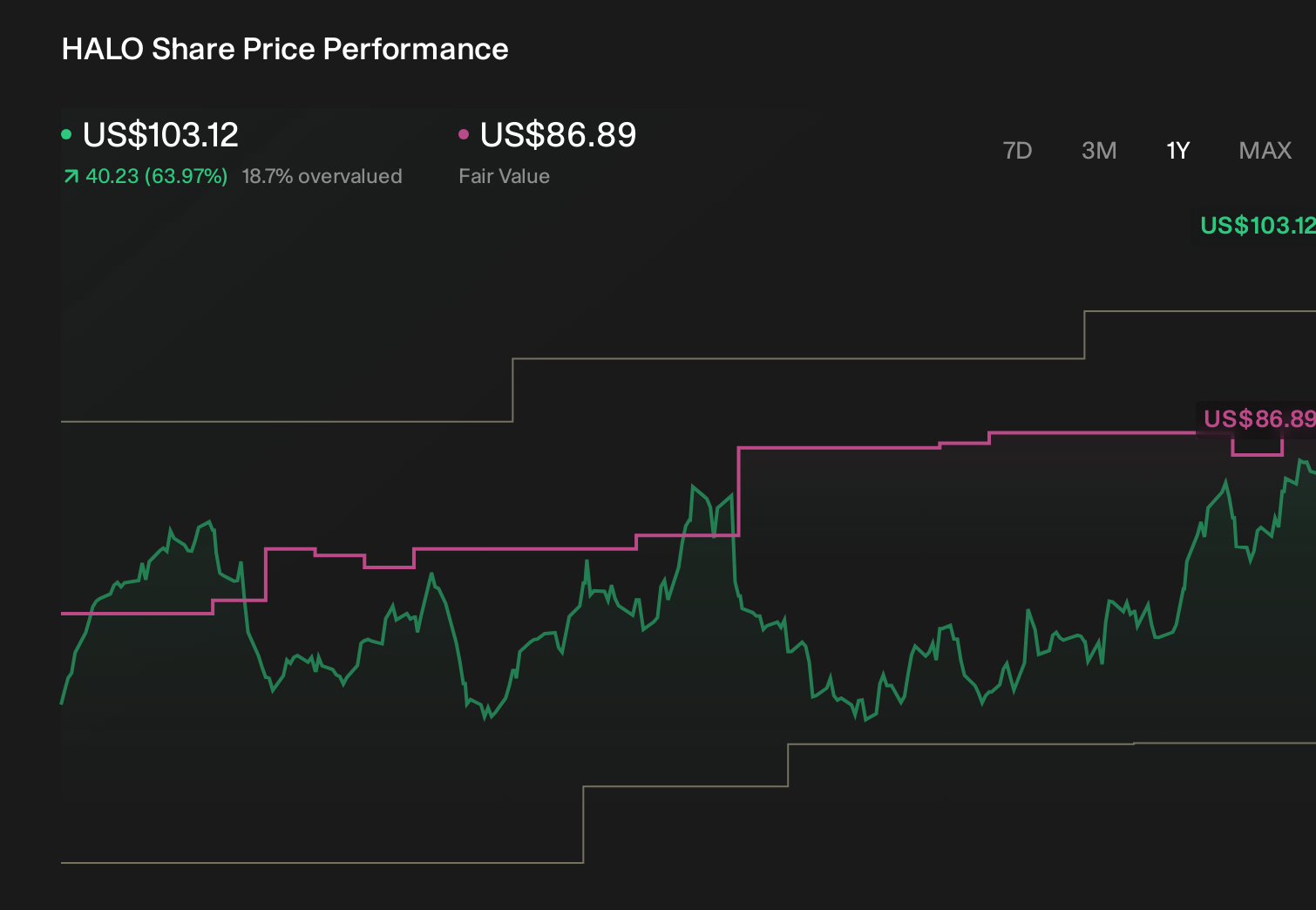
    Halozyme Therapeutics (HALO) shares surged 24.9% following the company’s decision to raise its 2026 revenue guidance and aggressively increase share buybacks, signaling confidence in the long-term scalability of its proprietary ENHANZE technology.

    The ENHANZE Revenue Engine

    To maintain a position in Halozyme, investors must weigh the potential of the ENHANZE royalty model—which converts partner drug launches into high-margin cash flows—against persistent regulatory, legal, and partner concentration risks. While the upgraded 2026 revenue outlook provides a clear near-term catalyst for growth, the company remains heavily reliant on a select group of major products to drive the majority of its earnings and royalties.

    Aggressive Capital Allocation

    A major driver of recent investor optimism is the completion of US$750 million in buybacks under the 2024 program, supplemented by an additional US$175.01 million authorization for 2026. These substantial repurchases, paired with increased revenue guidance, highlight the company’s commitment to shareholder returns. However, this strategy places greater emphasis on the resilience of ENHANZE-driven streams, as any disruption to key partnerships or legal protections could have a more pronounced impact on per-share value.

    Navigating Legal and Patent Hurdles

    Despite a strong quarterly performance, legal and patent challenges surrounding the ENHANZE platform remain a critical area that requires careful investor scrutiny. These unresolved issues continue to cast a shadow over the company’s long-term operational stability.

    Future Projections and Valuation

    Halozyme’s internal projections target US$2.1 billion in revenue and US$1.1 billion in earnings by 2029. While some optimistic analysts previously modeled figures as high as US$2.3 billion in revenue and US$1.2 billion in earnings by 2029, the recent guidance hike serves as a double-edged sword: it may validate the durability of the ENHANZE model or heighten concerns regarding the dependency of these targets on favorable litigation and patent outcomes.

  • Liberty Latin America Q2 2026: AI, M&A and Strategic Growth

    Liberty Latin America Q2 2026: AI, M&A and Strategic Growth

    Liberty Latin America (LILA) executives addressed key operational shifts during their Q2 2026 earnings call, highlighting a major AI partnership with Amdocs and a disciplined approach to portfolio optimization and capital allocation.

    Strategic AI Integration and Operational Efficiency

    CEO Balan Nair detailed the company’s new partnership with Amdocs, a domain-specific AI transformation initiative designed to replace legacy systems. The project is set to begin in Q4 2026, aiming to derisk operations and guarantee significant cost savings, with benefits expected to materialize immediately upon implementation.

    Puerto Rico Market Dynamics and Portfolio Strategy

    Addressing the competitive landscape in Puerto Rico, Nair attributed recent postpaid growth to reengineered sales channels, talent acquisition, and targeted network investments. These efforts have resulted in positive port-in ratios against major competitors like T-Mobile and Claro. Regarding the broader portfolio, Nair emphasized that “everything is for sale at the right price,” reinforcing a commitment to market rationalization. He added that a potential spin-off for the Puerto Rican business remains a key option under consideration, with the unit currently self-funding its own operations.

    Liberty Networks: Growth and Expansion

    Nair expressed a bullish outlook for the Liberty Networks business, noting that it warrants a higher multiple due to exceptional cash conversion rates. The company is actively pursuing both organic and inorganic growth, with new infrastructure builds underway in Colombia, Mexico, El Salvador, and Venezuela. According to leadership, these new routes offer superior returns compared to the consumer business, as they provide high operating contribution margins without significant increases in operating expenses.

    Starlink and Competitive Positioning

    When asked about the threat of satellite providers, Nair positioned Starlink as a complementary “add-on” rather than a replacement for LILA’s services. He noted that Liberty Latin America’s markets are “ring-fenced” by strong local employment ties and deep-rooted government relationships, rendering satellite operators a fill-in-the-blank solution rather than a wholesale market disruption.

    Financial Outlook and Capital Allocation

    CFO Chris Noyes provided insight into free cash flow (FCF) trends, noting that while the first half of the year was strong due to improved working capital, the second half is expected to be less robust than the same period last year. This variance is largely attributed to the $81 million weather derivative receipt in Q4 2025 and planned vendor financing paydowns.

    Regarding capital allocation, Nair reaffirmed a disciplined and opportunistic approach to share buybacks, emphasizing that the company currently views its own stock as the best value proposition available. Any potential M&A activity will remain strictly focused on assets that are accretive to free cash flow and offer clear synergy potential.

    Recovery in Jamaica

    The company reported a steady recovery in Jamaica following recent weather events. The mobile business, including ARPU and market share, has shown improvement. While the fixed-line business has not yet reached full pre-hurricane run rates, it is trending toward recovery with B2B segments largely stabilized. Furthermore, the company has secured parametric insurance for the upcoming season at cost-effective rates, ensuring financial protection against future environmental risks.

  • Instacart Q2 Surge: GTV Hits $10.3B Amid AI Expansion

    Instacart Q2 Surge: GTV Hits $10.3B Amid AI Expansion

    Maplebear (NASDAQ: CART), the parent company of Instacart, reported robust growth for the second quarter of 2026, with Gross Transaction Value (GTV) climbing 14% year-over-year to $10.35 billion. This performance, driven by a 9% increase in order volume and a 4% rise in average order value, highlights the company’s expanding influence across its marketplace, enterprise, and advertising segments.

    Financial Performance and Cash Flow Metrics

    Total revenue reached $1.04 billion, a 14% increase, while the advertising and other revenue segment surged 16% to $297 million. CEO Chris Rogers noted that the company has accelerated its growth over the past three quarters, bolstered by its strongest rate of net new customer activations since 2022.

    While GAAP net income settled at $111 million—a 4% year-over-year decline attributed to shifts in stock-based compensation vesting schedules—adjusted EBITDA demonstrated strength, rising 19% to $313 million. Furthermore, operational efficiency gains were evident as operating cash flow jumped 143% to $493 million, and free cash flow increased by 156% to $480 million. CFO Emily Reuter confirmed that the company remains committed to returning the majority of its free cash flow to shareholders, having repurchased $325 million in shares during the quarter.

    Technological Innovation: AI and Computer Vision

    Instacart is doubling down on its data and fulfillment infrastructure, which currently supports a catalog of over 2 billion products and generates 10 million daily inventory signals. The company’s recent acquisition of Arpalis, a computer-vision specialist, is expected to enhance shelf-availability intelligence and AI-powered shopping experiences.

    In the coming weeks, the company plans to launch a new AI assistant across its North American marketplace. The tool leverages purchase history, real-time inventory, and dietary preferences to streamline the shopping experience, with early tests showing larger basket sizes compared to traditional orders. Additionally, the company is integrating with major AI platforms, including Google Gemini, OpenAI, and Anthropic, to explore new demand channels.

    Enterprise Expansion and International Growth

    The company’s B2B offerings continue to gain traction. The Storefront solution now powers over 380 grocery websites, with new partners like Calgary Co-op and Dierbergs joining the platform. Meanwhile, specialized technologies such as Caper smart carts and Foodstorm—now utilized by Costco for nationwide catering orders—are seeing widespread adoption.

    Internationally, Instacart is pursuing an “enterprise-first” strategy. By deploying proven North American technologies to markets in France, Spain, and the U.K. (via a partnership with Morrisons following the Instaleap acquisition), the company aims to scale its e-commerce and fulfillment capabilities without requiring overly customized market solutions.

    Advertising Strategy and Future Outlook

    Advertising revenue continues to outpace overall GTV growth, supported by new tools in Ads Manager. Recent rollouts include AI-powered creative recommendations, an “Immersive Feed” for shoppable vertical video, and new objectives designed to increase customer lifetime value.

    Looking ahead to the third quarter of 2026, management forecasts GTV between $10.3 billion and $10.55 billion. Adjusted EBITDA is projected to reach between $320 million and $340 million, representing a 19% growth trajectory at the midpoint. The company expects advertising and other revenue to maintain its momentum, with a forecasted increase of 15% to 18%.

  • PACS Group Q2 Earnings: Revenue Soars 9% Amid Expansion

    PACS Group Q2 Earnings: Revenue Soars 9% Amid Expansion

    PACS Group (NYSE:PACS) reported a strong second quarter for 2026, delivering a 9.1% increase in revenue and a 25% surge in adjusted EBITDA compared to the same period last year, driven by high occupancy rates and improved patient mix across its portfolio.

    Financial Performance and Revenue Growth

    For the quarter, PACS generated $1.43 billion in revenue, marking an increase of $118.8 million year-over-year. Net income saw a substantial 50% jump to $76.4 million, while adjusted EBITDA climbed $32.9 million to reach $166.8 million. The company’s adjusted EBITDAR rose to $261.5 million, with margins expanding 150 basis points to 11.7%.

    Operational Success in Same-Store Facilities

    CEO Jason Murray highlighted that the growth was primarily organic rather than acquisition-led. Same-store facilities achieved a 5.8% revenue increase, bolstered by a 150-basis-point rise in occupancy. Specifically, same-store skilled nursing revenue reached $1.35 billion, with occupancy hitting 90.6% and the skilled mix rising to 29.7%.

    Across the entire portfolio, occupancy reached 90.4%, significantly outpacing the industry average of 79.5%. As of June 30, PACS operated 324 facilities across 17 states, encompassing 35,631 beds, with 184 facilities classified as mature.

    Improving Efficiency and Quality Standards

    COO Josh Jergensen noted that as facilities stabilize, the company has successfully reduced reliance on overtime, double-time, and agency labor. This operational efficiency is paired with a strong focus on quality: 83.6% of the company’s facilities with CMS ratings hold four- or five-star statuses. Mature facilities boast an average CMS Quality Measure rating of 4.5, well above the 3.7 industry average.

    Murray also emphasized the successful turnaround of a California behavioral-health facility. Previously designated as a “Special Focus Facility” by the CMS, the location successfully graduated from the program on June 29, 2026, after major improvements to clinical and regulatory processes.

    Strategic Acquisitions and Future Outlook

    PACS is entering a new phase of expansion. The company has moved to acquire operations for 34 facilities from Eduro Healthcare. The first 20 locations in Texas were closed on August 1, with the remaining 14 expected to finalize in the coming quarters. While these facilities currently operate at lower occupancy levels, management views them as prime opportunities for performance improvement.

    The company remains in a strong financial position with $756.6 million in available liquidity and no borrowings on its $600 million credit line. Given the current momentum, PACS has raised its full-year 2026 revenue guidance to a range of $5.75 billion to $5.85 billion, with adjusted EBITDA expectations increased to between $640 million and $660 million.

    Regarding ongoing government investigations, Murray stated that PACS continues to cooperate fully with authorities, though no specific timeline for a resolution was provided.

  • You’re Renting Your Brains, and Nobody Reads the Lease

    You’re Renting Your Brains, and Nobody Reads the Lease

    The email will be short, and it will use the word “sunset.” Your team will spend the afternoon scrambling to figure out what actually runs on the retired model, and by evening, someone will say the sentence you’ll remember forever: we should have gotten the export terms in writing.

    You’ll ask, reasonably, why nobody did.

    The “Plumbing Meeting” Trap

    Fourteen months earlier, there was a meeting you skipped. It was the “plumbing meeting”—integration architecture, auth, data flows, the technical annex. Your engineers and the vendor’s engineers were there. The invitation promised “technical alignment,” the kind of session executives avoid because it’s where the nerds handle the pipes.

    Four items were on the agenda. Item three was the exit language: who keeps your fine-tunes and embeddings when the relationship ends? A vendor representative casually mentioned that if American companies slow down, “someone else wins.” Nobody argued; it felt true, and none of them felt authorized to make the call. The item was dropped. It never reached your desk, because nothing that gets deleted ever does. You only saw a green checkmark and a start date.

    Eleven seconds of silence in a technical meeting cost you the entire quarter.

    The Illusion of Software Ownership

    You didn’t buy software. Software you install; it sits on your machines and functions even when the vendor stops returning calls. You bought access to a mind living on someone else’s servers in a building you’ll never visit. That mind is a statistical object fed on a diet of text and images no one has fully audited.

    Your team spent a year teaching this model your business. They built prompts, converted contracts into embeddings, and fine-tuned the model against your institutional memory. This is arguably the most valuable asset your company created last year, yet most executives have no idea where it is stored—or who has the right to walk out the door with it.

    The Economics of “Hard to Leave”

    The four largest tech companies have committed roughly $725 billion in capital expenditure this year—a 77% surge from 2025. They are spending at the scale of national infrastructure programs, yet a study by DigitalRoute found that only 8% of organizations are confident they understand the true cost of their AI features. When you sell a product whose unit economics are a mystery, the oldest trick in the book is to make leaving as difficult as possible.

    Consider the “SaaSpocalypse.” Between January and April, $2 trillion evaporated from software stocks. Atlassian, Salesforce, and Workday took massive hits. But when Atlassian reported earnings on August 6, their seats were expanding again, credited to AI adoption. The pricing models underlying thirty years of enterprise software are now unstable in both directions.

    Data Sovereignty is Not a Luxury

    Aaron Gibson, CEO of the analytics platform Hurree, faced a choice when a third-party tool couldn’t handle his company’s scale. Instead of paying for a broken dependency, he spent six weeks building his own. “Six weeks of disruption was nothing compared to being permanently dependent on infrastructure we didn’t control,” he says.

    This is the real argument for data sovereignty. It isn’t about lofty principles; it’s about what happens when the thing you depend on breaks, disappears, or changes the rules. When a vendor deprecates a tool, they don’t just kill a feature—they kill the “posture” you spent months teaching the machine to adopt.

    The “Context” Moat

    Atlassian CEO Mike Cannon-Brookes argues that in the AI era, “context is the edge”—it’s hard to build and cannot be hired. He believes that twenty-five years of connecting teams creates a moat that competitors can’t touch. But there is a dangerous distinction here: the context you build together is an asset; context you cannot export is a hostage. If you can’t walk away from your own memory because someone else is keeping it for you, you aren’t a customer—you’re a prisoner.

    Lessons from the Factory Floor

    In 1911, Frederick Winslow Taylor sought to extract traditional knowledge from workmen and reduce it to “rules, laws, and formulae.” He framed it as a favor to the workers, but the result was that the worker became replaceable because their skill was no longer in their hands—it was in the building, and the building had an owner. Today, your institutional context is being moved into a data center you’ve never seen, governed by a terms-of-service agreement you clicked through at 2:00 PM on a Tuesday.

    The Path Forward: Transparency and Disclosure

    Medicine offers a rare, successful precedent. When surgeons realized their primary anatomical atlas, the Pernkopf-Atlas, was built on the bodies of Nazi victims, they didn’t just burn the books. They developed the “Vienna Protocol.” They used the atlas only under strict conditions: formal disclosure of its origins, bioethicist review, and a memorial to the victims. They made the information available to the user, and they let the user decide.

    The AI industry needs a similar “model card” approach. If a vendor wants the power of a landlord over your access, they must accept the obligations of one regarding their inputs. This doesn’t require a philosopher; it requires explicit guarantees: indemnity for model outputs, notice before deprecation, and a promise that your institutional knowledge never enters the vendor’s training set.

    As Gibson puts it, “Trust is the only moat left. If your business model only works because customers cannot leave, it is not a moat. It is captivity with nicer branding.”

    The solution isn’t to stop progress; it’s to ensure someone senior is in the room during the plumbing meeting, with a standing rule that the technical annex is not where your company’s future is traded away. One week of extra development is a small price to pay to ensure you still own your own brain.

  • Coherus Oncology Q2: Growth, Clinical Milestones and Strategy

    Coherus Oncology Q2: Growth, Clinical Milestones and Strategy

    Coherus Oncology (NASDAQ:CHRS) reported a strong second quarter, highlighting steady growth for its LOQTORZI treatment and a leaner operating structure following the divestiture of its UDENYCA franchise, as it prepares for major clinical data disclosures throughout the second half of 2026.

    Advancing the Immuno-Oncology Pipeline

    CEO Denny Lanfear emphasized that the company is currently in a phase of active clinical data generation. The development strategy is sharply focused on overcoming immune resistance in cancer, with a strategic emphasis on the durability of clinical benefits and patient selection through biomarker analysis.

    Chief Medical Officer Dr. Rosh Dias confirmed that three pivotal studies have achieved full enrollment: the first-line hepatocellular carcinoma study of casdozokitug, and tagmokitug cohorts targeting head and neck squamous cell carcinoma and colorectal cancer.

    The Role of Tagmokitug in Cancer Treatment

    Tagmokitug, a selective CCR8 cytolytic antibody, is designed to deplete regulatory T cells (Tregs). Coherus is currently evaluating this candidate in combination with toripalimab across various tumor types to assess its efficacy.

    In the 40-patient second-line head and neck squamous cell carcinoma study, initial results are promising. Dr. Dias noted an “acceptable and manageable” safety profile for the combination therapy. While early data suggest higher activity in HPV-positive patients and those with higher tumor immune regulatory index (TIRI) scores, the company urges caution, as these findings are based on a small, preliminary sample size.

    Biomarkers and Upcoming Clinical Data

    Chief Scientific and Development Officer Dr. Theresa LaVallee stated that the TIRI score is a vital tool for identifying the immune context where patients are most likely to benefit from tagmokitug. The company plans a formal data disclosure for the head and neck cohort in October.

    Additional data readouts are expected later this year, including results from the 40-patient upper gastrointestinal adenocarcinoma cohort and the initial 20-patient colorectal cancer group. Furthermore, a new protocol is slated for the fall, exploring tagmokitug in combination with Johnson & Johnson’s pasritamig for metastatic castration-resistant prostate cancer.

    Regarding the hepatocellular carcinoma study, Coherus expects initial data in the fourth quarter. Dr. Dias hinted that the company may not require formal overall survival endpoints to justify advancing the program into Phase III, instead focusing on response rates, durability, and biomarker measurements.

    Commercial Performance of LOQTORZI

    Commercial momentum for LOQTORZI remains robust. Chief Commercial Officer Sameer Goregaoker reported Q2 net sales of $13.6 million, a 15% increase over the previous quarter. The company achieved its highest number of new patient starts since the treatment’s launch, with demand returning to a healthy 10% to 15% growth trajectory.

    Coherus has maintained its full-year 2026 revenue guidance of $57 million to $62 million. The company is also addressing educational opportunities regarding dosing schedules, ensuring physicians optimize the application of LOQTORZI for better patient outcomes.

    Financial Position and Operational Efficiency

    CFO Bryan McMichael reported a significant reduction in expenditures, with R&D expenses dropping to $21.4 million and SG&A expenses falling to $21.0 million. This marks six consecutive quarters of declining SG&A costs, reflecting the company’s exit from the biosimilar business and a smaller, more focused headcount.

    As of the end of the second quarter, Coherus held $105.3 million in cash, cash equivalents, and investments. Management believes this funding is sufficient to support the company through its key data readouts in 2026 and 2027, as transition service obligations continue to diminish.

  • Cirrus Logic Hits Record Q1 Revenue: Smartphone Sales Surge

    Cirrus Logic Hits Record Q1 Revenue: Smartphone Sales Surge

    Cirrus Logic (NASDAQ:CRUS) posted record-breaking fiscal first-quarter revenue of $460 million for the period ending in June, marking a 13% year-over-year increase fueled by robust demand for smartphone components. The semiconductor firm achieved a GAAP earnings per share (EPS) of $1.47 and a non-GAAP EPS of $1.84, setting a new benchmark for the company’s June quarter.

    Financial Performance and Margin Dynamics

    CFO Jeff Woolard confirmed that revenue results aligned with the midpoint of the company’s guidance. While smartphone component sales drove growth, this was partially offset by anticipated pricing reductions compared to the previous year. Non-GAAP gross profit reached $242.1 million, resulting in a 52.7% margin. Woolard noted that while pricing pressures impacted sequential margins, a favorable product mix helped bolster year-over-year performance, despite headwinds from elevated supply-chain and freight costs.

    Operating expenses rose to $135.4 million, driven primarily by R&D investments, increased variable compensation, and employee-related costs. This resulted in a non-GAAP operating income of $106.7 million, representing 23.2% of total revenue.

    Future Outlook and Growth Strategy

    For the fiscal second quarter of 2027, Cirrus Logic projects revenue between $510 million and $570 million. The company expects GAAP gross margins to land between 52% and 54%. Management highlighted that the September quarter will benefit from favorable wafer pricing under legacy agreements with GlobalFoundries, though these margins are expected to normalize once that inventory is depleted.

    Leadership emphasized that quarterly seasonality is becoming more stable, with less variation expected moving forward compared to historical patterns. Demand for custom-boosted amplifiers and smart codecs remains strong, bolstered by a successful product cycle at the company’s largest customer.

    Expanding Beyond Smartphones

    Cirrus Logic is aggressively expanding its High-Performance Mixed-Signal (HPMS) portfolio, including camera controllers and smart power ICs for 3D sensing. Management described the current HPMS pipeline as exceptionally strong, with new power products already shipping in tablets and others slated for upcoming accessory markets.

    While the PC market remains a key growth pillar, the company has tempered its near-term expectations due to component shortages and delays in new model launches by OEMs. However, Cirrus Logic remains optimistic about AI-enabled PCs. The company is currently in advanced discussions with multiple customers regarding a low-power smart codec designed to handle wake-word detection and noise reduction, which offloads processing from the CPU to save power.

    Innovation in General Markets

    Beyond consumer electronics, Cirrus Logic is targeting the smart-meter market. The company recently taped out a new family of high-performance analog front-end components, with sampling expected to begin in the September quarter. These products are designed for high-accuracy measurement in residential and industrial applications, with a broader strategic focus on energy storage, EV charging, and data center metrology by 2028.

    Capital Allocation and Balance Sheet

    Cirrus Logic maintains a fortress balance sheet, closing the quarter with $1.2 billion in cash and zero debt. During the period, the company generated $64.1 million in operating cash flow and repurchased $34.5 million in shares, followed by an additional $50.5 million buyback post-quarter. Management reaffirmed its capital priorities: funding organic growth first, evaluating strategic acquisitions second, and returning value to shareholders through buybacks third. No dividend plans are currently under consideration.

  • Oil Prices Spike as U.S.-Iran Tensions Reignite

    Oil Prices Spike as U.S.-Iran Tensions Reignite

    Crude oil prices surged today as hopes for a diplomatic breakthrough between the United States and Iran evaporated, triggered by Tehran’s recent six-point demand list and a combative response from President Trump.

    Market Reaction and Price Volatility

    As of this writing, Brent crude is trading at $87.72 per barrel, while West Texas Intermediate (WTI) has climbed to $82.13 per barrel. The rally follows President Trump’s firm demand that Iran provide financial reparations to the U.S. for decades of war-related damages.

    Addressing the media at the White House, Trump stated, “We’re going to ask for money for the damage they’ve done over a 50-year period. If there’s damages to be paid, I think Iran should pay those damages.” He further emphasized that any future negotiations must account for the, “damages and death caused to the people of Lebanon, Syria, Yemen, and Gaza.”

    The Strait of Hormuz Standoff

    While Washington demands accountability, Tehran remains entrenched in its position. Iran announced it is nearing a final agreement with Oman regarding the joint management of the Strait of Hormuz. Authorities in Tehran reiterated that the waterway will remain closed until the U.S. meets the specific conditions outlined earlier this week.

    “There appears to be a gulf, no pun intended, between the U.S. and Iran over what any agreement would actually look like,” noted KCM Trade chief market analyst Tim Waterer.

    Strategic Outlook and Supply Disruptions

    Analysts at ING suggest that the current geopolitical rhetoric indicates a deal is far from reach, keeping upside pressure on oil prices. Despite the ongoing friction, ING strategists noted that “Oil continues to move through the Strait of Hormuz even as disruptions persist, underscoring the market’s ability to keep flows moving despite periodic turbulence.”

    The operational reality in the region remains complex. Tankers are increasingly disabling their transponders to navigate the Strait of Hormuz undetected. Iraq, for instance, continues to manage an average daily export rate of 2 million barrels, according to commodity strategists Warren Patterson and Ewa Manthey.