
Blog

  • Paycom Q2 Earnings: Revenue Surges as Automation Drives Growth

    Paycom Q2 Earnings: Revenue Surges as Automation Drives Growth

    Paycom Software (NYSE:PAYC) surpassed second-quarter expectations, reporting a 10% year-over-year revenue increase to $531 million, fueled by robust automation demand and enhanced operating efficiencies.

    Financial Performance and Margin Expansion

    The company’s recurring revenue climbed 11% to $505 million, while GAAP net income rose 20% to $107 million, or $2.34 per diluted share. On a non-GAAP basis, net income reached $128 million, or $2.78 per diluted share.

    Adjusted EBITDA hit $235 million, reflecting a 44.2% margin—a 320-basis-point improvement over the previous year. CFO Bob Foster attributed this growth to internal automation efforts and the strategic use of proprietary technology, which are driving sustainable productivity gains across the organization.

    Upgraded 2026 Outlook

    Bolstered by a strong first-half performance, Paycom has raised its 2026 guidance. The firm now projects total revenue between $2.197 billion and $2.212 billion, representing a 7% to 8% growth over 2025. Recurring revenue is expected to rise by 8% to 9%.

    The updated forecast anticipates a record 46% adjusted EBITDA margin at the midpoint, with free cash flow projected to exceed $650 million. Foster noted that current interest rates on client funds contribute approximately $105 million to the outlook, with minimal expected impact from future rate fluctuations.

    Innovation: AI and New Product Launches

    Founder and CEO Chad Richison emphasized that Paycom’s automation-first service model continues to deliver significant ROI for clients. The company recently expanded its portfolio with a career and succession planning solution, which has already seen solid adoption.

    In July, Paycom introduced “Asset Management,” a tool for tracking physical and digital assets. This launch marks the company’s 45th product, effectively opening a new multibillion-dollar total addressable market. Furthermore, President Shane Hadlock highlighted “Project Arc,” the company’s largest system-wide release, which significantly improved performance and customization, with one client reporting a fourfold increase in system speed.

    The company also continues to refine its AI offering, “I Want.” Richison stressed that the focus remains on accuracy and utility rather than the superficial deployment of AI tools, ensuring that the technology delivers tangible value to employees.

    Sales Strategy and Operational Growth

    Paycom’s sales pipeline remains healthy, with new representatives reaching productivity benchmarks faster than historical averages. The company has expanded its sales force by over 100 new members and increased team sizes. These efforts, combined with in-app purchasing capabilities, are designed to streamline the acquisition process for both new and existing customers.

    Capital Allocation and Shareholder Returns

    Paycom remains aggressive in its capital return program. During the second quarter, the company repurchased approximately 2.6 million shares for $346 million. In the first six months of 2026 alone, it has retired nearly 11 million shares—a 20% reduction in shares outstanding—for roughly $1.4 billion.

    The company ended the quarter with $198 million in cash and cash equivalents, having utilized $900 million of its $2.1 billion revolving credit facility to fund these repurchases. Additionally, the board approved a quarterly dividend of $0.375 per share, payable in early September.

    About Paycom Software

    Paycom Software, Inc (NYSE: PAYC) is a cloud-based human capital management (HCM) provider offering an end-to-end platform for payroll, talent acquisition, time management, and HR administration. By utilizing a single-database architecture, the company enables organizations to automate complex administrative tasks and leverage real-time data for strategic decision-making.

  • Nvidia and Wall Street Giants Target $500B AI Infrastructure

    Nvidia and Wall Street Giants Target $500B AI Infrastructure

    Nvidia is spearheading a massive coalition alongside top-tier Wall Street financial institutions to mobilize at least $500 billion for artificial intelligence infrastructure. This strategic initiative aims to aggregate significant investor capital to fund high-capacity data centers powered by Nvidia’s industry-leading chip architecture.

    A Financial Powerhouse Coalition

    The ambitious partnership, announced by Nvidia on Monday, unites some of the world’s most influential financial entities, including Goldman Sachs, Apollo, BlackRock, and KKR. While the consortium has set a monumental $500 billion target, specific details regarding the timeline for this capital raise remain under wraps.

    Scaling the AI Backbone

    Nvidia currently dominates the market as the primary provider of the specialized chip systems required to train and execute complex AI models. This infrastructure push arrives as cloud titans—including Amazon, Google, Microsoft, and Meta—continue to pour hundreds of billions of dollars into the rapid expansion of their global data center footprints.

    Strategic Investments and Market Concerns

    Nvidia CEO Jensen Huang noted that these new funds are poised to provide a critical lifeline for AI research laboratories and emerging startups. However, the company’s recent investment strategy has drawn scrutiny; Nvidia has directly funded several AI companies that subsequently utilize those proceeds to purchase Nvidia’s own hardware. These circular transactions have sparked debate among some market observers regarding the nature of the company’s revenue growth.

    The Gigawatt Challenge

    Infrastructure demands are reaching unprecedented levels, with Huang estimating that building modern data centers requires an investment of $50 billion to $60 billion for every gigawatt of power consumption. The scale of the challenge is immense, as BlackRock CEO Larry Fink highlighted that current projections indicate the United States alone will require over 70 gigawatts of dedicated AI data center capacity.

    Establishing AI as an Asset Class

    Despite the high stakes and the inherent risks of the sector, the financial partners are moving forward with a long-term vision. Goldman Sachs CEO David Solomon acknowledged that the race to develop AI will inevitably produce winners and losers; however, the consortium maintains a firm conviction that computing capacity is rapidly evolving into a permanent and essential investment category.

  • Deutsche Bank Hits Record Profits and Launches Buyback

    Deutsche Bank Hits Record Profits and Launches Buyback

    Deutsche Bank reported its highest-ever half-year profit of EUR 4.1 billion for the first half of 2026, driven by a strong performance across its “Global Hausbank” divisions and a revenue increase to EUR 17.2 billion. CEO Christian Sewing and CFO Raja Akram confirmed the bank is firmly on track to meet its full-year revenue ambition of EUR 33 billion, while simultaneously announcing a new EUR 500 million share buyback program funded from 2026 net income.

    Operational Momentum and Capital Strength

    The bank’s performance was highlighted by an improved post-tax Return on Tangible Equity (RoTE) of 11.9% and a CET1 capital ratio of 13.9%. Sewing emphasized that the decision to execute a buyback from current-year earnings underscores the bank’s confidence in its long-term strategy. This momentum is supported by significant growth in business volumes, with assets under management rising 16% year-on-year to reach EUR 1.92 trillion, bolstered by record inflows of EUR 56 billion.

    Strategic Growth Across Divisions

    Each core division contributed to the positive results:

    • Private Bank: Despite costs related to the exit of its India franchise, the division grew client assets by over EUR 55 billion and completed its 2026 branch closure targets.
    • Asset Management: Recorded a stellar quarter with EUR 97 billion in asset growth, including a record EUR 25 billion in net client flows.
    • Corporate Bank: Continued to show strength in volume growth for both loans and deposits, maintaining its role as a stable pillar for the institution.
    • Investment Bank: Successfully navigated market volatility, achieving a record second quarter in Fixed Income and Currencies (FIC) and expanding its market share in EMEA.

    Future-Proofing: AI and Macro Trends

    Deutsche Bank is actively aligning its operations with four key structural trends to ensure growth beyond 2026:

    1. German Structural Reforms: The government’s 34-point economic plan is expected to boost infrastructure and defense spending, areas where the bank is well-positioned to capture demand.
    2. Artificial Intelligence: The bank is embedding AI across its workflows to enhance productivity, client experience, and revenue generation.
    3. Savings and Investment Union: Integration across European markets is creating new opportunities for the bank’s asset-gathering and investment banking franchises.
    4. Regulatory Environment: Leadership anticipates a more favorable regulatory landscape in Europe, which may lead to simplified requirements and improved competitiveness.

    Financial Discipline and Outlook

    CFO Raja Akram detailed that while noninterest expenses rose 8% due to performance-related compensation and strategic investments, these were largely offset by operating efficiencies. The bank remains committed to its 2028 targets, viewing an RoTE of greater than 13% as a baseline. Asset quality remains resilient, with the bank continuing its disciplined approach to managing credit risk, including the targeted exit of certain nonperforming commercial real estate exposures.

    As the bank enters the second half of 2026, the focus remains on maintaining cost discipline, leveraging AI for incremental productivity, and executing the share buyback program to deliver continued value to shareholders.

  • Can USAC’s Q2 Surge Sustain Its Growth Narrative?

    Can USAC’s Q2 Surge Sustain Its Growth Narrative?

    USA Compression Partners (USAC) reported a robust second quarter for 2026, posting US$342.15 million in revenue and US$45.65 million in net income, sparking a debate on whether the firm can balance aggressive fleet expansion with its significant debt load.

    Evaluating the Growth-Debt Balancing Act

    To maintain a bullish outlook on USA Compression Partners, investors must trust that the demand for its natural gas compression fleet will remain resilient enough to sustain high utilization rates and consistent distributions. While the recent quarterly performance signals a positive trend, the partnership faces ongoing pressure to manage heavy capital expenditure requirements and a complex balance sheet.

    Financial Performance and Strategic M&A

    The latest earnings report highlights a clear year-over-year revenue increase, providing management with the necessary capital to fund planned horsepower additions and potential accretive acquisitions. However, this growth-oriented strategy places a spotlight on the company’s ability to maintain leverage control. While improved profitability offers a cushion, the firm remains vulnerable to the capital-intensive nature of the compression industry and specific customer concentration risks.

    Projecting Future Value and Market Divergence

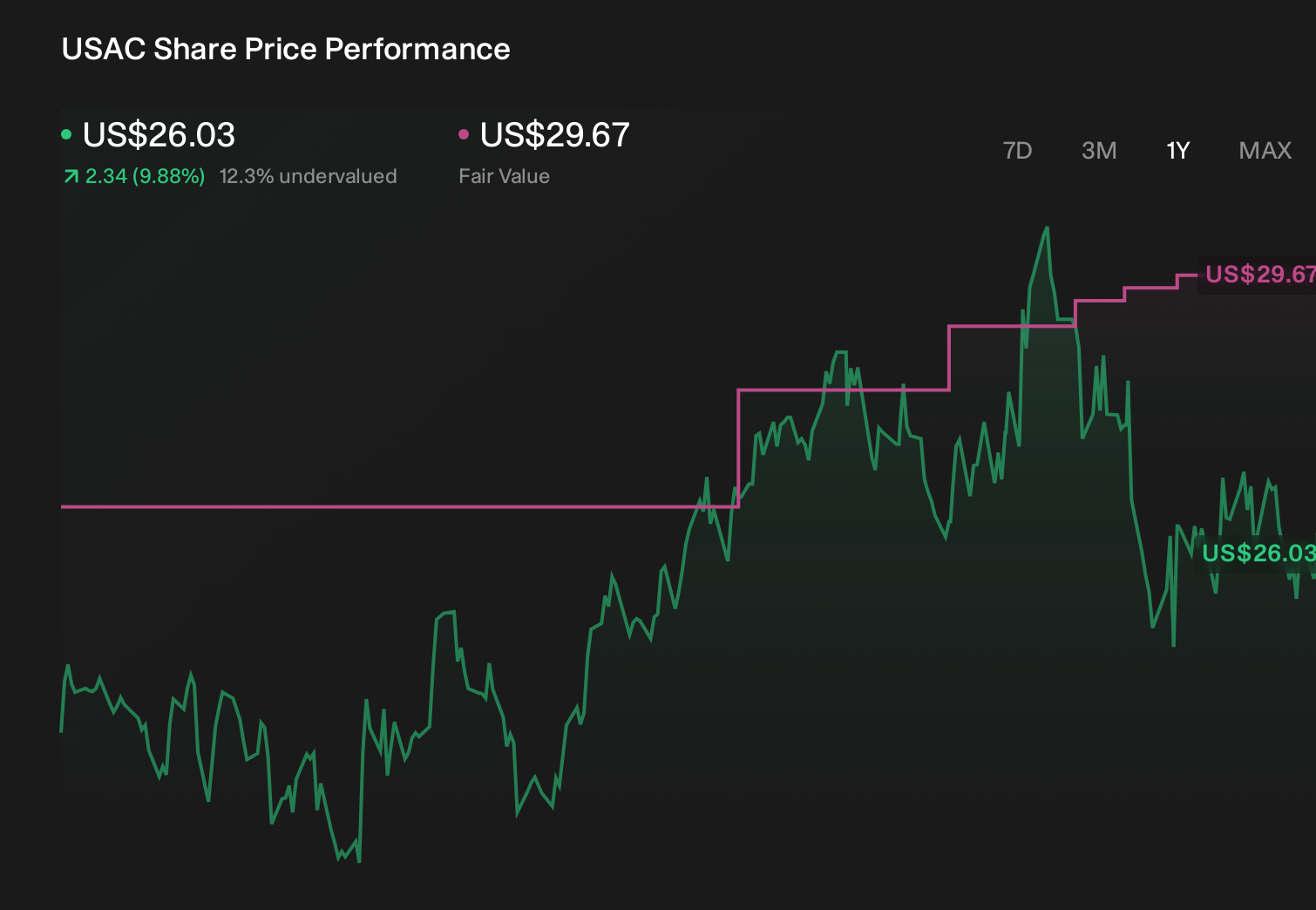
    The current narrative for USA Compression Partners projects revenue reaching US$1.5 billion and earnings of US$271.6 million by 2029. Despite these ambitious targets, market sentiment remains divided. Fair value estimates from the investment community currently range from US$21.57 to US$29.67 per share, reflecting a significant gap in how analysts perceive the partnership’s future resilience.

    For those weighing these contrasting expectations, the core issue remains whether USAC can successfully scale its compression fleet without compromising its financial stability. Investors are encouraged to look beyond the ticker symbol, scrutinizing the underlying data to determine if the potential 14% upside to the US$29.67 fair value outweighs the risks posed by rising costs and evolving contract terms.

  • Aon Q2 2026: Strategy and AI Drive Strong Performance

    Aon Q2 2026: Strategy and AI Drive Strong Performance

    Aon plc delivered a resilient second quarter in 2026, reporting 5% organic revenue growth and a 9% increase in adjusted earnings per share, according to the company’s earnings call held on Wednesday, July 29, 2026. CEO Gregory C. Case and CFO Edmund J. Reese highlighted that the firm’s “Aon United” strategy, fueled by the 3×3 Plan and significant investments in AI-enabled technology, has allowed the company to meet growing client demand amidst geopolitical uncertainty, cyber threats, and complex workforce transformations.

    Driving Growth Through Integrated Risk Capital

    Aon’s leadership emphasized that their organizational structure—uniting risk capital, human capital, and Aon Business Services (ABS)—is a key differentiator. By leveraging proprietary data and AI-enabled tools like the Aon Claims Copilot, the firm is addressing the increasing complexity faced by large and middle-market clients. The expansion of Claims Copilot across North America, Asia Pacific, and EMEA has bolstered Aon’s ability to generate actionable insights, contributing to over $10 billion in financial value recovered for clients through advocacy over the past decade.

    Aon United Strategy Overview

    Technology Investments and Market Expansion

    The company continues to capitalize on the digital infrastructure boom. Aon recently increased its data center lifecycle insurance program capacity to $5 billion, reflecting high demand from major technology companies. Furthermore, the firm is expanding its addressable market by connecting private equity firms and other capital providers with uncorrelated risk streams. In the Talent Solutions segment, Aon’s AI-sensitivity tools and the Aon Activate platform are helping organizations navigate workforce shifts and total rewards strategies with greater precision.

    Financial Performance and 2026 Outlook

    CFO Edmund J. Reese reported that organic revenue growth was broad-based, with all four solution lines achieving 5% growth. Adjusted operating margins expanded by 70 basis points to 28.9%, driven by operating leverage from the ABS platform and disciplined expense management. The company generated $483 million in free cash flow during the quarter, despite tax impacts from the NFP wealth sale.

    Q2 2026 Financial Highlights

    “Our results reflect the durability of our business model across market cycles,” said Reese. “We are generating sustainable organic revenue growth through consistent new business generation and high retention, translating that growth into strong earnings.” Aon reaffirmed its full-year 2026 guidance, targeting mid-single-digit or greater organic revenue growth and double-digit free cash flow expansion.

    Strategic Capital Allocation

    Aon remains focused on a disciplined capital allocation strategy. In the first half of 2026, the company deployed $1.1 billion toward share repurchases, signaling confidence that the firm’s share price remains below its intrinsic value. While continuing to invest in “tuck-in” acquisitions for its middle-market platform, management emphasized that they maintain significant financial flexibility to pivot toward the highest-return opportunities, whether through M&A or continued shareholder returns.

    As the firm moves into the second half of the year, leadership remains optimistic about the trajectory of the business. By focusing on integrated solutions that address risk, capital, and people, Aon expects to continue delivering value through complex market environments, regardless of fluctuations in traditional pricing cycles.

  • Ardelyx Shares Plunge 19.7% Despite Upgraded Revenue Outlook

    Ardelyx Shares Plunge 19.7% Despite Upgraded Revenue Outlook

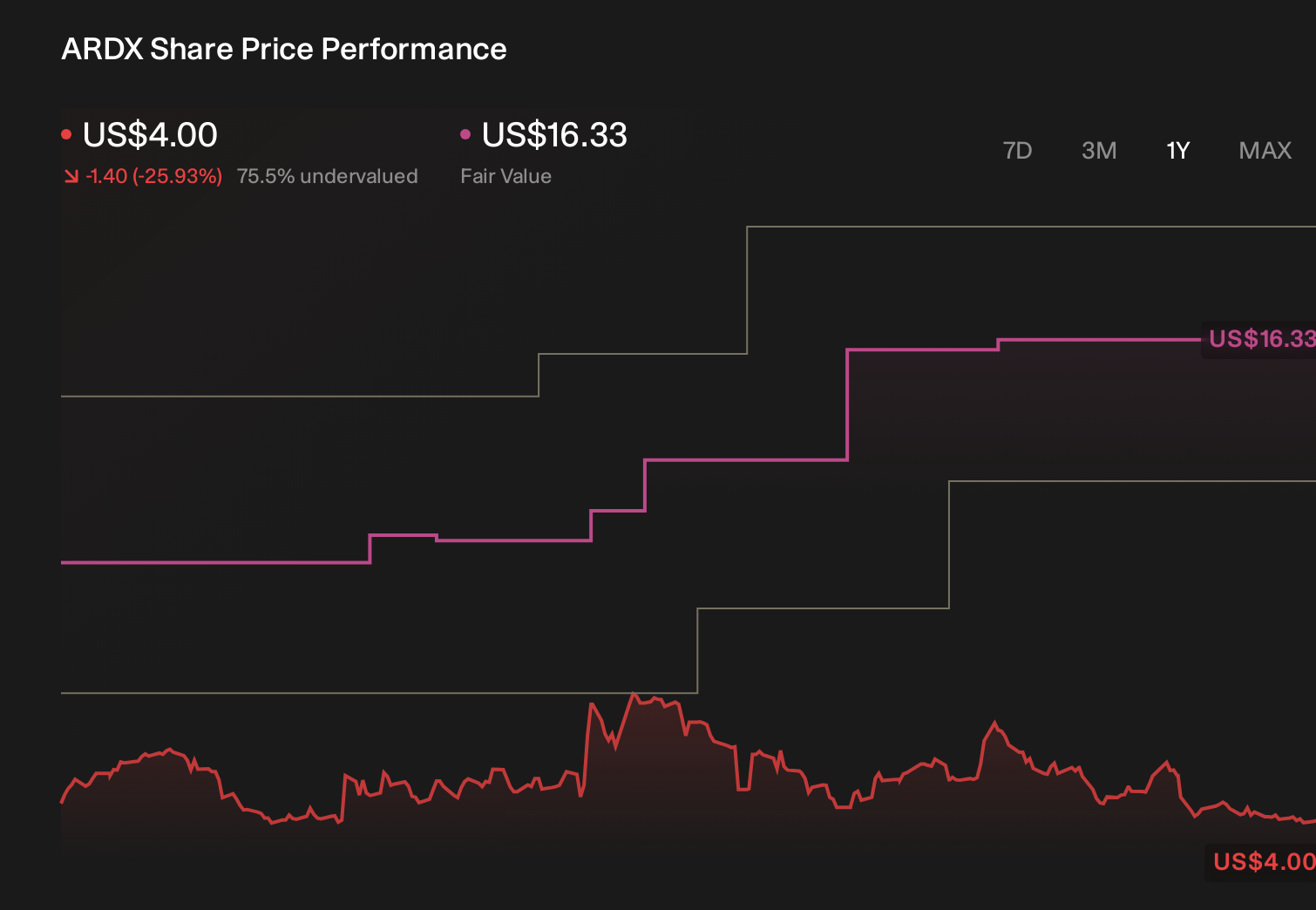
    Ardelyx (ARDX) shares tumbled 19.7% today, as investors reacted to a combination of raised revenue guidance for IBSRELA and narrowing company losses, highlighting persistent concerns over the firm’s concentrated product portfolio.

    Commercial Execution vs. Portfolio Concentration

    To maintain a long-term position in Ardelyx, investors must weigh the potential of its gastrointestinal and kidney franchise to transition from narrowing losses to sustainable profitability. While the upward revision of IBSRELA revenue guidance underscores a strong near-term catalyst for commercial execution, it fails to mitigate the primary risk facing the company: a heavy reliance on tenapanor-based products. This concentration remains particularly vulnerable to ongoing reimbursement hurdles and legal uncertainties, specifically regarding XPHOZAH and Medicare access.

    Tracking Guidance and Revenue Milestones

    The company’s February 2026 outlook for IBSRELA and XPHOZAH serves as a critical benchmark for stakeholders. By upgrading IBSRELA revenue expectations while reiterating XPHOZAH targets, Ardelyx has provided a clearer framework for investors to evaluate whether execution across these two core products is sufficient to offset the inherent risks of a narrow product base.

    Long-Term Projections and Market Skepticism

    Despite the optimistic IBSRELA outlook, the market remains cautious about the firm’s exposure to tenapanor-related headwinds. Current internal projections for Ardelyx estimate revenues reaching US$1.0 billion with earnings of US$317.0 million by 2029. However, some analysts maintain a more conservative outlook, suggesting that even with improved guidance, the company could face significant challenges if reimbursement setbacks continue to plague its limited portfolio. These analysts note that previous forecasts—which projected US$935.2 million in revenue and US$186.3 million in earnings by 2029—may require substantial revisions following the latest financial results.

  • OpenAI Completes $7 Billion Employee Stock Tender Offer

    OpenAI Completes $7 Billion Employee Stock Tender Offer

    OpenAI has successfully closed a $7 billion employee tender offer, allowing staff to cash out portions of their equity as the artificial intelligence giant continues to navigate its path toward a potential public market debut.

    Strategic Implications of the Tender Offer

    While the company filed confidentially with the Securities and Exchange Commission in June to lay the groundwork for a possible IPO later this year, the completion of this tender offer signals that a public listing may not be imminent. In an era where tech companies frequently choose to remain private for extended periods, private tenders have become a standard mechanism. This approach enables firms to offer employees liquidity and realize the value of their stock compensation without the rigorous regulatory and operational burdens associated with an immediate public offering.

    OpenAI did not respond to requests for comment regarding the transaction prior to publication.

    Financial Performance and Future Outlook

    The move comes amid a period of introspection for the company. Last month, CEO Sam Altman acknowledged recent hurdles, stating, “we did not have our best 12 months ever, which is mostly my fault, but we are about to have our best 12 months to date.” Historically, companies seeking an IPO aim to demonstrate robust financial health to attract institutional investors; however, reports from The Wall Street Journal in April indicated that OpenAI had previously fallen short of its internal financial targets.

    Competitive Pressure and Strategic Shifts

    Despite its explosive growth and market-leading products, OpenAI faces mounting pressure to optimize its operations. The potential public debut of competitor Anthropic—which reportedly achieved profitability earlier this year—provides additional incentive for OpenAI to refine its financial narrative. The latest tender offer may indicate that the company intends to delay its IPO to allow its new strategic direction, which emphasizes narrowing its focus and expanding its enterprise business, to gain further market traction.

  • Tesla’s Secret Growth Engine: Why Software Beats Car Sales

    Tesla’s Secret Growth Engine: Why Software Beats Car Sales

    Tesla is pivoting its growth strategy toward a high-margin software ecosystem, as the company seeks to monetize its existing fleet of vehicles while its Robotaxi service faces temporary hurdles in total paid mileage.

    The Robotaxi Reality Check

    While Elon Musk remains focused on transforming Tesla (NASDAQ: TSLA) into an autonomous-driving powerhouse, the company’s Robotaxi service reported approximately 700,000 paid miles in the second quarter. This figure represents a 36% decline compared to the 1.1 million miles recorded in the first quarter. Despite this dip, the service has expanded into new U.S. metropolitan areas, gathering critical driving data to refine the purpose-built Cybercab for future mass deployment.

    Scaling an autonomous fleet is a complex process that demands rigorous safety validation and navigation of evolving regulatory landscapes. Consequently, investors may need to exercise patience before autonomous rides become a primary revenue driver for the company.

    Monetizing the Existing Fleet

    While the Robotaxi business experiences growing pains, Tesla is successfully leveraging its massive base of millions of existing customers to drive revenue. Data from Similarweb indicates that Tesla’s mobile app reached 10.8 million monthly active users in July, marking a 36.8% increase year-over-year and a 16.5% jump from June.

    The app is evolving into a central hub for the company’s software ecosystem. Recent updates have introduced enhanced vehicle controls, self-driving statistics, and the integration of xAI’s Grok assistant. This allows drivers to manage climate and media settings via voice commands, effectively increasing the utility and value of vehicles that are already on the road.

    Software as a Service (SaaS) Growth

    Tesla’s ability to generate recurring revenue without selling a single new unit is becoming its most compelling growth story. By the end of the second quarter, the company boasted 1.48 million active Full Self-Driving (FSD) customers—a 56% increase from the previous year. Notably, over 55% of new Tesla deliveries in North America now include the FSD package, cementing the company’s transition toward a software-centric business model.

    This strategic focus is reflected in the bottom line: “Services and other revenue” reached $4.58 billion in the second quarter, a 50% year-over-year increase, accompanied by record gross profit and margins.

    Ultimately, the long-term value proposition for Tesla lies not just in manufacturing, but in its capacity to maintain and expand revenue streams from its active fleet through software, subscriptions, and digital services. While the Robotaxi remains a significant prize, maximizing the value of the current fleet serves as a robust and immediate path for growth.

  • CleanSpark Bets Big: $11.6B Shift to Data Centers

    CleanSpark Bets Big: $11.6B Shift to Data Centers

    CleanSpark (NASDAQ:CLSK) reported fiscal third-quarter revenue of $138 million—a 1% sequential increase—while officially pivoting its long-term strategy from pure Bitcoin mining toward large-scale digital infrastructure via a massive data center lease in Georgia.

    A Multi-Billion Dollar Infrastructure Play

    CEO Matthew Schultz announced the company’s most significant transaction to date: a 20-year triple-net lease for its Sandersville, Georgia campus with a major, undisclosed global technology firm. The deal encompasses nearly 250 megawatts of gross capacity and 175 megawatts of critical IT load.

    The contract is valued at approximately $6.6 billion in initial revenue. With two five-year extension options, the total value could climb to $11.6 billion over three decades. CleanSpark projects an average annual net operating income of $330 million, with the tenant assuming responsibility for taxes, insurance, and maintenance costs.

    Sandersville Development Timeline

    The company expects the first data hall at the Sandersville site to go live in the fourth quarter of 2027. Site preparation on the 122-acre greenfield parcel has been underway for months, operating independently from the firm’s existing Bitcoin mining infrastructure in the region.

    Chief Business Officer Harry Sudock noted that while the existing energized substation offers some utility, the development is primarily a greenfield project. CleanSpark has already ordered and prepaid for essential long-lead equipment to ensure the facility meets its “ready-for-service” deadline.

    Capital Strategy and Financial Health

    CFO Gary Vecchiarelli estimates capital expenditures for the Sandersville expansion will range between $10 million and $12 million per megawatt, totaling roughly $1.75 billion to $2.1 billion. The company intends to utilize project-based debt financing for the majority of the build-out, having already secured the necessary equity portion.

    Crucially, management confirmed that CleanSpark will not dilute shareholders to fund the Sandersville project. As of June 30, the company maintained a strong liquidity position of $917 million, comprising $200 million in cash and nearly 14,000 Bitcoin.

    Mining Operations and Digital Asset Strategy

    During the third quarter, CleanSpark recorded an average revenue of approximately $72,000 per Bitcoin mined. While this reflects a 5% dip from the previous quarter, overall revenue growth was sustained by higher hash rates and increased uptime.

    The company continues to treat its Bitcoin holdings as a strategic capital asset. Through digital asset management, CleanSpark generated $8.6 million in cash during the quarter, often selling production at prices 7% above spot. Management maintains the flexibility to use these holdings for derivative strategies, collateralized borrowing, or reinvestment into accretive projects.

    Expansion Outlook in Texas

    CleanSpark’s Texas portfolio—comprising the Sealy and Brazoria campuses—remains under an exclusivity agreement with the same counterparty involved in the Georgia lease. While discussions are ongoing, regulatory delays regarding large-load interconnection projects in Texas have slowed progress.

    The company is awaiting a Public Utility Commission of Texas hearing on August 20 to clarify the status of its “Batch Zero” projects. Despite these regulatory hurdles, CleanSpark remains optimistic, reporting 1.8 gigawatts of contracted capacity and high confidence in surpassing 2.1 gigawatts as the ERCOT review process concludes.

    The Role of Bitcoin in Infrastructure

    CleanSpark views Bitcoin mining as a strategic bridge. It allows the firm to monetize power loads quickly while long-term data center projects are under development. At Sandersville, mining will continue until the data center cutover, utilizing modular, immersion-cooled equipment that can be redeployed elsewhere once the transition is complete.

  • Par Pacific Q2 Profits Surge: Refining Gains Drive Results

    Par Pacific Q2 Profits Surge: Refining Gains Drive Results

    Par Pacific (NYSE:PARR) reported a robust second quarter, achieving an adjusted net income of $499 million, or $10.10 per share, driven by strong refining margins, high throughput, and strategic commercial execution during a period of market volatility.

    Financial Performance and Refining Growth

    CFO Shawn Flores confirmed that adjusted EBITDA reached $571 million for the quarter. The refining segment was a primary engine for this growth, with adjusted EBITDA climbing to $552 million, a significant increase from the $69 million reported in the first quarter. This surge was largely supported by supply disruptions in crude and refined products that tightened market conditions.

    The company’s combined refining index averaged approximately $33 per barrel, significantly outpacing the 2025 full-year average of $12.40 per barrel. System-wide refining capture hit 125%, or 112% after normalizing for Hawaii price-lag effects and Wyoming FIFO impacts.

    Market Dynamics and Operational Efficiency

    CEO Will Monteleone noted that refined-product cracks remained well above historical norms. He credited this favorable environment to reduced exports from the Persian Gulf and Russia, combined with conservative refining runs in Asia and restrictive trade policies that kept global inventories lean.

    Operational highlights included:

    • Hawaii: Throughput reached 73,200 barrels per day with production costs of $6.43 per barrel. Capture was 124%, bolstered by a $77 million net price-lag benefit.
    • Tacoma, Washington: The refinery achieved a production record of 41,200 barrels per day at 98.1% utilization, with production costs at $4.21 per barrel.
    • Montana: Throughput averaged 53,000 barrels per day. The facility successfully completed an April crude-unit outage, with performance reaching 62,000 barrels per day in May and June.
    • Wyoming: Throughput was 14,000 barrels per day, impacted by an April outage, while maintaining a margin capture of 118%.

    Turnaround Impact and Future Outlook

    The Hawaii refinery initiated a plant-wide turnaround in late June. EVP of Refining and Logistics Richard Creamer confirmed that the project was completed safely and within budget. While the financial impact of this maintenance is expected to weigh on third-quarter results, the company has proactively built inventory to mitigate supply disruptions.

    For the third quarter, Par Pacific projects a consolidated throughput midpoint of 182,000 barrels per day. The company is also scaling its renewable diesel business, which reached 3,000 barrels per day in June, marking the beginning of its commercial ramp-up.

    Balance Sheet and Capital Allocation

    Par Pacific strengthened its financial position during the quarter by completing a $500 million senior unsecured notes offering. This move allowed for a reduction in gross term debt by over $130 million and a decrease in asset-based lending by $78 million, resulting in a total net debt reduction of more than $220 million.

    As of June 30, the company held approximately $1.4 billion in total liquidity. Regarding future capital allocation, Monteleone emphasized a dynamic approach, prioritizing debt reduction while continuing to evaluate internal growth projects and potential share repurchases. The company also expects to utilize a significant portion of its $700 million net operating loss balance throughout 2026, potentially shifting to a standard federal tax position by 2027.