
Blog

  • Is Atmos Energy (ATO) 9% Undervalued? Key Earnings Insights

    Is Atmos Energy (ATO) 9% Undervalued? Key Earnings Insights

    Atmos Energy (ATO) reported strong fiscal 2026 third-quarter growth and reaffirmed its full-year earnings guidance, signaling potential undervaluation as the stock currently trades approximately 9% below its estimated fair value of $186.18.

    Strong Quarterly and Fiscal Performance

    For the third quarter ending June 30, 2026, Atmos Energy posted revenue of US$879.06 million, up from US$838.77 million in the same period last year. Net income rose significantly to US$242.69 million, compared to US$186.43 million a year prior. Consequently, diluted earnings per share (EPS) climbed to US$1.43, up from US$1.16.

    The nine-month fiscal performance follows this positive trajectory, with total revenue reaching US$4.18 billion compared to US$3.97 billion in the previous year. Net income for this period hit US$1.23 billion, with diluted EPS reaching US$7.33, an increase from US$6.40 in the prior year.

    Strategic Guidance and Market Adjustments

    Management has reaffirmed its fiscal 2026 earnings guidance, maintaining a range of US$8.40 to US$8.50 per diluted share. The company is committing to a capital expenditure plan of approximately US$4.2 billion for the fiscal year, while simultaneously targeting US$334 million in annualized operating income growth through regulatory filings.

    Regarding its APT pipeline business, the company noted that increased takeaway capacity has led to narrower spreads. As a result, Atmos Energy anticipates that the second-half earnings contribution from the APT segment will land near the lower end of its previous forecast of US$0.08 to US$0.12 per share.

    Dividend Consistency and Stock Valuation

    Demonstrating its commitment to shareholders, the Board of Directors declared a quarterly dividend of US$1.00 per share, marking the 171st consecutive quarterly payout. The dividend is set for distribution on September 8, 2026, to shareholders of record as of August 24, 2026.

    Despite recent short-term volatility—with the share price dipping 3.9% over the last 30 days and 5.9% over the quarter—the company maintains a robust 5-year total shareholder return of 89.9%. Current market analysis suggests that the recent price cooling reflects a broader sentiment reset rather than fundamental flaws in the company’s risk profile or long-term growth trajectory.

    Investment Risks and Outlook

    While the valuation model points to a fair value of $186.18—representing a 9% upside from the recent close of $170.19—investors should remain mindful of potential headwinds. Key risks include rising capital and operating costs that may pressure cash flows, as well as unpredictable regulatory outcomes that could impact future earnings visibility.

  • 2 Energy Stocks Currently Overhyped by Market Optimism

    2 Energy Stocks Currently Overhyped by Market Optimism

    The energy sector has experienced a significant rally over the past year, fueled by rising oil prices, surging electricity demand, and intense investor enthusiasm surrounding artificial intelligence. However, not every stock climbing the charts is backed by solid underlying fundamentals.

    Oklo: Betting on a Future That Isn’t Here Yet

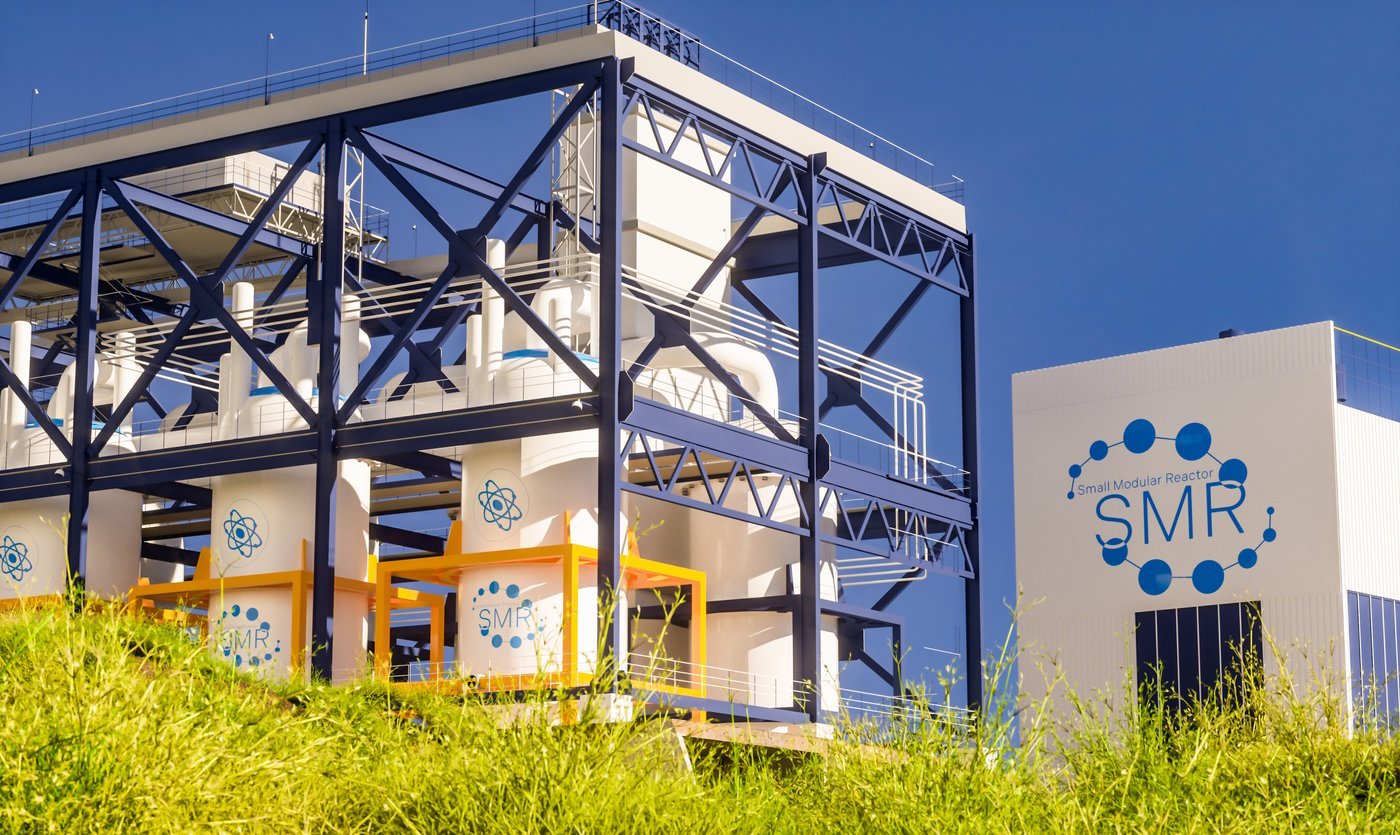
    Few companies have capitalized on the AI-driven nuclear power narrative as effectively as Oklo (NYSE: OKLO). The market is currently pricing the firm based on its potential to provide small modular reactors (SMRs) to power data centers, military sites, and industrial hubs—a vision highly sought after by tech giants like Microsoft, Amazon, and Meta Platforms.

    The core issue remains that Oklo’s valuation is detached from its current operational reality. The company is pre-revenue and has yet to deploy a single commercial reactor. With its first “Aurora” powerhouse not slated for operation until approximately 2028, the firm continues to report operating losses. While Oklo maintains a healthy balance sheet with roughly $2.5 billion in cash and no long-term debt, today’s stock price assumes a flawless execution of future regulatory and development milestones.

    This leaves little margin for error. Any delays in permitting or commercial adoption could force investors to reconcile with the fact that these optimistic projections are not yet supported by the company’s financial statements.

    EQT: Execution vs. Market Expectations

    As the largest natural gas producer in the United States, EQT (NYSE: EQT) has clearly demonstrated operational strength. Second-quarter results were robust: the company produced 634 Bcfe, generated $330 million in free cash flow, raised production guidance, and secured a 10-year supply agreement for a new 2-gigawatt power plant.

    The challenge for EQT is not operational performance, but rather whether the market has become overly optimistic regarding the impact of demand on future earnings. Natural gas is a commodity; without significant price appreciation, production growth alone does not guarantee a surge in profitability. Furthermore, while AI and LNG exports are driving demand, U.S. producers are simultaneously ramping up supply.

    With the Energy Information Administration projecting domestic production to remain near record levels, price ceilings may persist. Consequently, EQT could continue to deliver strong operational results while earnings growth lags behind the high expectations currently baked into the share price.

    Ultimately, while neither company is fundamentally broken, both Oklo and EQT highlight the dangers of investing when optimism is fully reflected in valuation. In such scenarios, future shareholder returns depend less on solid execution and more on the ability to exceed already lofty market expectations.

  • Camping World Q2 2026: Tough Market, Strategic Pivot

    Camping World Q2 2026: Tough Market, Strategic Pivot

    Camping World Holdings reported its financial results for the second quarter ending June 30, 2026, navigating what CEO Matthew Wagner described as the most challenging new RV retail environment in over 15 years. Despite these headwinds, the company successfully grew its unit market share, accelerated its Good Sam service offerings, and aggressively reduced SG&A expenses by over $26 million.

    Operational Resilience Amid Industry Softness

    Management admitted that the quarter did not align with initial April projections. As the new RV market weakened during the peak selling season, the company made a strategic decision to liquidate aged and prior-year model inventory rather than carrying those assets into the second half of the year. While this impacted vehicle gross margins in the short term, leadership emphasized that the payoff is already becoming evident with sequential margin improvements seen in July.

    The company’s used vehicle segment remains a cornerstone of its long-term strategy. Same-store used vehicle sales grew by over 5%, securing market share gains. For the full year, Camping World expects the used RV market to remain in the 715,000 to 750,000 unit range, providing a more accessible entry point for consumers into the RV lifestyle.

    Market Headwinds and Inventory Optimization

    On the new vehicle front, retail registrations declined 16% through May, a trend that persisted into the summer months. Wagner noted a clear correlation between geopolitical tensions in the Middle East and cooling demand for new units. Consequently, the company has adjusted its full-year industry outlook to 290,000–310,000 units, down from the previous expectation of 325,000–350,000 units.

    Despite the market pressure, the company has reached its healthiest new inventory position since 2020. Exposure to prior model year vehicles is now near 1%, and the number of vehicles aged over 365 days has been reduced by 60% year-over-year. Used inventory has also seen significant improvement, with the number of units aged over 180 days cut by nearly 50%.

    Efficiency Initiatives and Financial Outlook

    Camping World has launched a broad operating efficiency program comprising 20 initiatives aimed at delivering $100 million in incremental annualized savings. Key efforts include retiring legacy software, centralizing processes, and deploying a new in-house enterprise-grade CRM for RV sales. These technological upgrades are expected to reduce annualized costs by over $20 million while improving closing ratios and customer satisfaction.

    Reflecting the current volatility, the company has reset its adjusted EBITDA guidance to a range of $230 million to $270 million. CFO Tom Kirn highlighted that total revenue for the quarter was $1.9 billion, a 2.1% decrease year-over-year. While new vehicle gross margins compressed to 10.9% from 13.8% due to inventory clearing, the company maintains a strong balance sheet with $224 million in cash and $185 million in unencumbered real estate.

    Strategic Focus for the Second Half

    Looking ahead, Camping World is prioritizing variables within its control: leaner inventory management, structural cost reduction, and the continued expansion of the Good Sam platform. Management remains optimistic that these actions will build a more scalable operating model, positioning the business for stronger performance once the current industry cycle stabilizes.

  • Grocery Stores Are Secretly Scanning Your Face to Stop Theft

    Grocery Stores Are Secretly Scanning Your Face to Stop Theft

    Grocery Outlet and other major retailers are increasingly deploying controversial facial recognition technology to combat shoplifting, sparking a heated debate over consumer privacy and surveillance in retail spaces.

    How the Surveillance Technology Works

    According to SAFR President Charisse Jacques, the system is designed for “targeted deployment” rather than mass surveillance. Jacques claims that if a scanned face does not match a database of known offenders, the biometric data is deleted immediately.

    The Privacy Dilemma for Shoppers

    While the California Consumer Privacy Act (CCPA) grants customers the right to request the deletion of their images or prevent their data from being sold, these protections are reactive. Because requests cannot be filed in advance, the only way for privacy-conscious shoppers to avoid being scanned entirely is to refrain from entering the store.

    Customer Reactions: Convenience vs. Consent

    Feedback from shoppers has been sharply divided. Some patrons appreciate the lack of locked-up merchandise, viewing the technology as a necessary security measure. Others, however, feel violated by the lack of transparency.

    “I don’t like that,” said customer Alice York. “That’s without my consent. I’m not coming here again. That’s a shame, too.”

    A Growing Trend in American Retail

    Grocery Outlet is far from alone in its adoption of biometric security. The ACLU reported in January that Wegmans has implemented similar systems, actively storing data and collaborating with law enforcement to identify “persons of interest.”

    “At Wegmans, the safety of our customers and employees is a top priority,” the company stated. “Like many retailers, we use cameras to help identify individuals who pose a risk to our people, customers, or operation. In a small fraction of our stores that exhibit an elevated risk, we have deployed cameras equipped with facial recognition technology.”

    Regulatory Backlash and Consumer Rights

    The retail industry’s reliance on facial recognition has already faced legal scrutiny. Rite Aid was previously hit with a five-year ban by the FTC after it was discovered the company used the technology without properly informing customers.

    For those concerned about their digital footprint, resources like the website Ban Facial Recognition offer a map tracking where the technology is currently in use versus where it has been banned or restricted by local legislation. Experts suggest that if you are worried about your data, you should research your state’s specific privacy laws and demand transparency from store management regarding how your biometric information is stored and shared.

  • Arcade Acquires Smithery to Control the AI Agent Supply Chain

    Arcade Acquires Smithery to Control the AI Agent Supply Chain

    Arcade.dev has acquired Smithery, the prominent public registry and hosting platform that emerged as the premier destination for developers to discover and deploy Model Context Protocol (MCP) servers. The acquisition, announced on August 5, includes the integration of Smithery co-founder Anirudh Kamath into the Arcade team. While financial terms remain undisclosed, the strategic move signals a major shift in how enterprises manage AI agents.

    Consolidating the AI Agent Ecosystem

    As enterprises transition AI agents from experimental pilots to production environments, the demand for robust infrastructure has surged. Organizations require a unified ecosystem that combines a comprehensive tool catalog with a secure runtime capable of auditing and authorizing agent actions. By merging Smithery’s discovery capabilities with Arcade’s execution layer, the acquisition aims to provide a single, end-to-end solution for CIOs.

    Bridging Discovery and Execution

    Smithery built its reputation by solving the “discovery and packaging” bottleneck, allowing developers to locate and run servers with minimal friction. This utility drove the index to tens of thousands of entries, encompassing both MCP servers and Anthropic’s Agent Skills format. Arcade, conversely, operates as a secure action layer. By managing delegated authorization, Arcade ensures that agents act only with specific user permissions, while simultaneously generating a comprehensive audit trail for every action taken.

    The Ambition Behind the Buy

    Arcade is positioning itself as the backbone of agentic infrastructure. Following a $60 million Series A round in June led by SYN Ventures—bringing total funding to $72 million—the company has the capital to back its aggressive expansion. Arcade claims to have authored the MCP authorization specification, a standard now widely referenced by major clients and servers, further cementing its influence over the protocol.

    Benchmarking and the Quality Gap

    The rationale for the acquisition is rooted in Arcade’s data-driven approach. Through its ToolBench benchmark, Arcade has analyzed over 219,000 tools across 43,400 MCP servers. The findings were stark: only 0.5% of these tools earned an “A” grade. Arcade attributes this to a “publishing gold rush” where the speed of releasing new tools has significantly outpaced the rigors of engineering, resulting in malformed schemas and overlapping tool names that often cause model failures.

    The Evolving Competitive Landscape

    Arcade now operates in a space crowded with diverse approaches to protocol management. The official MCP Registry, launched in preview in September 2025, serves as a thin, community-owned source of truth. Meanwhile, Docker has prioritized containerization and policy enforcement within its own MCP Catalog and Toolkit. Furthermore, the protocol’s governance has shifted to the Agentic AI Foundation under the Linux Foundation, with support from industry giants like OpenAI, Google, Microsoft, and AWS.

    Addressing Neutrality and Future Risks

    The acquisition raises valid questions regarding developer trust and platform neutrality. Developers previously favored Smithery for its independence, but now the registry is controlled by a vendor with a commercial incentive to prioritize its own runtime. Arcade has yet to publicly clarify how it will insulate its grading and verification processes from its commercial interests.

    Additionally, the rapid evolution of the MCP protocol—including breaking changes like the removal of initialization handshakes—creates a volatile environment for registries. For platform teams, the move toward Arcade necessitates a critical evaluation of three key areas:

    • Portability: Determining whether authorization policies and audit records can be exported or if they remain locked within a single vendor’s control plane.
    • Grading Independence: Ensuring that ToolBench scores remain objective, especially when evaluating servers that compete directly with Arcade’s own catalog.
    • Scalability Costs: Assessing how pricing models adjust during periods of high tool-call volume, a metric that Arcade reports has grown 25-fold in the last six months.

    Ultimately, the era of assembling MCP tooling from disparate, free parts is ending. As the technology matures into a procured enterprise layer, Arcade’s acquisition of Smithery represents a strategic move to dominate the entire lifecycle of agentic execution.

  • Bitcoin and Ethereum Dip Ahead of Critical Inflation Data

    Bitcoin and Ethereum Dip Ahead of Critical Inflation Data

    Bitcoin and Ethereum opened lower on Tuesday, August 11, 2026, as markets brace for pivotal inflation reports later this week that could influence Federal Reserve interest rate policy.

    Crypto Market Movements: Tuesday Update

    Bitcoin (BTC-USD) started the day at $63,912.50, reflecting a 1.4% decline from Monday’s opening price. By 8:32 a.m. ET, the asset showed signs of recovery, climbing to $64,282.28. Meanwhile, Ethereum (ETH-USD) opened at $1,871.33—a 2% drop from the previous day—before ticking upward to $1,888.83 by mid-morning.

    Market Sentiment and Economic Headwinds

    Current prices for both assets have retreated to levels observed one week ago. Although the crypto market experienced a brief rally following last week’s underwhelming jobs report, that momentum proved unsustainable. Investors are now shifting their focus toward upcoming inflation data, which will be instrumental in determining the Federal Reserve’s stance during their September meeting. Because cryptocurrencies do not generate interest, they often face significant pressure when interest rates rise.

    Bitcoin and Ethereum Price Performance

    The price of bitcoin this morning was down 1.4% from Monday’s opening price. Here’s a look at how the opening bitcoin price has changed versus last week, month, and year:

    The price of ethereum this morning was 2% lower than Monday’s open. Here’s a look at how the opening ethereum price has changed versus last week, month, and year:

    Understanding Ethereum and Market Strategy

    It is important to distinguish between Ethereum, the underlying blockchain, and ether (ETH), the digital asset used to power applications and store value. Investors typically utilize different strategies when engaging with the asset, ranging from short-term trading to long-term accumulation or earning yield through staking.

    While ether remains more volatile than traditional indices like the S&P 500, it has evolved from a speculative asset into a foundational component of modern digital portfolios.

    For those looking to enter the market, understanding the basics is essential. You can learn more about the process in this guide: How to buy Ethereum and what to know before you do.

    Whether you are a newcomer tracking price action or a seasoned investor, monitoring historical trends is vital. Yahoo Finance’s price-of-ethereum chart provides a visual history of how the currency’s value continues to evolve over time.

  • Is DINO Stock Still a Buy After 225% Gains?

    Is DINO Stock Still a Buy After 225% Gains?

    HF Sinclair (DINO) has delivered an impressive 224.8% total return over the past five years, yet recent market data suggests the stock remains undervalued, prompting investors to weigh whether the current price accounts for the company’s future growth or leaves room for further upside.

    Valuation Analysis: Why DINO Trades at a Discount

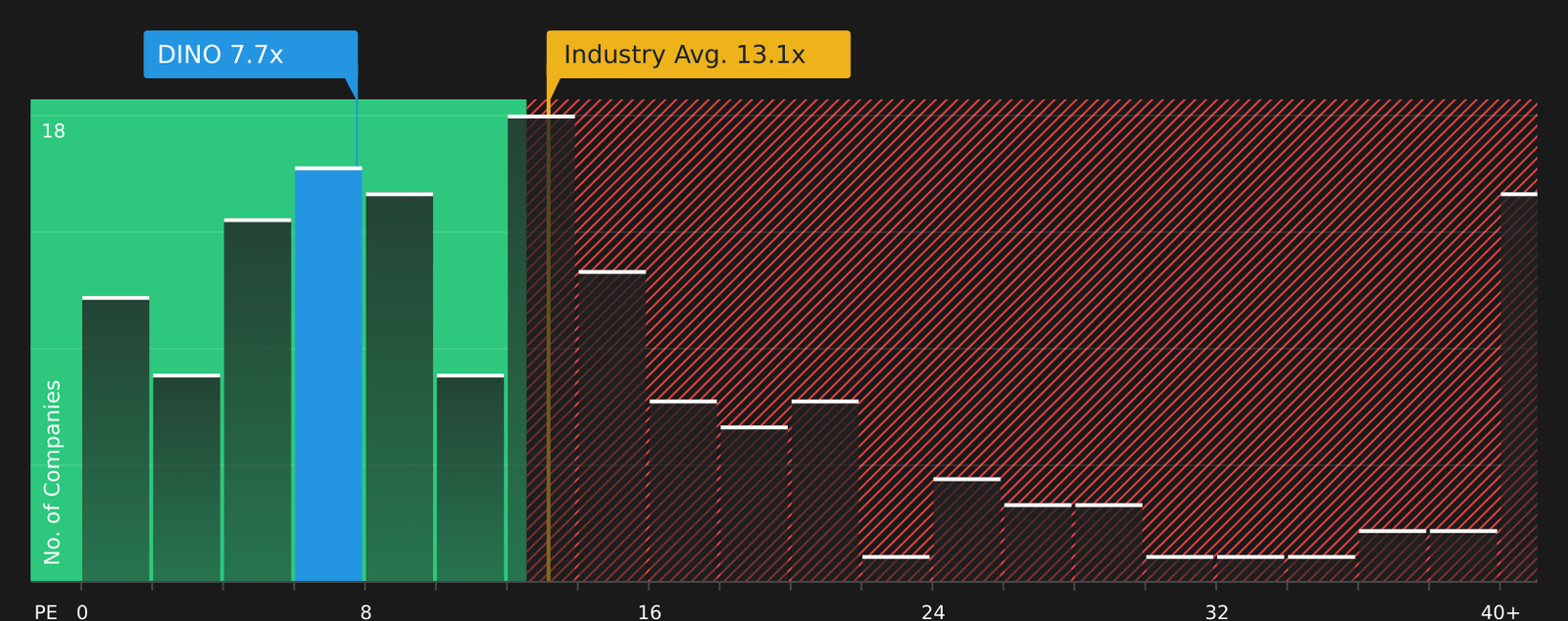
    The core of the current investment debate lies in how the market prices HF Sinclair’s earnings potential. Currently, the company trades at a P/E ratio of approximately 7.7x, significantly lower than the Oil and Gas industry average of 13.1x and the broader peer group average of 17.4x.

    When applying the Fair Ratio model—which adjusts for the company’s specific size, risk profile, and profit margins—a P/E of 9.9x emerges as a more accurate benchmark. This suggests that despite the planned separation of the Lubricants & Specialties segment and the strategic closure of the Mississauga refinery, the stock continues to trade at a material discount compared to its fundamental value.

    Strategic Shifts and Market Sentiment

    The company is currently undergoing a significant portfolio transformation, reshaping its earnings mix through asset divestitures and refinery rationalization. Investors are split on the outlook: proponents point to robust refining economics and aggressive capital returns as catalysts for growth, while cautious market participants highlight concerns regarding long-term fuel demand, regulatory pressures, and the execution risks associated with the upcoming Lubes spinout.

    Assessing the Investment Case

    For those analyzing the stock’s future, the primary question is whether the current discount represents a genuine mispricing by the market or a “value trap” reflecting inherent sector risks. The company’s trajectory will likely depend on its ability to execute its restructuring plans effectively, potentially narrowing the gap between its current low valuation and its calculated fair value.

    To help investors navigate these variables, detailed breakdowns of the company’s growth, profitability, and risk factors—including both the Bull Case and Bear Case—are available for deeper examination. These insights provide a framework for tracking how shifts in refinery economics and corporate strategy may impact the stock’s performance moving forward.

  • Oklo Stock Surge: Real Growth or Just Nuclear Hype?

    Oklo Stock Surge: Real Growth or Just Nuclear Hype?

    Oklo (NYSE: OKLO) shares jumped over 14% on Friday, August 7, after the company reported its first-ever quarterly revenue of $1.21 million and confirmed that its Groves test reactor achieved initial criticality.

    Financial Performance and Operational Milestones

    While the company reported a net loss of approximately $48.5 million for the quarter, the transition from zero revenue a year ago to $1.21 million marks a pivotal shift. Operating expenses reached $74 million, yet the company maintains a strong financial position with $3 billion in total liquidity. The achievement of first criticality for the Groves Reactor—meaning it successfully sustained a controlled nuclear chain reaction—serves as a significant technical validation for the firm.

    Evaluating the Business Model

    Oklo is aggressively scaling three distinct segments: small modular nuclear reactors (Aurora powerhouses), fuel fabrication and recycling, and the production of isotopes. The Aurora reactors are specifically designed for commercial deployment, while the isotope division aims to address the critical shortage of radioactive materials in various industries.

    The bull case for the company relies on future scalability. For instance, a single 75-megawatt (MW) reactor, operating at 90% capacity with electricity priced at $100 per megawatt-hour, could generate roughly $15 million in quarterly revenue. Scaling this to the 18 gigawatts (GW) of potential demand previously disclosed by Oklo suggests a theoretical annual revenue capacity of approximately $14 billion. As regulatory milestones are met, the narrative that Oklo is purely speculative is becoming increasingly difficult to support.

    The Commercialization Challenge

    Despite the optimism, significant hurdles remain. The Aurora powerhouse is still in a pre-commercial phase, making it challenging to accurately forecast long-term economics. Key variables—such as the final cost of construction, deployment profitability, and the long-term global demand for nuclear energy—remain unproven.

    Valuation Concerns

    Investors must weigh the current market capitalization of approximately $8 billion against the company’s nascent revenue stream. Annualizing the most recent quarterly revenue results in a price-to-sales ratio exceeding 1,700x. While this metric is skewed by the timing of recent business acquisitions, it highlights the immense amount of future growth already priced into the stock.

    For investors seeking exposure to the intersection of AI and energy, Oklo represents a high-stakes play. However, for those with a lower risk tolerance, the inherent volatility of a pre-commercial nuclear venture suggests that broader nuclear-focused exchange-traded funds (ETFs) may offer a more balanced approach to the sector.

  • Gulfport Energy: CFO Exit and 2026 Guidance – Should You Buy?

    Gulfport Energy: CFO Exit and 2026 Guidance – Should You Buy?

    Gulfport Energy (GPOR) is navigating a leadership transition and updated 2026 production targets, maintaining its strategic focus on the Utica and SCOOP basins despite recent fluctuations in quarterly earnings and production volumes.

    Strategic Outlook and 2026 Guidance

    The core of the current investment thesis for Gulfport Energy remains its concentrated natural gas operations in the Utica and SCOOP plays. While the most recent quarterly results reflected a year-over-year decline in production and earnings, the company has demonstrated improved profitability on a year-to-date basis. The primary anchor for investors is the updated 2026 production guidance, which targets 1.030 to 1.055 Bcfe per day, alongside 18.0 to 21.0 thousand barrels per day of liquids. This forecast serves as a critical benchmark for the company’s ability to execute on its efficiency and inventory management objectives.

    Evaluating Long-Term Risks and Valuation

    Despite the operational guidance, investors must weigh the long-term implications of Gulfport’s heavy geographic reliance on the Utica and SCOOP basins. Projections for the company suggest a trajectory toward $1.7 billion in revenue and $542.9 million in earnings by 2029. Achieving these figures necessitates a 7.3% annual revenue growth rate and a slight contraction in earnings from the current $563.3 million level.

    Market Sentiment and Fair Value Estimates

    Valuation models for Gulfport Energy present a significant spread in market opinion. Current estimates for fair value range from approximately US$231 to US$970. This wide disparity highlights the importance of analyzing multiple independent perspectives when assessing the stock’s future performance, particularly given the specific risks associated with a concentrated asset portfolio.

    The data suggests that Gulfport’s forecasts could imply a fair value of $231.08, representing a potential 38% upside from its current market price. Investors are encouraged to look beyond the ticker symbol and conduct a thorough analysis of the fundamental data to form an independent conviction regarding the stock’s viability.

  • Why Weak Jobs Data Could Actually Fuel a Stock Market Rally

    Why Weak Jobs Data Could Actually Fuel a Stock Market Rally

    The S&P 500 is eyeing record highs this week, bolstered by a robust corporate earnings season and a cooling labor market that has tempered Federal Reserve interest-rate hike expectations following Friday’s surprisingly weak jobs report.

    “Bad News is Good News” for Wall Street

    Analysts at Citi Research, led by Scott Chronert, have adopted a “bad news is good news” stance regarding the current labor market. This sentiment aligns with Dennis DeBusschere, chief market strategist at 22V Research, who suggests that a “benign slowing” of U.S. economic growth could act as a catalyst for higher stock prices.

    The latest nonfarm-payrolls report revealed a loss of 23,000 jobs in July, defying expectations of an 83,000 gain. While employment conditions are easing—evidenced by a lower employment-to-population ratio and slowing nominal wage growth—economic activity remains resilient. For DeBusschere, this cooling effect provides the economy with necessary breathing room to expand before inflation becomes a systemic threat.

    Raising the GDP Speed Limit

    “This easing labor market dynamic, counterintuitively, raises the implied speed limit for GDP growth,” DeBusschere argues, noting that the threshold could now potentially exceed 2%. By preventing wage-driven inflation, the economy can run hotter without forcing the Federal Reserve to aggressively tighten monetary policy. Consequently, the Fed retains the flexibility to respond to demand shocks with interest rate cuts as long as labor slack increases and wage pressures diminish.

    Investors are now looking ahead to Wednesday’s release of the July consumer-price index data to confirm this trend.

    The Outlook for Treasury Yields and Equities

    Despite the cooling labor market, DeBusschere does not anticipate a significant drop in Treasury yields. He expects 10-year Treasury yields BX:TMUBMUSD10Y to hover around 4.5%, reflecting a firmer long-term growth outlook and a higher equilibrium interest rate, or R*.

    This environment—characterized by sustainable growth, easing inflation, and a central bank with room to maneuver—creates a powerful tailwind for equities. DeBusschere anticipates that a more durable expansion will lower equity risk premiums, providing further upside potential for stocks. Additionally, he points to artificial intelligence as a key driver of profitability. His analysis suggests that AI-linked efficiencies are contributing to an average 150 basis-point improvement in corporate margins.

    Driven by these factors, DeBusschere projects the S&P 500 SPX could reach 8,500 within the next 12 months, leading him to favor cyclical stocks over defensive alternatives.

    Market Movements and Corporate Updates

    As of the opening bell, U.S. stock indices SPX DJIA COMP are trading slightly lower as Treasury yields BX:TMUBMUSD10Y edge upward. The dollar index DXY has strengthened, while gold futures GC00 are trading near $4,392 an ounce.

    In corporate news, Berkshire Hathaway BRK.B reported that its second-quarter profit more than doubled, fueled by successful stock investments. Meanwhile, oil prices CL.1 BRN00 rose on Monday amid concerns regarding a stalled U.S.-Iran deal that would have reopened the Strait of Hormuz. Intel shares INTC are trending downward following the company’s announcement of a $15 billion stock sale, and Apple AAPL shares faced a downgrade to “underperform” by Jefferies analysts.

    Regarding precious metals, Jonathan Krinsky, technical strategist at BTIG, notes that while gold has rallied from recent lows, it is approaching strong resistance in the $4,400 to $4,500-an-ounce range. This zone coincides with the 200-day moving average and the downtrend from previous all-time highs.