
Blog

  • USA TODAY (TDAY) Q2 Results: Is the Stock Undervalued?

    USA TODAY (TDAY) Q2 Results: Is the Stock Undervalued?

    USA TODAY (TDAY) reported second-quarter 2026 revenue of US$536.34 million and net income of US$9.13 million, while reiterating its full-year guidance for higher net income compared to the previous year.

    Market Reaction and Performance Metrics

    The latest earnings update arrived alongside a sharp 9.38% single-day decline in share price to US$7.25, extending a 16.57% slide over the past seven days. Despite this recent volatility, the company maintains a strong long-term position, with a year-to-date return of 39.16% and a one-year total shareholder return of 86.38%, suggesting the recent pullback may be an outlier against broader momentum.

    Valuation vs. Recent Earnings

    The market is currently divided on TDAY. Bulls interpret the recent price drop as a necessary reset following a period of significant growth, while bears highlight the softer earnings results as a cause for concern. A critical point of contention remains the company’s valuation: at a current share price of $7.25, the stock sits below its implied fair value of $8.51.

    The Bull Case for Upside

    The investment narrative for USA TODAY hinges on three primary pillars: margin expansion, the transition toward positive earnings, and a shift in profit multiples. These factors form the backbone of the $8.51 fair value estimate. Investors are increasingly looking at how these levers might influence future performance despite projections of continued revenue decline.

    Key Risks and Financial Challenges

    While the valuation suggests the stock is approximately 14.8% undervalued, investors must weigh this against significant headwinds. USA TODAY continues to grapple with persistent revenue contraction and a heavy debt load. These factors remain substantial risks that could pressure profit margins and challenge the underlying assumptions of the current fair value model.

    Given the mixed market sentiment, analyzing the company’s fundamental data is essential for those evaluating whether the recent dip represents a buying opportunity or a signal of deeper structural challenges.

  • Kaspi.kz Q2 2026: AI-Driven Growth and Fintech Expansion

    Kaspi.kz Q2 2026: AI-Driven Growth and Fintech Expansion

    Kaspi.kz reported robust financial results for the second quarter and first half of 2026, highlighted by a 16% revenue increase and an 18% dividend hike, as the company pivots toward AI-powered commerce and banking expansion in Kazakhstan and Turkey.

    Strategic Growth and the Launch of “Kasper”

    CEO Mikheil Lomtadze emphasized that Kaspi’s core marketplace continues to thrive, with e-commerce GMV growing by 28% on a constant currency basis. A major milestone in the company’s evolution is the launch of “Kasper,” a personal AI assistant integrated directly into their super app. As of July 1st, Kasper has been helping consumers discover products, compare features, and complete purchases with increased efficiency. Early metrics show that 20% of users are engaging with the AI, with interaction speeds averaging just 3 seconds.

    Financial Performance and Margin Dynamics

    David Ferguson, representing Kaspi, detailed the broader financial landscape. Despite a 21% depreciation of the Turkish Lira impacting reported figures, the company’s marketplace take rate expanded to 12.1%. While EBITDA growth was recorded at 5%, the company is successfully managing cost pressures through strategic adjustments. Notably, the firm has begun reducing deposit rates in Kazakhstan following recent Central Bank policy shifts, a move expected to provide a tailwind for profitability heading into 2027.

    Fintech Expansion in Turkey

    Kaspi has finalized the acquisition of a banking license in Turkey, marking a significant step in its regional fintech strategy. The company plans to invest approximately $300 million to build out its local fintech capabilities. Currently, Kaspi is piloting a new shopping loan on the Hepsiburada platform, which already accounts for 0.54% of GMV. The firm intends to roll out a full suite of consumer and merchant financial products in Turkey throughout the coming year.

    Operational Resilience and Future Outlook

    The company maintains its full-year guidance, projecting 20% GMV growth. Leadership remains focused on high-frequency transaction environments and improving delivery logistics, which have proven to be the primary drivers of consumer engagement. By shifting the loan portfolio mix toward higher-revenue-generating products and optimizing funding costs, Kaspi aims to strengthen its bottom line as inflation in its primary markets continues to moderate.

    The management team reiterated that their competitive advantage lies in the integration of commerce and financial services, a model they intend to scale aggressively across their current and future markets.

  • Trump’s Iran Deal Hopes Won’t Lower Gas Prices

    Trump’s Iran Deal Hopes Won’t Lower Gas Prices

    Donald Trump’s hopes of resolving U.S. energy frustrations through a potential deal with Iran are unlikely to yield results this year, as the complexities of the global supply chain remain largely misunderstood by political leadership.

    The Reality of Gasoline Pricing

    On Tuesday, Trump told Fox News that the U.S. and Iran were nearing an agreement to open the Strait of Hormuz. He subsequently claimed this would slash nationwide gasoline prices from $4.06 to $2.50 per gallon. This assertion ignores the intricate mechanics of the global supply chain, which connects crude oil production to refiners and, ultimately, the local gas station pump.

    Refining Capacity and Market Imbalance

    The U.S. has not constructed a new refinery in nearly 50 years, with the last one dating back to 1977. While India’s Reliance Industries plans to build a facility at Port Brownsville this year, domestic refineries are currently operating at maximum capacity to meet a daily demand of 65 million barrels of gasoline, diesel, and jet fuel.

    Exxon CEO Darren Woods recently noted that he has never witnessed such a stark imbalance between refinery capacity and consumer demand. Compounding the issue, the government’s aggressive push toward electric vehicles has left refiners reluctant to invest in expanding fossil fuel infrastructure.

    Global Supply Disruptions

    China, which previously exported between 650,000 and 900,000 barrels of refined products daily, has seen its supply dwindle to roughly 350,000 barrels due to the ongoing Iran situation. Meanwhile, U.S. crude inventories have plummeted to their lowest levels in 42 years.

    Corporate Profits and Middle East Uncertainty

    Major refiners, including Marathon, Phillips 66, and Valero, recently reported their second-highest quarterly earnings in four years. ExxonMobil posted a massive $14.5 billion profit, with $5.5 billion derived specifically from refining. The conflict in the Strait of Hormuz continues to drive energy prices upward; despite assurances from Defense Secretary Hegseth that the conflict would be brief, the situation remains protracted and volatile.

    Market Volatility and Economic Indicators

    Oil prices have seen significant swings this month, with West Texas crude fluctuating from under $70 on July 6 to over $90 by July 23. While news of a potential deal briefly dipped prices below $75, the market has settled into a range between $76.53 and $78.77, with $80 appearing to be the current stabilization point.

    Investor confidence in the energy sector is waning, as energy stocks with a bullish outlook have dropped to just 33% of the total. This uncertainty persists even as stock indexes reach new highs. Economic data remains mixed, with Friday’s jobs report showing a loss of 23,000 jobs, while May’s previously reported 120,000 new jobs were revised downward by half.

    Furthermore, the two-year Treasury note yield sits at 4.26%, significantly higher than the March low of 3.4%, as investors grapple with the massive corporate debt being issued to fund new AI projects. With retail gasoline prices remaining stubbornly high, the political stakes for the upcoming midterm elections are intensifying, leaving observers to question the strategy behind escalating Middle East tensions during an election year.

  • Arbutus vs. Moderna: The $178M Settlement That Changed Everything

    Arbutus vs. Moderna: The $178M Settlement That Changed Everything

    A landmark legal resolution concerning lipid nanoparticle (LNP) delivery technology has fundamentally altered the financial landscapes for Arbutus Biopharma Corporation (NASDAQ:ABUS) and Moderna, Inc. (NASDAQ:MRNA). By settling their global patent infringement dispute, Arbutus secured a massive, non-dilutive liquidity injection, while Moderna successfully cleared a significant legal hurdle as it maneuvers to pivot its commercial pipeline beyond the COVID-19 era.

    The $178 Million Windfall and Arbutus’ Strategic Pivot

    On July 16, Arbutus Biopharma secured a decisive victory, receiving approximately $178 million from Moderna—its portion of a $950 million noncontingent settlement channeled through licensee Genevant Sciences. This payment, which covers legal costs, is expected to be supplemented by a Q3 dividend from Arbutus’ 16% equity stake in Genevant’s parent company. Capitalizing on this influx, Arbutus has initiated plans to return $230 million to its shareholders.

    The financial impact was immediate: in Q1 2026, Arbutus reported total revenue of $179.1 million, a stark rise from $1.8 million in the prior-year period, largely attributed to the settlement. Through aggressive cost-cutting and workforce optimization, the company slashed operating expenses to $10.2 million. This resulted in a net income of $169.7 million ($0.88 per share), a dramatic turnaround from the $24.5 million loss recorded a year earlier. Arbutus exited the quarter with $95.2 million in cash and equivalents, providing a stable runway for its lead hepatitis B candidate, imdusiran, which currently holds Fast Track designation.

    Moderna’s Transition: Beyond COVID-19

    Moderna is aggressively diversifying its mRNA therapeutics portfolio. A critical milestone was reached on August 6, when the FDA approved mFLUSIVA, the company’s seasonal influenza vaccine for adults 50 and older—marking its fifth commercial product. With late-stage programs in oncology (intismeran, in partnership with Merck) and RSV (mRESVIA) advancing, Moderna is targeting up to 10% overall revenue growth for 2026.

    However, scaling commercial operations remains capital-intensive. Moderna’s Q2 2026 earnings revealed total revenue of $145 million, compared to $142 million in Q2 2025. With operating expenses of $960 million—driven by $651 million in R&D—the company posted a net loss of $782 million ($1.97 per share). Despite this, Moderna maintains a robust balance sheet with $6.9 billion in liquidity (pre-settlement), and has lowered its full-year 2026 operating expense guidance by $200 million.

    Financial Profiles: Efficiency vs. Scale

    The divergence between the two firms is clear: Arbutus currently offers superior short-term capital efficiency, leveraging litigation success to reward shareholders. Conversely, Moderna is operating at a massive industrial scale, utilizing its $6.9 billion cash reserves to fund a clinical pipeline that remains out of reach for smaller biotech entities.

    The bull case for Arbutus focuses on its $230 million capital return plan and the potential for a $1.3 billion contingent payout tied to pending federal patent rulings. Critics, however, argue that this profitability is non-recurring, relying on legacy IP rather than sustained product sales. For Moderna, the bull case rests on its mRNA platform versatility and new product launches, while bears point to ongoing operational losses and recent pipeline setbacks, such as the underperformance of its norovirus candidate.

    Institutional Shifts in Hedge Fund Holdings

    Institutional interest has evolved across both tickers according to recent data. For Arbutus (ABUS), hedge fund participation dipped slightly to 25 funds in Q1 2026. Notable positions include Two Seas Capital, which holds 18,557,543 shares, and Whitefort Capital, which maintains a significant 19.81% portfolio weight in the stock.

    Moderna (MRNA) saw institutional participation rise to 52 hedge funds. Strategic moves included Walleye Capital, which utilized a hedged approach, holding both call and put options to navigate the company’s ongoing regulatory and pipeline developments.

    Ultimately, while Moderna possesses the long-term infrastructure to dominate the mRNA market, Arbutus has demonstrated that strategic intellectual property defense can generate immediate, substantial value for investors, proving that biotech success is not solely dependent on drug development pipelines.

  • d’Amico Shipping Hits Record Q2 Profits Amid Market Surge

    d’Amico Shipping Hits Record Q2 Profits Amid Market Surge

    d’Amico International Shipping SA (DMCOF) reported a powerhouse performance for the second quarter of 2026, driven by record-breaking spot rates of $57,500 per day. The company concluded the first half of the year with a net profit of $79.4 million and a robust EBITDA of $105.8 million, signaling a significant growth trajectory compared to the same period in 2025.

    Operational Performance and Market Dynamics

    CEO Antonio Carlos Balestra Di Mottola highlighted that while Q3 spot fixtures are currently averaging $31,000 per day, the market remains highly regionalized. The US Gulf is performing exceptionally well, with rates reaching the high $30s to low $40s. Conversely, the East of Suez market has faced temporary softness, though recovery is underway as vessel positioning adjusts. Despite record refining margins, the company noted that product transport volumes have been tempered by domestic stock retention, though global systems have remained more resilient than initially forecasted.

    Financial Strength and Dividend Policy

    CFO Federico Rosen confirmed that the company reached a milestone net cash position of $19.2 million by the end of June 2026, with a total fleet market value of $1.28 billion. The company’s dividend policy remains tethered to balance sheet deleveraging. With debt levels significantly reduced and zero debt expiring in 2027, management intends to maintain a payout ratio consistent with the 2025 results, provided current market conditions hold.

    Fleet Expansion and Strategic Capital Allocation

    d’Amico’s fleet currently consists of 28 vessels with an average age of 9.9 years. The company is actively modernizing its assets, with 10 newbuildings on order—including four LR1s for 2027 and six vessels scheduled for 2029. Total capital expenditure commitments for these ships stand at $512 million. Furthermore, the company is evaluating the exercise of purchase options on leased vessels, a move expected to unlock significant value given the current $90 million delta between market and exercise prices.

    Market Outlook: The Impact of Geopolitical Tensions

    Management emphasized that geopolitical instability, particularly in the Bab-el-Mandeb Strait, continues to influence ton-mile demand. Increased threats to shipping have forced route adjustments, benefiting crude and product tanker segments. Additionally, the migration of LR2 vessels into “dirty” trades has tightened the clean tanker market, effectively restricting supply. With nearly 22% of the global MR and LR1 fleet now over 20 years old and a limited order book for younger vessels, the company anticipates a favorable supply-demand balance moving into 2027.

    Valuation and Future Positioning

    At the end of June, d’Amico recorded an overall Net Asset Value (NAV) of $1.3 billion. While the stock has historically traded at a discount to its NAV, recent share price appreciation has begun to narrow that gap. With 57% of H2 2026 days covered by period contracts and a solid 80% coverage for Q3 at a blended average TCE of $25,257 per day, the firm remains well-positioned to navigate potential volatility in the coming quarters.

  • Rail Shift Hits Trucking: Why Shippers Are Fleeing Costs

    Rail Shift Hits Trucking: Why Shippers Are Fleeing Costs

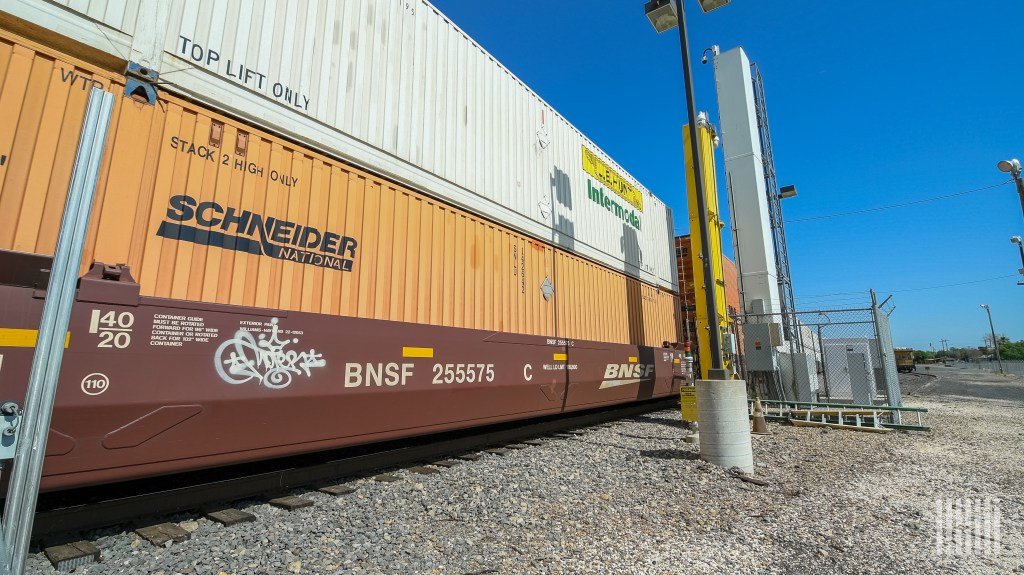
    Intermodal rail usage has surged by 10% compared to 2025 levels, while long-haul truckload demand stagnates, signaling a strategic shift as shippers abandon expensive trucking lanes for rail alternatives.

    The Divergence Between Rail and Road

    Since mid-July, intermodal and long-haul tender volumes (LSTVI) have moved in opposite directions. While domestic-sized container usage (ORAILDOML) is climbing, long-haul tender volumes—defined as loads traveling over 800 miles—have remained flat. This trend raises a critical question: is this the beginning of the end for the current truckload upcycle?

    Long-haul trucking is the segment most interchangeable with intermodal, and currently, it is where rail offers the most significant cost advantages. Total tender volumes are up 6% year-over-year, yet long-haul remains the only segment failing to show annual growth. Furthermore, the LSTVI has plummeted to its lowest point this year—a highly unusual occurrence for August, especially given the strength of imports arriving at California ports.

    Import Dynamics and Geographic Growth

    Long-haul trucking demand remains deeply tethered to imports, with 30-40% of overseas containers clearing through the Los Angeles and Long Beach port complexes. A significant portion of this freight travels to the East Coast, where the majority of the U.S. population resides.

    While Los Angeles serves as the primary gateway, much of the freight is transloaded into domestic containers or trucks after moving inland. Chicago, the nation’s largest market for domestic container shipping, has seen a 9% growth rate compared to last year. Meanwhile, Atlanta—fed by containers from Savannah and Los Angeles—has experienced a staggering 20% growth in domestic container volumes, far outpacing Los Angeles’s modest 3% increase.

    The Cost Catalyst

    The primary driver behind this modal shift is the rapid escalation of truckload costs. Contract rates from Chicago to Elizabeth, New Jersey, have jumped 31% (including fuel), while intermodal rates on the same route rose only 5%. The disparity is even sharper for the Atlanta to Elizabeth lane, where trucking rates are up nearly 60% compared to just 6% for intermodal. For most shippers, these price gaps are impossible to ignore.

    Sustainability and Future Risks

    While the immediate cost savings are clear, these spreads are likely unsustainable given the inherent limitations of rail infrastructure. Intermodal carriers are almost certain to implement double-digit rate increases, as they have significant room to raise prices without losing business. However, a potential transcontinental merger could act as a temporary ceiling on these rates until a formal ruling is issued.

    Capacity remains a concern. Although rails have managed the current volume spike, drayage constraints mirror the same bottlenecks affecting long-haul trucking. Additionally, the market has yet to hit the peak intermodal season in September and October.

    A final variable is the return of supply chain urgency. With inventory levels at the downstream end tighter than in previous years, shippers remain vulnerable to unexpected demand shocks. Relying too heavily on a single mode of transportation carries significant risk, and as the freight market remains highly dynamic, shippers must balance immediate cost-cutting with long-term supply chain resilience.

  • Silicom (SILC) Q2 2026: Revenue Soars 59% Amid AI Boom

    Silicom (SILC) Q2 2026: Revenue Soars 59% Amid AI Boom

    Silicom Ltd. (SILC) reported outstanding financial results for the second quarter of 2026 on Wednesday, July 29, significantly outperforming market expectations with a 59% year-over-year revenue increase to $23.8 million. Driven by a surge in its core business and early momentum in AI inference, the company has raised its full-year 2026 revenue guidance to a range of $93 million to $95 million.

    Accelerating Growth and Strategic Inflection

    During the Q2 earnings call, President and CEO Liron Eizenman highlighted that the company’s strategic plan is yielding results well ahead of schedule. The revenue growth trajectory has steepened consistently, moving from 17% in Q4 2025 to 33% last quarter, and reaching 59% in the current quarter. Management expects this momentum to continue, with third-quarter guidance implying growth as high as 66% year-over-year.

    Key Design Wins Driving Momentum

    Silicom has successfully secured seven new design wins in the first half of 2026, putting the company on track to exceed its annual target of nine. Among the notable achievements in Q2:

    • An FPGA Smart NIC design win with a European leader in post-quantum cryptography, expected to scale to $3 million in annual deployment.
    • The company’s first “white label” switching design win with a Tier 1 global security leader, representing a $5 million annual revenue potential.
    • A new custom high-speed server adapter win with a blue-chip customer, which is projected to triple business with that client to nearly $10 million by 2027.

    The AI Inference Shift

    A significant portion of the discussion focused on Silicom’s rapid expansion into the AI inference market. Eizenman noted that the company is successfully capitalizing on the industry-wide shift from AI model training to inference-based workloads. Silicom has already secured a design win with a pioneering AI inference acceleration provider and is actively developing bespoke solutions to meet the specific networking and compute challenges of AI infrastructure.

    Financial Health and Profitability Outlook

    CFO Eran Gilad emphasized the operating leverage inherent in the company’s business model. While revenue grew by 59%, operating expenses increased by only 16%, leading to a significant narrowing of net losses. Silicom expects to return to non-GAAP profitability in the second half of 2026, earlier than initially anticipated.

    The company maintains a robust balance sheet with $107 million in working capital and marketable securities, including $55 million in cash and no debt. This liquidity allows Silicom to build strategic inventory to mitigate supply chain lead times and support aggressive growth in its AI and core product lines.

    Addressing Future Scalability

    When questioned about the company’s recent shelf registration filing, Eizenman clarified that it is standard corporate housekeeping designed to ensure financial flexibility. “If we experience higher-than-expected growth in our core business or see an opportunity to aggressively scale alongside the accelerating demand for our AI inference solution, this simply gives us the agility to support that working capital efficiently,” Eizenman stated.

    As Silicom continues to leverage its deep-rooted expertise in networking and FPGA technology, management remains confident that the current momentum provides a solid foundation for sustained growth throughout 2027 and beyond.

  • Why Samsung’s Netlist Deal is a Strategic Play for AI

    Why Samsung’s Netlist Deal is a Strategic Play for AI

    Samsung Electronics has secured a five-year cross-licensing agreement with Netlist to resolve all ongoing litigation, granting the tech giant access to critical server DIMM and High Bandwidth Memory (HBM) intellectual property while establishing a new supply relationship for DRAM and NAND products.

    Strategic IP Access and Legal Clarity

    This alliance serves as a pivotal move for Samsung, effectively wiping the slate clean on legal disputes while bolstering its technological arsenal. By gaining access to Netlist’s full patent portfolio, Samsung has significantly lowered its legal risk profile. More importantly, the deal provides clearer access to proprietary AI and data center memory IP. As part of the arrangement, Samsung has also committed to a supply relationship and acquired 10 million shares of Netlist, deepening the integration between the two entities.

    Strengthening the AI Infrastructure Narrative

    The agreement underscores Samsung’s aggressive pivot toward high-performance memory solutions tailored for the booming AI and data center sectors. This strategy complements the company’s recent disclosures at FMS 2026, where it unveiled new architectures such as zHBM, zNAND, and V10 BV NAND. By aligning its hardware roadmap with Netlist’s IP, Samsung is positioning itself to capture a larger share of the AI server market, despite the persistent pressures of intense industry competition and significant capital expenditure requirements.

    Monitoring Future Commercial Momentum

    Investors should look for tangible evidence of this partnership manifesting in future product wins. Key indicators of success will include joint design disclosures or customer adoption announcements involving Netlist-related DIMM or HBM technology. These developments, when viewed alongside Samsung’s ongoing push for HBM4E and PM1763 PCIe 6.0 SSDs, will serve as the true litmus test for the deal’s commercial value. Future earnings calls and regulatory filings will be the primary sources to determine if this alliance translates into measurable revenue growth or remains merely a patent-focused settlement.

    Samsung Electronics currently trades at ₩230,500. While the stock has delivered robust gains over multi-year periods, it has faced a sharp 22.1% pullback over the past month, making the market’s reaction to such strategic maneuvers particularly relevant for stakeholders.

  • General Dynamics Q2 2026: Revenue Hits $14.1B in Record Quarter

    General Dynamics Q2 2026: Revenue Hits $14.1B in Record Quarter

    General Dynamics (NYSE: GD) reported a stellar second quarter on Wednesday, July 29, 2026, delivering earnings of $4.24 per diluted share on $14.1 billion in revenue. Driven by robust performance in its Aerospace and Marine segments, the company outperformed consensus estimates, showcasing an 8.1% year-over-year revenue increase and a significant 14.4% jump in net earnings.

    Record-Breaking Financial Performance

    Chairman and CEO Phebe Novakovic highlighted that the second quarter surpassed an already strong start to the year. The company achieved an operating margin of 10.4%, a 40-basis-point improvement compared to the same period in 2025. Year-to-date, General Dynamics has generated $27.6 billion in revenue, marking a 9.1% growth rate. CFO Kim Kuryea emphasized the company’s financial health, noting over $4 billion in operating cash flow for the first half of 2026 and a record backlog reaching $136.5 billion.

    Aerospace and Marine Systems Drive Growth

    The Aerospace segment saw a 15.1% revenue increase to $3.5 billion, fueled by 41 aircraft deliveries and strong service revenue from Gulfstream and Jet Aviation. Meanwhile, Marine Systems continued its upward trajectory with 10.4% revenue growth, propelled by the Columbia and Virginia-class submarine programs. Productivity gains at shipyards, particularly at Bath Iron Works and Electric Boat, remain a central focus as the company works to accelerate delivery rates to meet national security demands.

    Defense and Technology Resilience

    The Defense segment demonstrated the strength of the company’s combat portfolio, with Combat Systems reporting a 2.1-to-1 book-to-bill ratio. Demand remains high for wheeled and tracked vehicles, driven by the current international threat environment. In the Technologies segment, Mission Systems led growth, while GDIT successfully leveraged agile contracting, winning more Other Transaction Authority (OTA) programs in the first half of 2026 than in the entirety of 2025.

    Strategic Outlook and Guidance

    Based on the strong first-half performance, General Dynamics has raised its full-year EPS guidance to a range of $16.80 to $16.90. The company expects total 2026 revenue to reach approximately $55.7 billion. While supply chain challenges persist in specific single-source components, management noted a “noticeable improvement” in the overall cadence of production across the enterprise.

    General Dynamics remains focused on capital deployment, having paid $430 million in dividends and repurchased $100 million in stock during the quarter. With a strong cash balance of $4.3 billion, the company is well-positioned to continue its investment in shipyard capacity and next-generation aerospace platforms throughout the remainder of the year.

  • Clover Health Soars: Q2 Profits Surge and Outlook Raised

    Clover Health Soars: Q2 Profits Surge and Outlook Raised

    Clover Health Investments (NASDAQ:CLOV) posted robust second-quarter 2026 results, characterized by significant Medicare Advantage membership growth and sustained profitability, prompting the company to raise its financial guidance for the full fiscal year.

    Strategic Growth and the Clover Assistant

    CEO Andrew Toy identified the company’s proprietary “Clover Assistant” technology as the cornerstone of its clinical and financial strategy. The platform empowers physicians with a holistic view of patient health, facilitating earlier disease detection and more effective management of chronic conditions.

    During the first half of 2026, Clover reported a 48% year-over-year increase in Medicare Advantage membership. Total revenue climbed by over $550 million to reach $1.5 billion, while GAAP net income improved by $67 million compared to the same period last year. Consolidated gross profit saw a $104 million boost, accompanied by a 200-basis-point improvement in operating leverage.

    Quarterly Performance Breakdown

    Interim CFO Clay Thornton noted that average Medicare Advantage membership hit 157,000 in Q2, a 48% jump from the previous year. Revenue for the quarter rose 56% to $743 million.

    Consolidated gross profit reached $153 million, marking 54% growth year-over-year. Additionally, adjusted selling, general, and administrative expenses accounted for 15% of revenue, an efficiency gain of approximately 220 basis points compared to Q2 2025.

    Clover reported adjusted EBITDA of $41 million and GAAP net income of $28 million for the quarter. Over the first six months of 2026, the company achieved $81 million in adjusted EBITDA and $55 million in GAAP net income.

    Financial Position and 2026 Outlook

    Clover concluded the quarter with a solid balance sheet, boasting $443 million in cash and investments with zero outstanding debt. Operational cash flow reached $133 million in the first half of the year, providing the company with the liquidity to self-fund future expansion.

    Management remains disciplined, noting that because a substantial portion of its membership is early in the care cycle, they are carefully monitoring emerging claims data. The company anticipates higher gross profit in the third quarter compared to the fourth, citing typical Medicare Advantage seasonality and increased investment activities related to the annual enrollment period.

    The Power of Cohort Maturation

    A key driver of Clover’s confidence is the performance of its member cohorts. Management reports that cohorts typically see gross profit improve by roughly $70 per member per month as they transition from their first to their second year of enrollment.

    Currently, the 2025 cohort—representing 21% of total membership—is showing superior economics in its second year. Meanwhile, the 2026 cohort (28% of membership) is tracking according to expected early-stage patterns. This progression is a primary factor in management’s positive outlook for 2027.

    Operational Efficiency and Regulatory Status

    Medical-cost trends have outperformed expectations, with favorable inpatient utilization and moderated outpatient trends during the second quarter. Furthermore, changes to out-of-network dental claims management and better-than-expected Part D performance contributed to the improved margins.

    Regarding regulatory developments, CEO Andrew Toy confirmed that, following a court order and CMS recalculation, all Clover Medicare Advantage members are now enrolled in plans rated 4.5 stars for the 2027 payment year. While the government intends to appeal the decision, Clover is bidding for 2027 based on these 4.5-star ratings.

    Future AI Integration

    Looking ahead, Clover is expanding its use of artificial intelligence beyond clinical decision support. The company plans to integrate AI into insurance operations to accelerate claims processing, improve accuracy, and further reduce administrative overhead.