
Blog

  • Jobs Report Miss Triggers Stock Rally: What to Know

    Jobs Report Miss Triggers Stock Rally: What to Know

    Major stocks, including Corning, Sunrun, Coinbase, Builders FirstSource, and Blue Bird, surged during the afternoon session today following a July jobs report that revealed an unexpected loss of 23,000 jobs, signaling a cooling labor market.

    “Bad News Is Good News” for Markets

    While economists had projected a gain of approximately 80,000 nonfarm payrolls, the U.S. Bureau of Labor Statistics reported that the unemployment rate remained steady at 4.1%. This softer-than-anticipated data prompted investors to increase bets on an imminent interest rate cut by the Federal Reserve. The prevailing market logic suggests that a slowing economy may force the central bank to pivot away from rate hikes and toward cuts to stimulate growth, ultimately lowering borrowing costs and increasing the appeal of equities.

    Lower interest rates are particularly advantageous for growth-oriented companies, as they decrease the discount rate applied to future earnings, thereby enhancing the present value of long-term cash flows.

    Market Volatility and Opportunities

    The stock market frequently overreacts to macroeconomic data, but such fluctuations can create entry points for high-quality assets. Among the companies impacted by today’s shift, Sunrun remains a primary focus due to its inherent volatility, having recorded 66 price moves greater than 5% over the past year.

    Sunrun’s Financial Landscape

    Today’s market movement suggests that while investors find the jobs data meaningful, it does not fundamentally alter the long-term perception of Sunrun’s business model. To understand the current sentiment, it is necessary to look back at the company’s performance five months ago, when shares plummeted 36.1% following its fourth-quarter earnings report. Despite beating Wall Street estimates with $1.16 billion in revenue—a 124% year-over-year increase—and reporting a surprise profit of $0.38 per share, investor confidence was shaken by a weak outlook.

    Analysts have since pointed to a projected 13% revenue decline over the next 12 months and a return to negative earnings per share. Additionally, Sunrun’s financial health remains a point of contention; negative free cash flow widened to $312.7 million for the quarter. These factors, combined with a significant debt load, have fueled ongoing concerns regarding the company’s long-term profitability.

    Year-to-date, Sunrun shares have declined 47.5%. Trading at $10.21, the stock sits 52.3% below its 52-week high of $21.41, recorded in January 2026. For long-term investors, the performance has been stark: a $1,000 investment made five years ago would currently be valued at just $199.57.

  • Prestige Consumer Healthcare Q1 Revenue Climbs 6.5%

    Prestige Consumer Healthcare Q1 Revenue Climbs 6.5%

    Prestige Consumer Healthcare (NYSE:PBH) reported a 6.5% revenue increase for the first quarter of fiscal 2027, reaching $265.7 million, fueled by strong brand performance, the integration of Breathe Right, and favorable retailer order timing.

    Financial Performance and Strategic Growth

    The company’s quarterly revenue grew from $249.5 million in the previous year, with organic revenue—excluding foreign exchange impacts and the Breathe Right acquisition—rising by 3.2%. Profitability metrics also saw an upward trend, as adjusted diluted earnings per share (EPS) climbed to $0.98, up from $0.95, and adjusted EBITDA increased by 5.5%.

    Chairman, President, and CEO Ron Lombardi highlighted the company’s operational success, noting, “Our business exceeded sales and earning expectations in the first quarter. We also delivered record adjusted free cash flow, providing additional flexibility for disciplined capital allocation moving forward.”

    Category Performance and Supply Chain Updates

    North American organic revenue grew by 4.2%, primarily driven by gastrointestinal brands Fleet and Dramamine, alongside dermatological gains from Compound W. While TheraTears and Debrox also performed well, these gains helped mitigate softer sales for Clear Eyes, which continues to face supply constraints.

    To address these challenges, Prestige is investing in its Pillar5 sterile ophthalmic manufacturing facility. Lombardi expects output variability to persist through the first half of fiscal 2027, with improvements in eye-care shipments anticipated in the second half of the year. Currently, Clear Eyes accounts for less than 3% of total sales, with management describing its recovery as a multiyear effort to rebuild safety stocks and restore full SKU availability.

    International and E-commerce Insights

    International organic revenue saw a slight 2.1% decline due to the timing of distributor orders. Despite this, the company maintains its long-term growth target of at least 5% for the international segment. Meanwhile, e-commerce remains a bright spot, with double-digit growth rates continuing, although order timing patterns shifted some revenue from the second quarter into the first.

    Expansion Through Strategic Acquisitions

    Prestige finalized the acquisition of the Breathe Right portfolio on June 12 and Australia-based LaCorium Health on July 1. Breathe Right contributed $5.9 million to the first-quarter results and is expected to generate approximately $200 million in annual revenue. The brand has been largely integrated into the company’s network in under 60 days.

    LaCorium Health, known for the Dermal Therapy brand, is projected to contribute roughly $40 million in annualized revenue. Prestige plans to leverage sales-force integration and supply-chain efficiencies to drive further synergies from these acquisitions over the next two years.

    Fiscal 2027 Outlook and Capital Position

    Driven by these acquisitions, Prestige raised its full-year revenue outlook to a range of $1.290 billion to $1.315 billion. The company anticipates an adjusted gross margin of slightly over 57% for the remainder of the year. Additionally, Prestige achieved a record $83.7 million in adjusted free cash flow and raised its annual forecast for this metric to at least $270 million.

    With a net debt of approximately $2 billion as of June 30, the company has refinanced its debt profile, with its earliest maturity now set for 2031. Management intends to focus on paying down prepayable debt throughout the rest of fiscal 2027.

  • Ducommun Hits Record Growth: Missile Surge and 737 Max Wins

    Ducommun Hits Record Growth: Missile Surge and 737 Max Wins

    Ducommun Inc (DCO) reported a stellar second quarter for 2026, underscored by record-breaking revenue and a surging backlog driven by a 68% growth in its missile programs and strategic wins in aerospace retrofits. During the recent earnings call, leadership highlighted how specialized manufacturing and high-IP product integration are fueling the company’s aggressive expansion.

    Missile Growth and the Boeing 737 Max Retrofit

    The company’s missile segment experienced a massive 68% growth in Q2, primarily supported by the PAC-3 program. CEO Steve Oswald emphasized Ducommun’s critical role as a primary supplier of electronic cards for the program. Beyond defense, the company secured a major retrofit order for the Boeing 737 Max. By designing a proprietary switch for the aircraft, Ducommun expects consistent revenue for years to come, with the potential for the product to transition into line-fit status for future production.

    Redefining Contract Manufacturing

    Addressing investor concerns regarding contract manufacturing exposure, Oswald clarified that Ducommun operates in high-barrier, niche markets rather than commoditized machining. The company’s titanium business utilizes specialized super plastic and hot forming processes, while its Joplin facility produces ruggedized harnesses for extreme heat and pressure environments. These proprietary capabilities provide the company with significant pricing power and insulation from standard industry competition.

    Strategic Alignment with Emerging Primes

    Ducommun is actively positioning itself to capitalize on the rise of “affordable mass” defense providers, including AeroVironment and Anduril. While the company may not be targeting low-cost drone components, it is aggressively pursuing opportunities in composite materials and RF antenna technology. Management confirmed they are already in high-level discussions and quoting processes to integrate their specialized hardware into these emerging defense platforms.

    Margin Expansion and Engineered Products

    CFO Suman Mukherjee identified the shift toward engineered products as a primary lever for long-term margin expansion. The company’s focus on high-IP products is designed to improve the overall margin profile, moving away from lower-margin legacy work. Currently, engineered products account for 23% of revenue—an increase from 15%—with plans to further accelerate this mix through both organic growth and strategic M&A activity.

    Operational Capacity and Supply Chain Readiness

    To support the current ramp-up in demand, Ducommun has optimized its existing footprint rather than undertaking massive new capital expenditures. The company recently activated 30,000 square feet of previously unused space in its Joplin facility specifically for Tomahawk production. Furthermore, the company has successfully onboarded nearly 90 new employees since January to ensure production targets are met. Oswald noted that the internal supply chain team is effectively managing buffer stocks, leaving the company well-positioned to handle component demand without significant bottlenecks.

    Future Outlook and M&A Strategy

    Looking ahead, Ducommun remains active in the M&A market, having bolstered its internal team to evaluate transformational opportunities. While management remained tight-lipped on specific targets, they signaled that shareholders can expect deeper insights into the company’s long-term growth roadmap and M&A strategy during the upcoming Investor Day in September.

  • Figma Beats AI Revenue Targets: Is the 15% Dip a Buy?

    Figma Beats AI Revenue Targets: Is the 15% Dip a Buy?

    Figma (FIG) shares tumbled 15% following its second-quarter 2026 earnings report on August 5, despite the company surpassing revenue estimates and raising its full-year guidance fueled by successful AI monetization.

    AI Growth vs. Margin Pressures

    The market reaction highlights a growing investor anxiety: while Figma’s aggressive push into AI tools is successfully driving revenue, the associated infrastructure and development costs are significantly squeezing profit margins. This recent sell-off follows a period of volatility, where the stock saw a 16% return over the last 90 days, yet carries a 69% total shareholder return over the past year, indicating that short-term momentum is currently outpacing the long-term narrative.

    Evaluating the Fair Value Gap

    Following the post-earnings drop, Figma is currently trading at $23.97, notably below the consensus fair value estimate of $30.40. This valuation gap raises critical questions regarding the company’s future growth trajectory. The bullish case for a $30.40 valuation relies heavily on sustained compound revenue expansion, a significant shift in margin performance, and the maintenance of a high earnings multiple.

    Market Positioning and Valuation Metrics

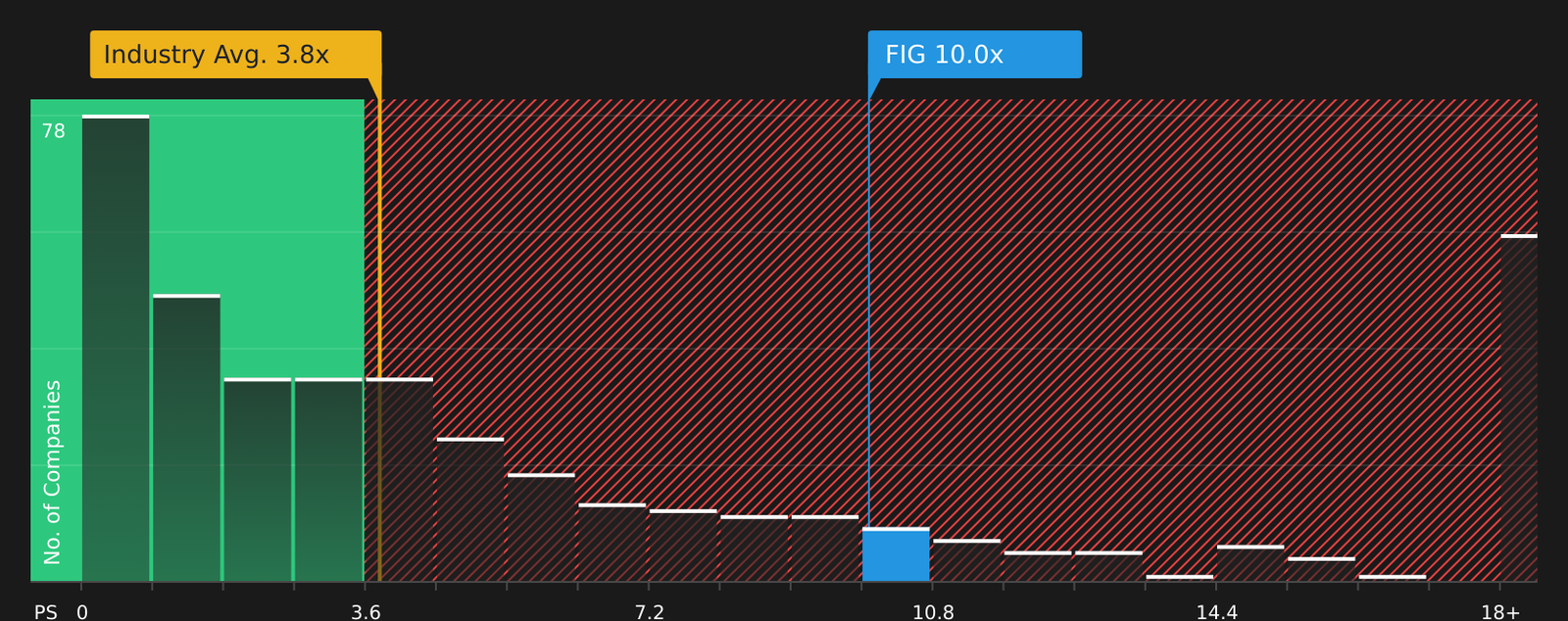
    Investors are currently scrutinizing Figma’s pricing relative to its peers. The stock trades at a price-to-sales (P/S) ratio of 10x, which sits above the estimated fair ratio of 9.1x and the broader US Software industry average of 3.8x, though it remains lower than the 13.7x average seen among direct competitors. This positioning forces a choice for market participants: is the current price a discount for a premium growth story, or does the AI spending profile present an unacceptable risk?

    Assessing Long-Term Risks

    Beyond the current valuation, the path forward for Figma involves navigating heightened competition in the design and developer tools sector. Heavy capital allocation toward AI, combined with the potential for slowing revenue growth if market saturation occurs, remains a central concern for long-term stakeholders. Investors must weigh the potential rewards of Figma’s AI integration against these mounting operational warning signs.

  • Roku Executive Offloads $1.6M in Stock Amid Fox Acquisition

    Roku Executive Offloads $1.6M in Stock Amid Fox Acquisition

    Gilbert Fuchsberg, President of Subscriptions at Roku, Inc. (NASDAQ:ROKU), sold 10,719 shares of Class A Common Stock on August 6, 2026, netting approximately $1.6 million. The transaction, disclosed via an SEC Form 4 filing, saw shares sold at a weighted average price of $150.00, just as the company faces a high-profile acquisition by Fox Corporation.

    Inside the Transaction Details

    The sale occurred on August 6, 2026, with the post-transaction value calculated based on that day’s market close of $150.07. It is critical to note that this divestment was a non-discretionary move executed under a pre-arranged Rule 10b5-1 trading plan, meaning the sale does not necessarily signal the executive’s personal sentiment regarding the stock’s future or the pending merger with Fox.

    Roku’s Position in the Streaming Market

    Roku remains a powerhouse in the streaming sector, currently boasting a market capitalization of $22.7 billion. The company’s financial health is robust, reporting $5.2 billion in trailing 12-month revenue. Its competitive edge is anchored in an open platform architecture and a deeply integrated hardware-software ecosystem that has cemented its role as essential infrastructure for digital entertainment.

    The Fox Acquisition Impact

    The timing of the insider sale is notable, occurring just one day before Roku shares climbed to a 52-week high of $153.54 on August 7. The upward momentum is largely attributed to the impending acquisition by Fox Corporation. However, the market reaction has been mixed; Fox shares experienced a decline following reports that the media giant plans to take on $12 billion in new debt to finance the acquisition of the streaming platform.

    Financial Performance Overview

    Roku’s fundamentals underscore why it is a prime target for acquisition. In the second quarter, the company reported a 22% year-over-year revenue increase, reaching $1.4 billion. Profitability also saw a significant surge, with net income rising to $164.2 million, a massive leap compared to the $10.5 million reported during the same period in the previous year.

  • Chipotle Q2 2026 Earnings: Revenue Hits $3.3B Despite Headwinds

    Chipotle Q2 2026 Earnings: Revenue Hits $3.3B Despite Headwinds

    Chipotle Mexican Grill (CMG) reported a strong second quarter for fiscal 2026, delivering a 9.3% revenue increase to $3.3 billion. The results, announced on Wednesday, July 29, 2026, were driven by steady transaction growth and the successful execution of the company’s “Recipe for Growth” strategy, which has focused on operational excellence, digital innovation, and menu expansion.

    Recipe for Growth: Driving Operational Efficiency

    CEO Scott Boatwright highlighted that the company’s core strategy is yielding tangible results in restaurant throughput and guest satisfaction. A key component of this success is the rollout of the High-Efficiency Equipment Package (HEEP). Currently installed in over 1,000 locations, HEEP is expected to reach 2,000 restaurants by the end of the year. Data indicates that restaurants equipped with this technology are outperforming the broader enterprise by two to three entrees during peak 15-minute service windows.

    Digital Transformation and Rewards Relaunch

    Chipotle continues to modernize its digital ecosystem under the leadership of Chief Digital Officer Arlie Sisson. The company relaunched its Rewards program in mid-April, focusing on personalization and reducing transaction friction. Since the relaunch, daily enrollments have surged by nearly 20%. Looking ahead, the company plans to pilot a “frictionless” in-restaurant payment experience in August, allowing guests to earn rewards automatically at checkout, further streamlining the service process.

    Menu Innovation and Brand Evolution

    The return of Chipotle Honey Chicken proved to be a major catalyst this quarter, outperforming previous launches with an attachment rate exceeding 25%. Additionally, the company has welcomed Chief Brand Officer Fernando Machado, who is spearheading a shift in brand messaging. The strategy focuses on highlighting the “real food” and “fresh preparation” that differentiate Chipotle, moving toward culturally relevant activations that resonate with a younger, broader demographic.

    Global Expansion and Strategic Markets

    Chipotle’s international footprint is growing through a blend of company-owned and partner-operated models. The company recently celebrated its first opening in Monterrey, Mexico, and has plans for expansion into Mexico City in 2027. Furthermore, the company is preparing for market entries in South Korea and Singapore, signaling a long-term commitment to becoming an iconic global brand.

    Financial Performance and 2026 Outlook

    CFO Adam Rymer reported that while the momentum from the second quarter carried into early July, the industry has faced recent softening due to consumer caution. Consequently, the company has adjusted its full-year comparable sales guidance to the low single-digit range. Despite these headwinds, the company remains confident in its long-term trajectory, supported by a healthy balance sheet and a robust pipeline for new restaurant openings, with 350 locations expected to open this year.

    The company also addressed recent industry-wide concerns regarding cyclospora. Management clarified that Chipotle is not involved in the current supply chain issues affecting the industry, noting that their lettuce is sourced from California and that they maintain a rigorous food safety program to protect guests and staff.

    Capital Allocation

    Chipotle continues to leverage its strong cash position to return value to shareholders. During the second quarter, the company repurchased $631 million in stock. With the Board authorizing an additional $1.3 billion in repurchase capacity, the company holds $1.7 billion in remaining authorization to execute opportunistic buybacks throughout the remainder of the year.

  • Why Kevin Warsh May Hike Rates Despite July’s Jobs Miss

    Why Kevin Warsh May Hike Rates Despite July’s Jobs Miss

    Despite a disappointing jobs report showing a loss of 23,000 positions in July—far below the expected gain of 80,000—Federal Reserve Chair Kevin Warsh may still move to increase interest rates at the next Federal Open Market Committee (FOMC) meeting. While weak employment data typically signals a need for monetary easing, Warsh remains focused on his primary objective: curbing persistent inflation.

    The Inflation Battle vs. Employment Data

    While the recent cooling of the annual inflation rate from 4.2% to 3.5% suggests progress, Warsh has downplayed the significance of this shift. He has characterized the decline as merely “one data point” rather than a definitive victory. Warsh maintains a firm commitment to reaching a 2% inflation target, explicitly stating that there is no “soft target” for the Fed to settle for. Consequently, raising interest rates remains his most potent tool to ensure price stability, regardless of the current labor market struggles.

    Market Uncertainty and FOMC Expectations

    The financial markets remain divided on the Fed’s next move. According to the CME FedWatch tool, there is currently a 50-50 split regarding the probability of a rate hike next month. This uncertainty highlights the tension between the cooling economy and the Fed’s aggressive stance on inflation.

    Risks to the S&P 500

    The S&P 500 has experienced a remarkable run, rising 13% so far this year and doubling in value since 2023. However, this growth has pushed valuations to record highs, leaving the index vulnerable. Should Warsh proceed with an interest rate hike, the resulting increase in borrowing costs for businesses could trigger a significant downturn in share prices.

    Investor Caution in a Volatile Market

    Beyond the immediate threat of FOMC policy changes, the stock market’s recent historic performance suggests it may be overdue for a correction. Investors are increasingly evaluating the benefits of diversifying into value-oriented assets to hedge against potential market instability. Whether or not the Federal Reserve opts for a rate increase, the current economic climate warrants a disciplined and cautious approach to portfolio management.

  • Is Insulet (PODD) Stock Undervalued After Its Recent Slide?

    Is Insulet (PODD) Stock Undervalued After Its Recent Slide?

    Insulet (PODD) shares have plummeted over the past year, yet current Discounted Cash Flow (DCF) models and market multiples suggest the company is significantly undervalued compared to its underlying business performance.

    Evaluating Insulet’s Intrinsic Value

    The core of the valuation debate rests on whether the stock’s 54.1% decline over the last 12 months reflects a genuine shift in business fundamentals or an overreaction by a cautious market. By utilizing the DCF method—which projects future free cash flow back to its present value—investors can gain a clearer perspective on the company’s worth.

    Based on a trailing twelve-month free cash flow of approximately $438.8 million, the DCF model estimates an intrinsic value of $243 per share. This figure represents a 42.6% discount from the current share price, signaling that the stock may be priced well below its potential. While Insulet recently lowered its full-year revenue growth guidance following an earnings beat, the data suggests that these conservative projections are already baked into the current market price.

    Market Multiples and Industry Comparison

    The Price-to-Earnings (P/E) ratio provides further evidence of a valuation gap. Insulet is currently trading at a P/E of approximately 25.7x, which sits comfortably below the Medical Equipment industry average of 27.5x and significantly under the peer group average of 37.6x.

    When adjusting for Insulet’s specific sector, size, and risk profile, a “fair” P/E multiple is estimated to be closer to 30.0x. Because the current 25.7x multiple remains below this threshold, the stock appears to be trading at a discount relative to what investors typically pay for similar earnings power in this industry.

    Navigating Future Growth Risks

    While the valuation metrics point toward a clear opportunity, the primary concern for investors remains the durability of future cash flows. The critical question is whether Insulet can maintain the growth and profitability levels required to validate these intrinsic value estimates.

    Investors should monitor how the company’s actual progress aligns with growth expectations. If the business sustains its trajectory, the current discount may represent an attractive entry point. Conversely, if growth continues to decelerate, there is a risk that the stock could become a value trap. For those looking to dive deeper, tracking these variables against analyst forecasts remains the most effective way to gauge whether the market’s current caution is justified.

  • Occidental Petroleum Q2 Earnings: Production Beats and $4B Plan

    Occidental Petroleum Q2 Earnings: Production Beats and $4B Plan

    Occidental Petroleum (NYSE:OXY) outperformed production guidance in the second quarter of 2024, delivering its highest quarterly free cash flow since Q3 2022 while unveiling a strategic roadmap to generate over $4 billion in additional sustainable annual cash flow by 2030.

    Strategic Financial Outlook and Cash Flow Goals

    CEO Richard Jackson emphasized a dual focus on capital returns and balance sheet fortification. The company’s long-term strategy shifts away from aggressive production growth, prioritizing instead lower operating costs and reduced sustaining capital requirements. Jackson noted that the projected $4 billion in annual sustainable cash flow represents a 95% annualized growth from 2025 levels.

    CFO Sunil Mathew reported adjusted earnings of $2.40 per diluted share, with GAAP earnings reaching $2.75 per share, bolstered by favorable commodity hedges and equity investment gains. The company concluded the quarter with a robust liquidity position, holding approximately $4.2 billion in unrestricted cash.

    Operational Excellence and Production Gains

    Total production averaged 1.43 million barrels of oil equivalent per day (BOE/d), surpassing the midpoint of company guidance by 23,000 BOE/d. This performance was largely driven by high-efficiency wells in the Permian Basin and strong uptime in the Gulf of Mexico, which successfully mitigated production disruptions in the Middle East.

    Operational efficiency was further highlighted by domestic lease operating expenses of $7.80 per BOE—6% below initial guidance. Additionally, the midstream and marketing segment achieved a record $960 million in adjusted earnings, doubling the expected midpoint due to optimized gas marketing and favorable commodity price movements.

    Debt Reduction and Dividend Growth

    Occidental continues to aggressively deleverage, reducing principal debt by $1.5 billion to $11.8 billion, the lowest level since 2019. This reduction translates to an annual interest expense savings of approximately $630 million compared to 2025 projections. In a move signaling confidence in its financial trajectory, the board approved an 8% increase in the quarterly dividend to $0.28 per share.

    Management remains committed to reaching a principal debt target of $10 billion. Post-target, the company plans to balance debt repayment with cash accumulation in anticipation of preferred equity redemption in August 2029.

    Efficiency Gains and Low-Carbon Ventures

    By 2030, Occidental expects to reduce sustaining capital by $900 million, aided by a decline rate improvement from 25% to 20%. The company has already realized over $2 billion in savings since 2023 through workforce simplification and technological deployment.

    Investment in low-carbon ventures is also shifting. As the Stratos direct air capture project transitions from development to operations, capital expenditure in this sector is expected to decline by $400 million starting next year. Full commissioning for the Stratos facility is anticipated by the end of 2024, with operational status projected for 2027.

    Future Guidance and Market Projections

    For the third quarter, production is forecast between 1.4 million and 1.44 million BOE/d. While the company raised its full-year production guidance, it maintained its capital expenditure outlook of $5.5 billion to $5.9 billion. Management expects midstream and marketing income to moderate in the coming quarter as natural gas spreads narrow, though this is expected to be offset by stronger upstream gas realizations.

    The company continues to lean on advanced recovery techniques, including waterflooding and CO2 applications, to maximize asset productivity in the Powder River Basin and beyond.

  • Smith Douglas Homes Q2 2026: Revenue Soars 22% Amid Challenges

    Smith Douglas Homes Q2 2026: Revenue Soars 22% Amid Challenges

    Smith Douglas Homes Corp (SDHC) reported a robust 22% revenue surge in its second quarter of 2026, navigating a complex housing market by balancing aggressive sales incentives with operational efficiency. During the recent earnings call, CEO Greg Bennett and CFO Russ Devendorf addressed the company’s strategy for maintaining steady sales pace while managing the impact of fluctuating interest rates on gross margins.

    Market Trends and Affordability Challenges

    Addressing the performance of June and July, CEO Greg Bennett noted that market demand remains resilient despite affordability hurdles. “Demand is there; it’s just solving affordability,” Bennett explained. To maintain a steady pace, the company has leaned into forward commitments and rate purchases as interest rates climbed. Despite these challenges, Smith Douglas continues to underwrite its projects to current market conditions, maintaining a cautiously optimistic outlook for the remainder of the year.

    Decoding the Margin Compression

    A primary focus of the call was the adjustment in gross margin guidance, which moved from 18.7% (excluding charges) to a range of 16% to 16.5%. CFO Russ Devendorf clarified that this compression is a direct result of the strategic use of incentives and discounting. As a “land-light” builder, Smith Douglas prioritizes a target of one sale per community per week to align with its option contract takedowns. The company is actively adjusting pricing and closing cost support to sustain this momentum, with hopes of pulling back on incentives as market conditions stabilize.

    Construction Costs and Strategic Pricing

    On the operational front, the company reported a 2.5% to 3% year-over-year reduction in hard construction costs, which has partially offset the financial impact of incentive spending. While fuel surcharges are beginning to re-emerge as a cost pressure, the company maintains a competitive pricing edge. “We are traditionally the biggest value in our markets, underwriting to at least $10,000 below the lowest competitor,” Devendorf stated. Base price cuts are applied selectively on a community-by-community basis to ensure the company remains the top value choice for homebuyers.

    Inventory and Future Growth Strategy

    Regarding inventory management, the company reported that impairments were minimal, affecting only three communities this quarter. Devendorf emphasized that these decisions are based strictly on economic viability rather than accounting projections. Looking toward the future, the company aims to move closer to its historical 90% pre-sale rate, with the current mix sitting at a 70-30 split between sold homes and quick move-ins (specs). The margin gap between these two categories has narrowed to approximately 150-200 basis points.

    Scaling Operations and M&A Outlook

    As Smith Douglas looks to expand, management is keeping a close eye on tuck-in M&A opportunities. While the company is exploring greenfield expansion, particularly in the Southeast, Central, and potentially the Midwest regions, the focus remains on strategic growth that protects their existing team structure. With SG&A expenses tightly controlled—prioritizing variable headcounts over non-essential travel and meetings—the company remains disciplined in its approach to scaling in a competitive landscape.