Blog

  • Becton Dickinson (BDX) Jumps 6.8% After Strong Q3 Earnings

    Becton Dickinson (BDX) Jumps 6.8% After Strong Q3 Earnings

    Becton Dickinson (BDX) shares climbed 6.8% following a strong third-quarter performance, driven by better-than-expected revenue growth and strategic partnerships in the GLP-1 drug delivery market.

    Q3 Performance and Strategic Growth

    Investing in Becton Dickinson requires confidence in a medical technology franchise that prioritizes innovation to drive incremental revenue, improve margins, and sustain reliable dividend payouts. The latest quarterly results reinforce this thesis, as FX-neutral revenue outperformed analyst expectations. Management has subsequently raised its full-year outlook, buoyed by significant momentum in biologic drug delivery and new GLP-1 partnerships, including a notable semaglutide pen agreement in Brazil.

    Earnings Quality and Operational Focus

    Despite the positive growth trajectory, investors remain attentive to earnings quality. A sharp decline in year-to-date net income and a substantial one-off loss highlight the critical need for rigorous cost control in the near term. While the company maintained its annual dividend of US$4.20 and the share price has shown signs of recovery, the market’s focus has shifted toward the company’s balance sheet strength and cash generation capabilities.

    Valuation and Market Outlook

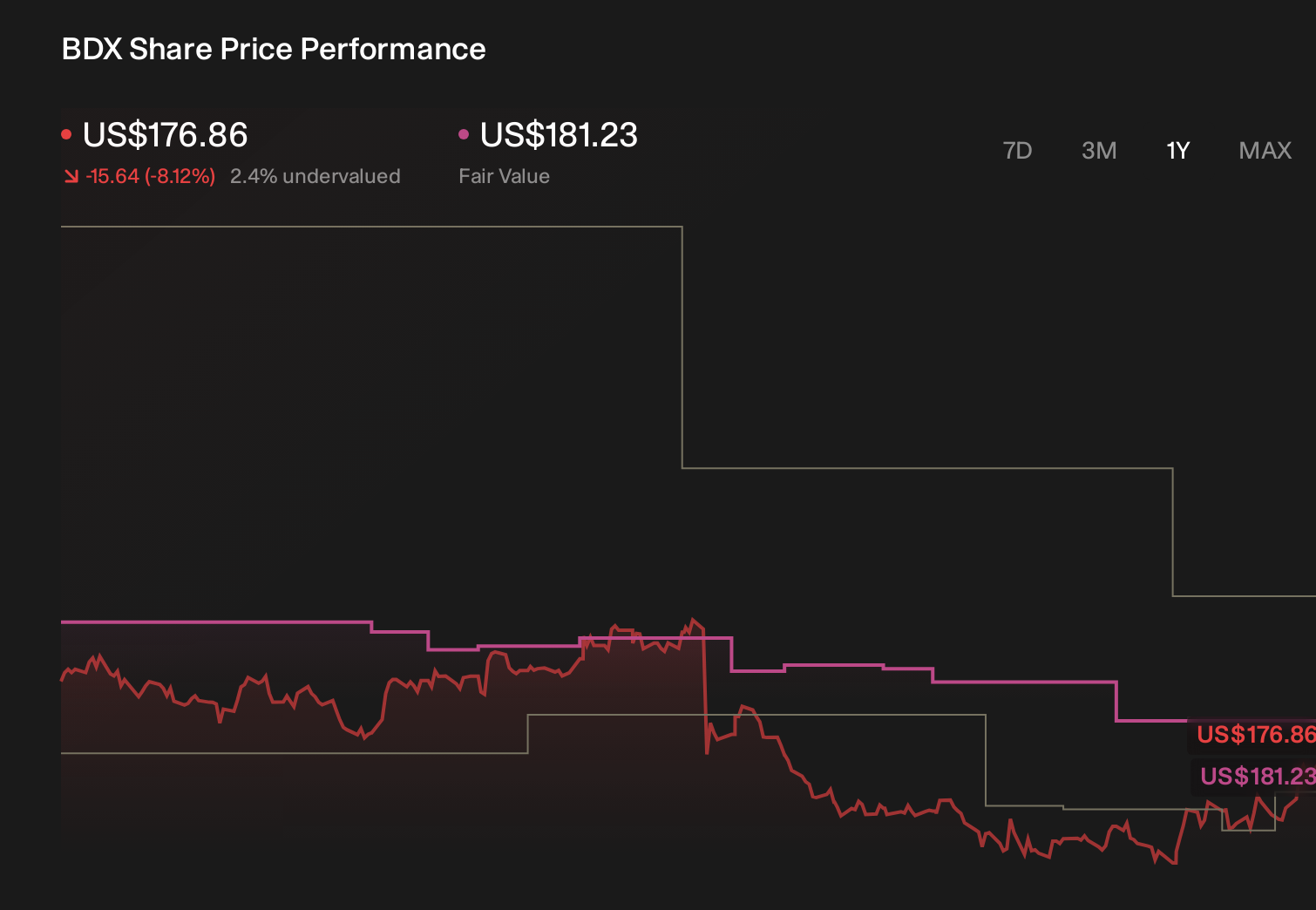
    Cash flow management and debt coverage remain key metrics for stakeholders to monitor. While Becton Dickinson’s shares have trended upward, some analysts suggest the stock remains undervalued by as much as 25%.

    Analyzing Fair Value Estimates

    Fair value estimates for BDX currently range between US$189.58 and US$234.52, reflecting a broad spectrum of market opinion. This variance, coupled with recent earnings volatility and one-off charges, underscores the importance for investors to synthesize multiple perspectives before establishing a position on the company’s current risk-reward profile.

  • Bunge Q2 2026 Earnings: Profit Soars Amid Global Volatility

    Bunge Q2 2026 Earnings: Profit Soars Amid Global Volatility

    Bunge Global (BG) reported a robust second quarter for 2026, with adjusted earnings per share (EPS) reaching $2.00, significantly outperforming the $1.31 recorded in the same period last year. During the earnings call held on Wednesday, July 29, 2026, CEO Greg Heckman attributed the strong performance to the company’s diversified global platform and disciplined risk management in an increasingly complex macroeconomic environment.

    Navigating Global Complexity

    The company’s ability to thrive despite geopolitical tensions, shifting trade flows, and volatile weather patterns was a central theme of the discussion. Heckman highlighted that Bunge’s integrated value chain allows it to capture opportunities that smaller, less diversified competitors might miss. “Bunge’s business is built for complexity and change,” Heckman stated, noting that the organization’s expanded footprint—bolstered by the Viterra transaction—has provided essential optionality in managing supply chain disruptions.

    Financial Highlights and Segment Performance

    John Neppl, Chief Financial Officer, provided a detailed breakdown of the segment results, which saw a surge in adjusted EBIT to $796 million, compared to $373 million in the prior year. Key drivers included:

    • Soybean Processing and Refining: Strong results in North and South America, particularly in Argentina, drove performance.
    • Softseed Processing: Execution across all regions improved, reflecting greater production capacity in Canada, Argentina, and Europe.
    • Grain Merchandising: Success in ocean freight and commercial services helped offset lower results in global grain merchandising and sugar.

    Strategic Outlook and Capital Allocation

    Reflecting confidence in its operational momentum, Bunge raised its full-year 2026 adjusted EPS guidance to a range of $9.25 to $9.75, up from the previous $9.00 to $9.50. The company remains focused on its capital allocation strategy, having completed a $2 billion share repurchase program associated with the Viterra integration. Furthermore, Bunge continues to invest in high-growth areas, including renewable fuels. Recent partnerships with Acelen, Petrobras, and Vibra in Brazil underscore the company’s commitment to providing sustainable soybean oil feedstock for Sustainable Aviation Fuel (SAF) and renewable diesel production.

    Operational Milestones and Future Growth

    Bunge’s management provided updates on several key capital projects, which are expected to bolster earnings power through 2030:

    • Destrehan, Louisiana: A new barge unloader and multi-seed processing plant are nearing completion, expected to be operational in the coming months.
    • Morristown SPC Plant: The facility is currently producing product, with ramp-up expected to continue as customer qualification progresses.
    • Westhaven, Netherlands: The large specialty and refined oils project remains on track for completion by the end of Q1 2027.

    Heckman emphasized that the long-term demand drivers, such as population growth and the rising need for food, feed, and fuel, remain “durable multiyear tailwinds.” As Bunge moves into the second half of 2026, the company remains positioned to leverage its expanded network and commercial synergies to maintain its competitive edge in the global agricultural market.

  • TaskUs Stock Fair Value Slashed 12% Amid Q2 Analyst Review

    TaskUs Stock Fair Value Slashed 12% Amid Q2 Analyst Review

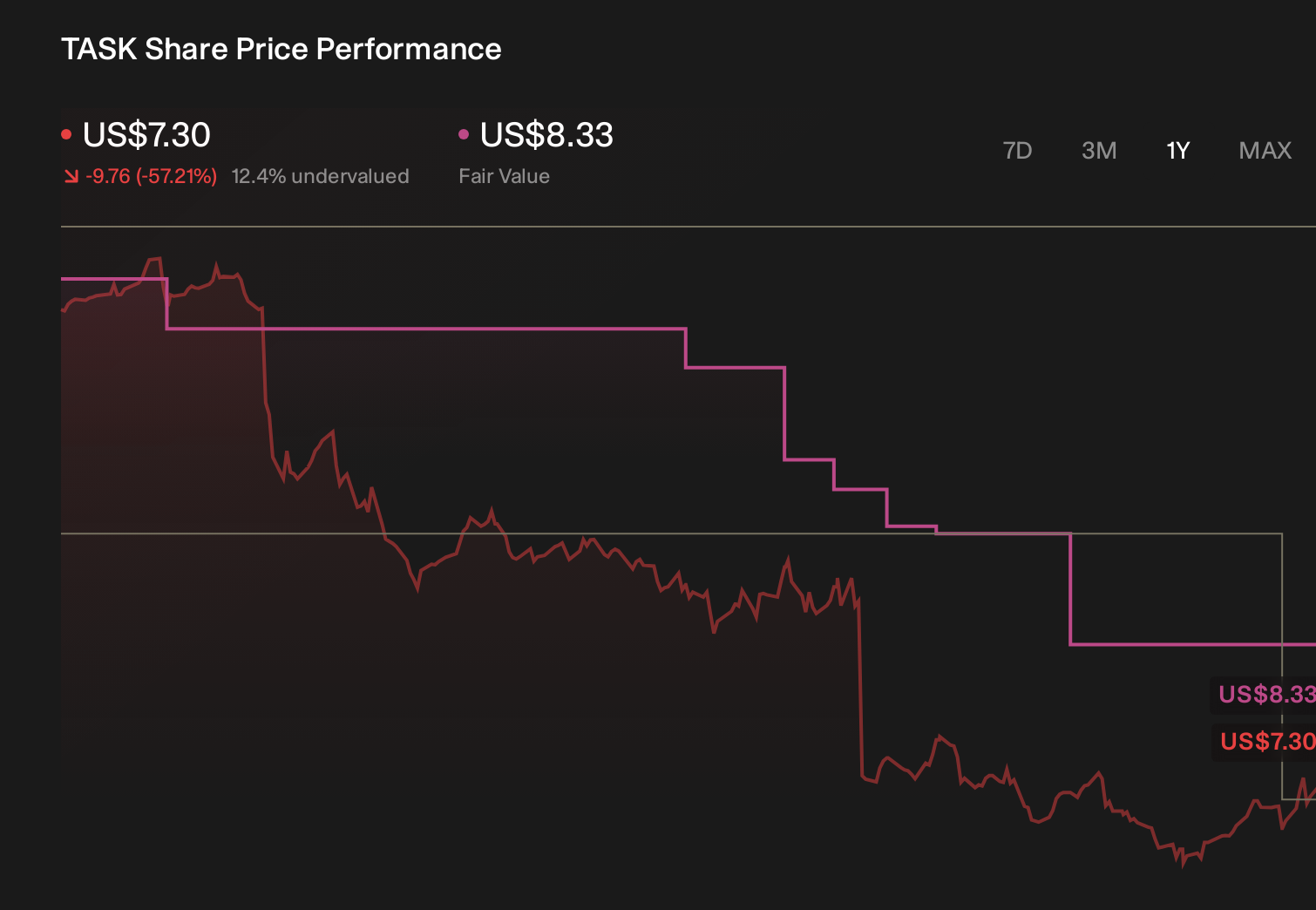
    TaskUs (TASK) faces a downward revision in market expectations as analysts cut the stock’s fair value estimate from US$9.50 to approximately US$8.33—a 12% decrease following the latest second-quarter performance analysis.

    Evaluating the TaskUs Valuation Shift

    The revised fair value reflects a complex landscape for TaskUs. While analysts remain optimistic regarding the company’s operational execution, this sentiment is tempered by growing caution surrounding client concentration risks and broader sector multiples. These moving components are currently being recalibrated by market observers to better align with the firm’s evolving financial narrative.

    Understanding Financial Narratives and Risk

    Market narratives serve as a bridge between a company’s operational story and the underlying financial assumptions used to determine fair value. As new data emerges, these assumptions are adjusted, providing investors with a clearer picture of how specific catalysts and operational risks directly impact the valuation models employed by analysts.

    For investors monitoring the situation, it is critical to look beyond standard price targets. Analyzing how specific business risks—such as the one currently flagged for TaskUs—interact with sector-wide trends is essential for understanding the company’s long-term trajectory.

    Monitoring the Evolving Outlook

    The adjustment to the fair value estimate underscores the importance of staying informed on how shifting market conditions influence company-specific data. By tracking these metrics, stakeholders can better identify how the interplay between internal execution and external market pressures shapes the investment thesis for TaskUs moving forward.

  • ATI Raises Guidance as Record Backlog Defies Valuation Fears

    ATI Raises Guidance as Record Backlog Defies Valuation Fears

    ATI (ATI) posted strong second-quarter financial results on August 6, 2026, featuring year-over-year growth in both sales and earnings, alongside an upward revision in full-year guidance fueled by a record-breaking contracted backlog.

    Market Momentum and Investor Sentiment

    The company’s robust quarterly performance has triggered significant share price momentum. ATI recorded a 1.97% gain in a single day and a 21.55% surge over the last seven days. These gains contribute to a 90-day return of 43.85% and a year-to-date increase of 91.14%. This long-term shareholder value reflects growing investor confidence in the company’s strategic backlog, improved financial outlook, and active share buyback programs.

    Valuation vs. Growth Narrative

    Following the rapid appreciation of ATI’s stock, investors are now questioning whether the current valuation reflects the company’s full potential or if the market has moved ahead of the fundamentals. With the stock recently closing at $227.84, it currently trades above the widely accepted fair value estimate of $200.33, which is derived from detailed earnings and margin projections utilizing a 7.9% discount rate.

    The Future Growth Path

    The core investment narrative for ATI rests on compounding growth within the high-value aerospace and defense sectors. This strategy assumes rising profitability and an earnings multiple that, while currently elevated, is expected to compress over time. The realization of this $200.33 fair value remains tethered to specific revenue mix assumptions and sustained cash flow performance.

    Key Operational Risks

    Despite the optimism, ATI faces distinct challenges. The company maintains a heavy reliance on a select group of major aerospace customers. Furthermore, the necessity for ongoing high capital expenditure could pressure margins if project costs escalate or if future order volumes fail to meet aggressive growth expectations. These factors remain the primary variables that could disrupt the current bullish sentiment surrounding the stock.

  • Oil Hits $89 as Strait of Hormuz Standoff Deepens

    Oil Hits $89 as Strait of Hormuz Standoff Deepens

    Global oil prices surged on Tuesday as hopes for a diplomatic breakthrough regarding the Strait of Hormuz evaporated, with Brent crude briefly hitting $90 per barrel and West Texas Intermediate (WTI) futures climbing 1.8% to $83.62.

    Stalled Negotiations Fuel Market Volatility

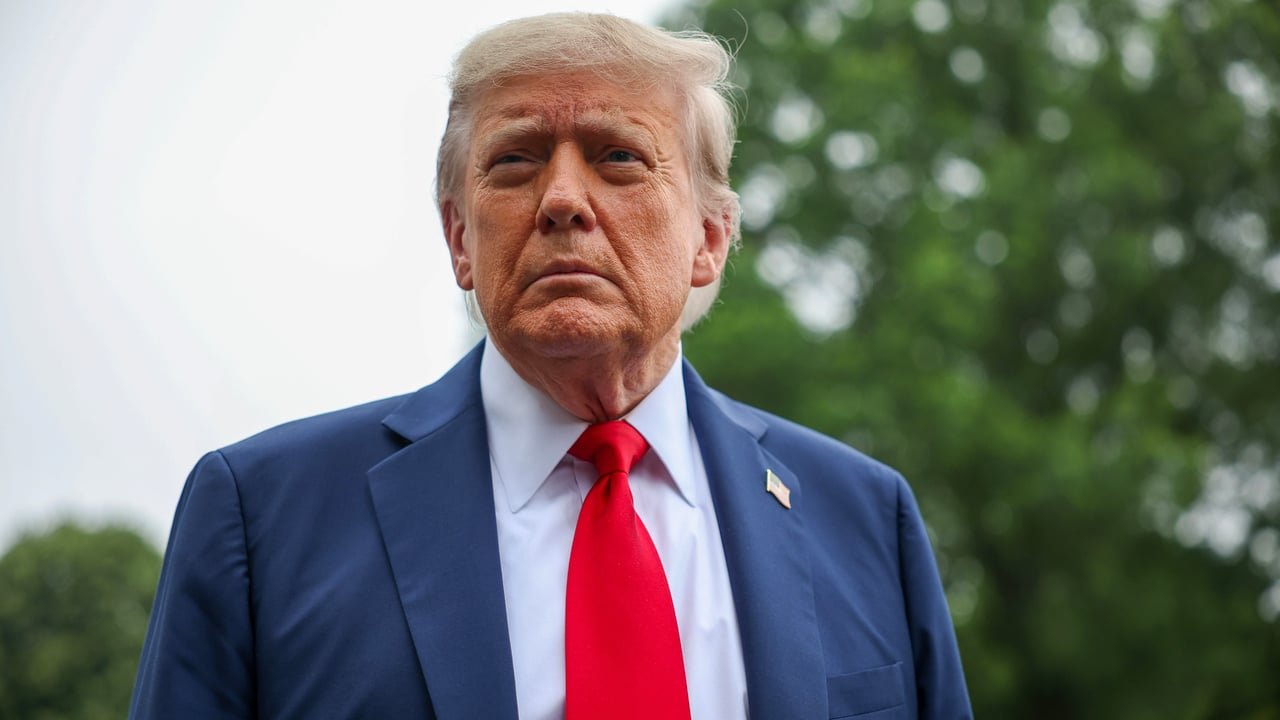
    The escalation follows Iran’s firm refusal to engage in direct talks with Washington. While Tehran claims to be pursuing a separate agreement with Oman to reopen the critical shipping lane, Iranian Foreign Minister Abbas Araghchi stated Sunday that negotiations are off the table until the U.S. addresses alleged breaches of their June memorandum of understanding. In response, President Trump demanded on social media that Iran provide compensation for lives lost during the conflict and recent protests, as reported by The Wall Street Journal.

    Despite the energy-sector instability, U.S. stock futures showed resilience; E-Mini S&P 500 futures rose 0.22%, Nasdaq-100 futures gained 0.46%, and Dow futures climbed 56 points.

    Inflation Fears and Federal Reserve Pressure

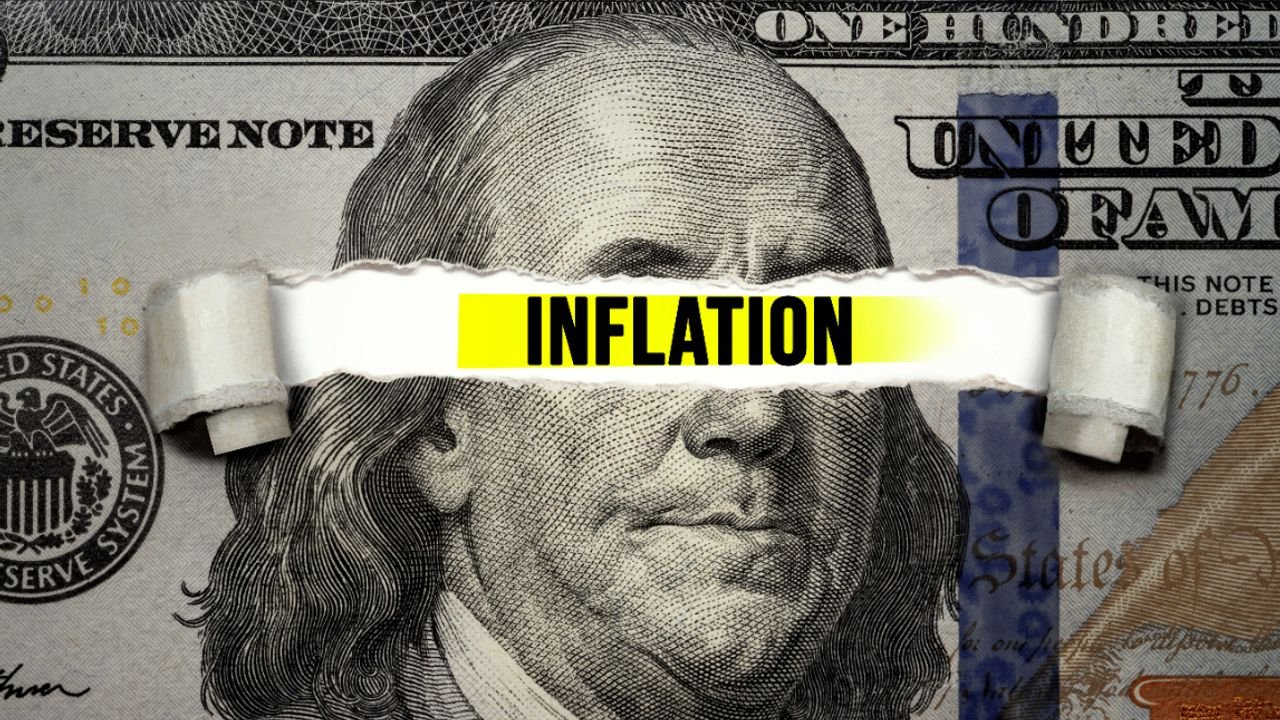
    The spike in energy costs has reignited concerns over persistent inflation. Reflecting this market anxiety, the 10-year Treasury yield surpassed 4.7%, nearing the 2026 highs recorded last month.

    Investors remain cautious, with trading volumes hitting yearly lows on Monday as the market awaits critical data. The July consumer price index (CPI) is scheduled for release Wednesday, followed by the producer price index (PPI) on Thursday. These figures arrive at a pivotal moment for the Federal Reserve, which is currently balancing the risks of a cooling labor market against the threat of renewed inflationary pressure driven by energy costs.

    Global Market Performance

    International markets presented a mixed picture on Tuesday. In Asia, South Korea’s Kospi rose 0.73% and Australia’s S&P/ASX 200 edged up 0.19%, while Hong Kong’s Hang Seng dropped 1.03% and China’s CSI 300 fell 0.79%. Japanese markets remained closed for a public holiday. Meanwhile, European indices, including the FTSE 100, CAC 40, and DAX, opened in negative territory as the session began.

  • Market Surge: Why Reddit, Axon, and Rivian Are Rallying Now

    Market Surge: Why Reddit, Axon, and Rivian Are Rallying Now

    Wall Street rallied this afternoon as a cooling U.S. labor market fueled investor optimism, with Reddit, Axon, Watsco, Rivian, and Visteon leading the charge. The latest July jobs report revealed an unexpected loss of 23,000 jobs—a sharp contrast to the 80,000 gain economists had anticipated.

    The “Bad News is Good News” Market Logic

    According to the U.S. Bureau of Labor Statistics, the unemployment rate remained stable at 4.1%. This weaker-than-expected data has triggered a shift in investor sentiment, with markets now pricing in the high probability of an interest rate cut by the Federal Reserve. The prevailing logic is that a slowing economy may force the central bank to pivot away from rate hikes and instead favor cuts to stimulate growth.

    Lower interest rates traditionally lower borrowing costs for corporations and increase the relative attractiveness of equities. Growth-oriented companies stand to benefit most, as lower rates reduce the discount applied to future earnings, effectively boosting the present value of long-term cash flows.

    Reddit’s Volatile Recovery

    Reddit shares saw significant movement today, underscoring the market’s reaction to the broader economic data. While the stock is known for its high volatility—having recorded 52 moves of over 5% in the last year—today’s activity suggests investors view the current economic landscape as a meaningful factor for the platform’s trajectory.

    This follows a recent 11% surge four days ago, as investors re-evaluated the company’s second-quarter performance. Despite an initial 20% sell-off driven by concerns over Google search referral traffic and the pace of AI data licensing deals, the company’s fundamentals remain robust. Reddit reported a 61% year-over-year revenue increase to approximately $805 million, alongside an upbeat third-quarter revenue forecast of $860 million to $870 million—comfortably beating Wall Street’s $830 million estimate.

    Investment Outlook and Performance

    Despite the recent uptick, Reddit is down 34% year-to-date. Trading at $159.75, the stock remains 41% below its 52-week high of $270.71 reached in September 2025. Notably, early investors who participated in the March 2024 IPO with a $1,000 investment would currently see their position valued at $3,167.

    As the market continues to react to macroeconomic shifts, analysts emphasize that while volatility is expected, significant price fluctuations often reveal entry points for high-quality stocks that have been unfairly penalized by broader market sentiment.

  • Tenable Q2 2026 Earnings: Record Adoption Driven by AI

    Tenable Q2 2026 Earnings: Record Adoption Driven by AI

    Tenable (TENB) reported robust financial results for the second quarter of 2026 on Wednesday, July 29, 2026, exceeding all guided metrics and raising its full-year outlook. The company’s performance was anchored by a record-breaking 50% adoption rate of its Tenable One platform, signaling a major shift in how enterprises manage cybersecurity risk in the era of agentic AI.

    Market Shift: The Rise of Tenable One

    Co-CEOs Steve Vintz and Mark Thurmond highlighted that Tenable One has become the primary vehicle for customer expansion. The company’s recent pricing and packaging overhaul—introducing “Foundation” and “Advanced” tiers—has significantly accelerated deal sizes. Notably, adoption of the more comprehensive Tenable One Advanced tier surpassed internal expectations, reflecting a heightened demand for preemptive security amid an evolving AI threat landscape.

    Hexa AI and the “Agentic” Defense

    A core driver of this momentum is Hexa, Tenable’s agentic engine. According to management, the platform is moving beyond passive reporting to active, automated defense. Over 80% of Hexa users are now actively submitting prompts to execute multistep security tasks, with nearly half using the engine for automated remediation. This capability effectively turns the Tenable One platform into a continuous, always-on defense layer, reducing the manual burden on security teams.

    Strategic Partnerships and AI Exposure

    Tenable is deepening its collaborative efforts with Frontier AI Labs, including Anthropic (via Project Glasswing) and OpenAI (via the Daybreak program). These partnerships provide the company with early insights into emerging attack vectors. Furthermore, Tenable has expanded its “AI Exposure” capabilities to cover Gemini, Claude, ChatGPT, and Copilot, providing security teams with a unified view of where AI is deployed and the risks associated with those integrations.

    Financial Performance and Outlook

    CFO Matt Brown reported strong fiscal health, with revenue reaching $268.5 million—an 8.6% year-over-year increase. Key financial highlights include:

    • Net Dollar Expansion Rate: Improved to 106%, the first quarterly increase since 2022.
    • Profitability: Non-GAAP income from operations rose 38.8% to $66.2 million.
    • Share Repurchases: The company repurchased 5.2 million shares for $100 million in Q2, continuing its aggressive capital allocation strategy.

    Competitive Positioning and Future Guidance

    Tenable noted significant competitive displacements during the quarter, successfully replacing legacy vulnerability management providers at major global enterprises and a large European postal service. Based on this momentum, the company raised its full-year 2026 revenue guidance to a range of $1.075 billion to $1.081 billion.

    The company also achieved FedRAMP High authorization for Tenable One cloud exposure, a milestone expected to unlock further growth within the U.S. federal sector. As organizations consolidate their security stacks to combat AI-driven threats, Tenable remains confident that its integrated platform approach offers a durable competitive moat against both specialized point-solution vendors and larger platform competitors.

  • Antero Resources Q2 2026: Strategy Shift Drives Growth

    Antero Resources Q2 2026: Strategy Shift Drives Growth

    Antero Resources Corporation (AR) reported its second-quarter 2026 financial and operational results, highlighted by a significant transition toward a balanced production strategy and a structural reduction in operating costs. The company achieved record production, exceeding 4.1 Bcfe per day, and successfully leveraged its long-haul firm transportation portfolio to navigate a shifting energy market.

    Structural Margin Improvements and Cost Reductions

    Management emphasized that the company is evolving from a pure liquids-focused developer to a balanced program of rich and dry gas development. This shift is designed to reduce earnings volatility and capitalize on regional demand. Antero forecasts a 25% decline in cash costs to $2 per Mcfe by the end of 2028.

    The company outlined $300 million in annual margin improvements through three core pillars:

    • Financial Transactions: The dissolution of the Martica entity on June 30 is expected to increase annualized cash flow by $60 million, with an additional $30 million uplift anticipated following the expiration of a VPP in 2027.
    • Liquids Optimization: Refinements to ethane and LPG firm transport are projected to improve margins by $105 million by late 2028.
    • Natural Gas Strategy: Increasing dry gas development and optimizing natural gas firm transportation are expected to contribute the remaining $105 million in margin improvements.

    NGL Fundamentals and Global Export Records

    David Cannelongo, Senior Vice President of Liquids Marketing and Transportation, highlighted that Antero’s realized C3+ prices reached $44.26 per barrel, the highest since 2022. U.S. propane exports reached record highs, driven by terminal expansions and global demand—particularly from China, where U.S. LPG market share rose to 51% during the second quarter.

    Despite geopolitical headwinds affecting shipping, the company anticipates a 31% increase in the VLGC (Very Large Gas Carrier) fleet by 2029, which is expected to support continued export growth and maintain strong Mont Belvieu pricing.

    The Rise of Demand-Pull Markets

    Justin Fowler, Senior Vice President of Gas Marketing, noted that the natural gas market is transitioning from “producer-push” to “demand-pull.” With over 9 Bcf per day of regional power projects announced in the Appalachian Basin, Antero is utilizing its unique firm transportation portfolio to be highly selective in its partnerships.

    “We hold optionality as we already sell our volumes at premium prices along the LNG fairway,” stated CEO Michael N. Kennedy. “Local power projects must compete with broader energy markets on returns to attract our volumes.”

    Operational Highlights and Dry Gas Success

    Brendan E. Krueger, CFO, reported that the company successfully spud its first dry gas pad in over 12 years. The results showed a 67% improvement in Estimated Ultimate Recovery (EUR) and a 30% reduction in cost per foot compared to previous methodologies. Furthermore, Antero closed $315 million in acquisitions in the West Virginia Marcellus footprint, adding 125 million cubic feet equivalent per day of net production.

    The company’s focus remains on shareholder returns, with 1.1 million shares repurchased during the quarter. Management confirmed that with production up 21% year-over-year and cash costs declining, the company is in its best financial position in history, with total debt expected to return to pre-acquisition levels in the coming quarters.

  • Oil Prices Hold Gains as US-Iran Peace Hopes Falter

    Oil Prices Hold Gains as US-Iran Peace Hopes Falter

    Oil prices maintained one-week highs on Tuesday as prospects for a U.S.-Iran peace deal dimmed, following President Donald Trump’s demand for reparations for damages allegedly caused by Iran.

    Market Stability Amid Geopolitical Tension

    Brent crude futures remained steady at $87.81 per barrel by 0013 GMT, while U.S. West Texas Intermediate (WTI) crude held firm at $82.20 per barrel. This stability follows a significant 5% surge on Monday, which pushed both benchmarks to their highest levels since July 31.

    The market rally was triggered by President Trump’s rejection of Iran’s peace conditions. Instead, Trump countered with demands for compensation regarding lives lost in conflicts, attacks, and protests—a move analysts expect will severely complicate negotiations to reopen the vital Strait of Hormuz. Additionally, the President asserted that the U.S. maintains control over the waterway and has successfully cleared it of Iranian mines.

    Diverging Views on Diplomatic Progress

    “There appears to be a gulf, no pun intended, between the U.S. and Iran over what any agreement would actually look like,” noted Tim Waterer, chief market analyst at KCM Trade. He added that the optimism surrounding potential diplomatic breakthroughs has largely evaporated, leaving oil prices with a strong upward bias.

    Supply Constraints and Infrastructure Risks

    Supply chain concerns have been further exacerbated by regional instability. Saudi Aramco has pushed back the restart of its 400,000-barrel-per-day Jazan refinery to August 30, following claims by Houthi forces of two separate attacks on the facility this past Sunday.

    Waterer emphasized that the “chokehold risk” regarding the Strait of Hormuz and the Bab el-Mandeb remains a critical factor for the market. “Even intermittent restrictions or the threat of further incidents keep insurance costs elevated and force longer shipping routes, which suggests energy flows will remain constrained in the near term,” he explained.

    Export Declines and Pricing Shifts

    Data from Barclays highlights the impact of these tensions on global transit. In the week ending August 7, net exports of crude oil and refined products through the Strait of Hormuz averaged 3 million barrels per day (bpd), a sharp decline from the 4.4 million bpd recorded the previous week.

    In response to shifting market dynamics, Iraq has adjusted its pricing strategy, raising the September official selling price (OSP) for Basra Medium crude bound for Asia by $2.50, setting it at minus $4 a barrel against the average of Oman/Dubai quotes.

  • Insight Enterprises Q2 Earnings: EPS Soars 44% on AI Demand

    Insight Enterprises Q2 Earnings: EPS Soars 44% on AI Demand

    Insight Enterprises (NSIT) reported a stellar second quarter for 2026, headlined by a 44% surge in earnings per share (EPS) as the company successfully balanced aggressive AI infrastructure investments with significant operational efficiency. CEO Jack Azagury and CFO James Morgado outlined a strategy focused on “One Insight”—a global integration model designed to harmonize systems and maximize margins while capitalizing on the massive shift toward on-premise AI workloads.

    Strategic Growth and Operational Efficiency

    Addressing the balance between reinvestment and profitability, CEO Jack Azagury confirmed that the company is actively funding high-growth areas like AI infrastructure by capturing operational efficiencies. This commitment is reflected in the numbers: CFO James Morgado highlighted a strong Q2 performance where operating expenses accounted for just over 65% of gross profit, signaling substantial room for continued margin expansion.

    The Path Forward: Revenue and Market Dynamics

    While Q2 served as a “high watermark” for the year, leadership provided a prudent outlook for the second half of 2026. Azagury noted that upcoming comparisons, including the impact of previous Google Partner program changes and the integration of last year’s acquisitions, suggest a more measured growth trajectory. The company is also maintaining a cautious stance regarding macroeconomic volatility and potential fluctuations in memory pricing.

    “One Insight” and the Future of AI

    The “One Insight” operating model is central to the company’s three-year organic growth plan. By consolidating leadership and streamlining efforts—such as merging disparate AI sales initiatives into a unified framework—the company aims to scale without compromising its operating leverage. Azagury emphasized that the business is currently prioritizing organic execution over M&A activity to ensure a robust foundation.

    Hardware Trends and the On-Premise AI Shift

    Insight’s hardware segment showed resilience, with strong average selling prices (ASP) in laptops helping offset slight unit declines. Notably, infrastructure growth is being fueled by a clear trend: enterprises are moving AI workloads back to on-premise environments. According to Azagury, this shift is driven by critical requirements for data security, latency management, and cost control. Insight is positioning itself as the primary architect and manager for these hybrid environments.

    Monetizing the Microsoft 365 E7 Opportunity

    The partnership with Microsoft remains a major tailwind. Insight is seeing significant momentum from Azure, Copilot, and the launch of Microsoft 365 E7 (Frontier Suite) with Agent 365. The monetization strategy extends beyond simple resale, focusing heavily on high-value services, including workload migration and the deployment of AI-driven agent solutions, which are seeing rapid adoption among the company’s client base.

    Cash Flow and Margin Outlook

    Looking toward the remainder of the year, CFO James Morgado projected a free cash flow inflection point, consistent with historical seasonality and large partner payment cycles. The company expects to generate cash flow in the range of $300-$400 million for the period. With operating expenses tightly managed, leadership remains confident in their ability to drive long-term earnings growth while continuing to invest in cloud, data, and security initiatives.