
Blog

  • Stocks Dip as Oil Prices Stoke Fresh Inflation Fears

    Stocks Dip as Oil Prices Stoke Fresh Inflation Fears

    Major U.S. stock indices retreated on August 10 as surging oil prices and growing geopolitical tensions fueled renewed inflation concerns, stalling the previous week’s market rally. The S&P 500 (SNPINDEX:^GSPC) dipped 0.06% to 7,753, the Nasdaq Composite (NASDAQINDEX:^IXIC) fell 0.32% to 26,605, and the Dow Jones Industrial Average (DJINDICES:^DJI) slipped 0.11% to 53,976 as it retreated from record highs.

    Market Movements and Sector Performance

    As investors braced for Wednesday’s highly anticipated consumer price data, energy stocks stood out as the top performers, buoyed by the rise in crude oil prices. Conversely, the technology and real estate sectors faced the heaviest selling pressure. Treasury markets also reacted to the uncertainty, with the 10-Year Treasury yield climbing 0.06% to 4.71%, while gold prices saw a significant uptick of 1.14%, closing at $4,390.85.

    Geopolitical Headwinds and Energy Concerns

    Market sentiment remains sensitive to the ongoing closure of the Strait of Hormuz. Hopes for a diplomatic resolution have begun to fade, and the resulting supply concerns are exerting downward pressure on the broader markets. This geopolitical instability, combined with the anticipation of inflation reports, has effectively cooled the bullish momentum seen in the prior week.

    Key Corporate Developments

    Corporate news drove significant volatility across individual tickers:

    • Intel Corporation: Shares slumped following the company’s announcement of a $15 billion stock offering aimed at financing its artificial intelligence (AI) and manufacturing expansion plans.
    • Meta Platforms, Inc.: The stock finished up 0.48% after an intraday climb, as investors assessed Mark Zuckerberg’s latest AI manifesto and the rollout of the Muse Glimmer model.
    • Nvidia: The chipmaker saw its shares fall after announcing a $500 billion funding partnership with major asset managers. While the company aims to build investable AI infrastructure, investors are increasingly wary of the extreme capital intensity required to remain competitive in the AI arms race.
    • Archer Aviation: Shares soared 12% following the announcement of a deal to acquire three Boeing subsidiaries, which also includes Boeing taking an equity stake in the firm.
  • iHeartMedia Q2 Earnings Beat Expectations on Digital Surge

    iHeartMedia Q2 Earnings Beat Expectations on Digital Surge

    iHeartMedia (NASDAQ:IHRT) surpassed its second-quarter revenue guidance, posting $977 million in consolidated revenue—a 4.7% increase year-over-year—driven by robust growth in podcasting and digital audio, despite lingering macroeconomic pressures on its traditional broadcast segments.

    Digital Expansion Powers Financial Performance

    The company’s strategic pivot toward digital continues to reshape its earnings profile. For the sixth consecutive quarter, the Digital Audio Group outperformed the Multiplatform Group in adjusted EBITDA. The digital segment generated $364 million in revenue, a 12.4% jump, while segment EBITDA climbed 14.5% to $123 million, maintaining a healthy 33.8% margin.

    Podcasting remains a primary engine for this growth, with revenues surging 20.7% to $162 million. CEO Bob Pittman noted that roughly half of this revenue is now driven by the company’s local-market sales force, underscoring the successful integration of digital products into traditional sales channels.

    The Push into Video Podcasting

    iHeartMedia is aggressively expanding its footprint in video distribution. By producing video versions of popular podcasts for the iHeartRadio service and external streaming platforms, the company aims to capture premium advertising rates. Recent partnerships highlight this momentum: Netflix is now hosting podcasts from stars like Kate Hudson and Martha Stewart, while Disney’s Hulu has integrated video episodes of titles such as Hey Jonas! and Pod Meets World.

    Pittman emphasized that video podcasting is a highly additive, low-cost strategy that increases audience engagement without the heavy production burdens associated with traditional television.

    Broadcast Challenges and Macroeconomic Headwinds

    While digital thrives, the Multiplatform Group—encompassing broadcast radio and live events—faced a 1.6% revenue decline to $536 million. Pittman attributed this to macroeconomic uncertainty, particularly the impact of fluctuating gas and diesel prices on consumer behavior. Additionally, segment EBITDA fell to $59 million, largely due to non-cash marketing expenses.

    COO Rich Bressler noted that while operating expenses rose 11.8% due to strategic co-marketing partnerships, these costs are expected to decrease in the second half of the year. The company is actively addressing the “monetization challenge” of broadcast radio by integrating its inventory into major demand-side platforms like Amazon, Google, and Yahoo, utilizing its proprietary AudioGraph tools to streamline digital buying for advertisers.

    Outlook and Financial Stability

    The Audio & Media Services Group saw a significant boost, with revenue up 18.8% to $80 million. Management remains optimistic about the remainder of the year, anticipating that political advertising—a major growth category—will provide a substantial tailwind for EBITDA and free cash flow in the fourth quarter.

    iHeartMedia reaffirmed its full-year targets, including $800 million in adjusted EBITDA and $200 million in free cash flow. As of the end of the second quarter, the company reported $4.7 billion in net debt and $457 million in liquidity. To bolster its balance sheet, the firm successfully amended and extended its $450 million asset-based lending facility to January 2029.

  • Cenovus Hits Record Q2 2026 Profit Amid Production Surge

    Cenovus Hits Record Q2 2026 Profit Amid Production Surge

    Cenovus Energy (CVE) shattered its financial records in the second quarter of 2026, posting an all-time high of $5.9 billion in operating margin and $5 billion in adjusted funds flow. Driven by a production milestone exceeding 970,000 barrels of oil equivalent (BOE) per day, the company has officially raised its full-year production guidance, signaling robust momentum heading into the second half of the year.

    Operational Efficiency and Record Production

    The company’s growth is anchored by its core oil sands assets. Christina Lake set a new production record of 372,000 barrels per day, while the Narrows Lake asset continues to outperform, producing over 80,000 barrels per day ahead of schedule. Furthermore, Cenovus successfully completed the Foster Creek enhanced sulfur recovery project, which is already delivering cost savings of $0.50 to $0.75 per barrel.

    CEO Jon McKenzie highlighted that July production is on track to surpass the 1 million BOE per day milestone for the first time in the company’s history. This surge in output, combined with rigorous cost discipline, allowed Cenovus to reduce unit costs across its oil sands, conventional, and Asia-Pacific segments.

    Strategic Downstream Performance

    Cenovus’ integrated model proved its worth in Q2, with downstream operations capitalizing on favorable pricing environments and high operational availability. The Canadian refining business maintained a 94% utilization rate, while U.S. operations hit 96%. With the planned turnaround of the Lima Refinery scheduled for the fall, the company remains focused on maintaining high throughput to capitalize on current crack spreads and robust demand.

    Debt Reduction and Shareholder Returns

    Financial discipline remains a top priority. During the quarter, Cenovus aggressively reduced its net debt to $5.4 billion—a $2.7 billion reduction in just three months. Having successfully repaid the remaining $2.2 billion term loan from the MEG Energy acquisition, the company is now shifting its focus toward increased shareholder returns. Under its updated financial framework, Cenovus intends to allocate 75% of excess free funds to shareholders over time, aiming for a long-term net debt target of $4 billion.

    Future Outlook and Policy Alignment

    Looking ahead, the company is preparing for “first oil” at the West White Rose project, expected by late Q3. Regarding the regulatory landscape, Cenovus expressed cautious optimism regarding the recent trilateral memorandum of understanding between the Oil Sands Alliance, federal, and Alberta governments. While noting that the agreement is only a first step, leadership views it as a vital foundation for creating a competitive investment environment that supports future growth and emissions reduction.

    As the industry navigates evolving global energy demands, Cenovus remains committed to its strategy of disciplined capital allocation and operational excellence. With production capacity continuing to climb and the integration of its refining assets yielding consistent margins, the company is well-positioned to maintain its current trajectory through 2027.

  • Medallion Financial Hits $3B Assets Milestone in Record Q2

    Medallion Financial Hits $3B Assets Milestone in Record Q2

    Medallion Financial Corp (MFIN) reported a record-breaking second quarter for 2026, highlighted by a surge in loan originations and the company surpassing $3 billion in total assets. During the earnings call, CEO Andrew Murstein and CFO Anthony Cutrone detailed a period of aggressive growth, fueled primarily by record-setting activity in the home improvement and recreation lending segments.

    Record Growth in Lending Segments

    The company’s lending platform demonstrated significant momentum, with home improvement originations reaching $128.6 million—more than double the figure from the same quarter last year. Simultaneously, recreation loan originations climbed 60% year-over-year to $228.5 million. This robust activity pushed total loans to $2.79 billion, a 12% increase compared to the previous year.

    “Our second quarter results further demonstrated the strength, stability, and growth potential of our lending platform,” said CEO Andrew Murstein. “Achieving the $3 billion asset milestone is a testament to our entire organization.”

    Financial Performance and Strategic Capital Allocation

    Medallion Financial achieved a new quarterly record with $57.2 million in net interest income, maintaining a net interest margin of approximately 8%. Despite the growth, the company remains committed to shareholder returns. The Board of Directors approved a second-quarter dividend of $0.14 per share, marking a 75% increase since the dividend was reinstated in 2022. Additionally, the company repurchased nearly 780,000 shares at a discount to book value.

    CFO Anthony Cutrone noted that while operating costs rose to $25 million—driven by higher employee costs and servicing fees associated with the expanding portfolio—the long-term expectation is that net interest income growth will continue to outpace operating expenses.

    Operational Outlook and Future Investments

    The company’s leadership emphasized that the current growth trajectory is sustainable. Management highlighted the strategic acquisition of talent from competitors like EnerBank, which has bolstered their home improvement division. Looking ahead, Medallion Financial is focusing on technological upgrades, including a new loan origination system scheduled for Q1 2027.

    “We have a clear track record of growing assets, net interest income, and our book value,” Murstein added. “We have proven to be able to do this profitably and believe we will continue to do so.”

    Regarding the company’s recent relocation to a new office in New York, management expects this move to reduce annual occupancy costs by approximately $500,000, contributing to long-term expense savings and overall shareholder value.

    Credit Quality and Market Strategy

    The company reported a provision for credit loss of $22.3 million for the quarter. While this included a $6.5 million “Day 1” provisioning penalty—a standard accounting practice for new loan originations—management maintains that this investment in growth is essential. Charge-offs in the home improvement portfolio saw a positive trend, decreasing to 1.37% from 1.87% in the prior year’s quarter, signaling strong credit quality within that segment.

    As Medallion Financial moves into the second half of 2026, the company plans to continue its methodical approach to growth, balancing the expansion of its loan book with careful capital management and ongoing efforts to enhance its underwriting sophistication.

  • The US Housing Market’s Hottest Zip Code Revealed

    The US Housing Market’s Hottest Zip Code Revealed

    Peabody, Massachusetts (01960), has officially been crowned the hottest housing market in the United States, driven by intense buyer competition and a severe shortage of available inventory, according to a new report from Realtor.com.

    The Reality of a High-Stakes Market

    For Cameron and Hannah Zirpolo, securing a home in Peabody was a grueling five-month journey that involved 15 open houses and six rejected offers. Seeking more space for their growing family, the couple transitioned from a two-bedroom condo in neighboring Danvers, only to find themselves in a bidding war against buyers willing to pay significantly over the asking price.

    “We knew selling the condo would be easy, but buying was a different ordeal,” Cameron Zirpolo explained. “We realized we needed to go at least $50,000 over asking just to remain competitive. The housing market is not for the weak.”

    What Makes 01960 So Desirable?

    Realtor.com’s ranking system evaluates ZIP codes based on two key metrics: the volume of online property views and the speed at which homes transition from listing to sale. Following Peabody, Montclair, N.J., secured the second spot, with Sewell, N.J., rounding out the top three.

    Peabody’s appeal lies in its unique balance: it offers a small-town atmosphere while maintaining proximity to major employment hubs like the Mass General Brigham Healthcare Center, all within 20 miles of downtown Boston. With a median home price hovering around $600,000, listings in the area spent an average of just 20 days on the market during the first half of 2026—a stark contrast to the national average of 57 days.

    A Fractured National Landscape

    The intensity in Peabody reflects a broader trend of a “two-tier” national housing market. While high-end, expensive markets in the Northeast remain robust, more affordable segments are seeing stagnation. Meanwhile, many buyers have pivoted away from Sun Belt markets, leading to price cuts across regions in Florida and Texas.

    “What’s especially notable is how financially prepared these buyers are,” said Hannah Jones, a senior economist at Realtor.com. “Even in areas where local incomes might not naturally cover current prices, buyers are arriving with larger down payments and stronger credit profiles than the national norm.”

    The Local Impact: Scarcity and Speed

    Dante Bruzzese, a local real estate agent with Compass, notes that move-in-ready single-family homes priced between $575,000 and $850,000 typically disappear within the first two weeks. Data from Compass confirms that inventory in Peabody has dropped 21% since last year, while the speed of sales has accelerated by 5%.

    For the Zirpolos, the pressure to overpay—sometimes by as much as $100,000—was a constant source of stress. “We were not going to become house poor, especially with a young baby,” Cameron Zirpolo said. The couple eventually succeeded in mid-June, purchasing a three-bedroom colonial for $751,000 with a 5.85% mortgage rate, utilizing $120,000 in equity from their previous home as a down payment.

    Despite the challenges, the couple remains satisfied with their new location. “There is nothing not to love,” Zirpolo noted, citing the area’s schools and local amenities as key factors that justify the market’s high demand.

  • SEC Charges Adit Ventures in SpaceX and Klarna Fraud Case

    SEC Charges Adit Ventures in SpaceX and Klarna Fraud Case

    The U.S. Securities and Exchange Commission (SEC) announced settled fraud charges on Monday against Adit Ventures Management, its founder, and three partners over deceptive practices involving pre-IPO investments in high-profile companies, including SpaceX and Klarna.

    Allegations of Misconduct and Misuse of Funds

    The SEC alleges that the investment firm utilized “false claims and promises” to solicit capital for Adit-managed funds. Furthermore, the agency claims the firm misappropriated client funds for its own benefit, notably by securing favorable, undisclosed loans using investor money.

    Adit Ventures has agreed to a consent order—subject to federal judicial approval—that includes the payment of disgorgement and civil penalties, without formally admitting to the allegations. Eric Munson, founder and CIO of Adit Ventures, issued a statement categorically denying the charges.

    Complexity in the Private Market Landscape

    As startups remain private for longer periods, investor demand for pre-IPO shares has surged. However, these private markets lack the stringent oversight found on public exchanges. In some instances, investors have engaged in complex arrangements to acquire stakes in companies like SpaceX, often resulting in confusion regarding the nature and legality of their holdings.

    The SEC’s complaint specifically highlights instances where Munson allegedly misled investors by falsely claiming funds possessed shares in pre-IPO companies. Additionally, the agency accuses the defendants of purchasing shares personally and subsequently offloading them to client funds at inflated prices, misrepresenting the actual acquisition costs.

    Defense and Industry-Wide Scrutiny

    In his rebuttal, Munson maintained his innocence: “Let me be unequivocal: I have delivered for my investors, and I reject these allegations completely.” He stated that the decision to settle was made solely to avoid the costs of protracted litigation that would offer no benefit to his investors.

    This case follows a broader pattern of regulatory crackdowns on pre-IPO investment schemes. Last December, a New York investment manager faced indictment for allegedly soliciting millions by promising access to nonpublic shares of Anduril Industries without actually holding any interest in the company. Similarly, three sales executives were arrested in February regarding a separate pre-IPO fraud scheme.

    Major tech firms are also taking action to curb unauthorized investment activity. Earlier this year, Anthropic warned the public about funds claiming to offer indirect access to its stock, stating that any unapproved transfers are void. The company explicitly prohibited offers to invest in its financing rounds through unauthorized special purpose vehicles, aiming to shield individuals from potential fraud.

  • Arteris (AIP) CFO Shakeup: Is the Stock Still a Buy?

    Arteris (AIP) CFO Shakeup: Is the Stock Still a Buy?

    Arteris (AIP) has appointed Saurabh Sinha as its new Chief Financial Officer, effective September 8, 2026, marking a leadership transition as outgoing CFO Nick Hawkins heads into retirement.

    Market Momentum and Leadership Transition

    The announcement follows a period of significant market performance for Arteris. With the stock closing at $31.62, investors have seen a year-to-date return of 102.95%. Looking at a longer horizon, the company has delivered a 1-year total shareholder return of 239.63% and a 3-year return of approximately 3.5x. While momentum has been robust, the recent 90-day price performance has shown signs of moderation, prompting investors to re-evaluate the company’s valuation in light of the upcoming C-suite change.

    Valuation Analysis: Is $37.75 Realistic?

    Current market narratives position the fair value of Arteris at $37.75 per share, suggesting the stock may be undervalued at its current price of $31.62. This valuation is predicated on the expectation of accelerated AI-related licensing and royalty growth. The model assumes rapid revenue expansion, a transition toward positive net profit margins, and a substantial increase in future earnings, despite the company’s current net loss of $34.6 million.

    The Premium Multiples Debate

    Analysts are closely monitoring the P/E multiple assigned to the company’s projected 2029 earnings, which sits significantly higher than the average for the U.S. software sector. This premium hinges on the assumption that Arteris will scale efficiently. If growth trajectories falter or profitability targets are delayed, the justification for this valuation gap may come under pressure.

    Assessing Risk and Reward

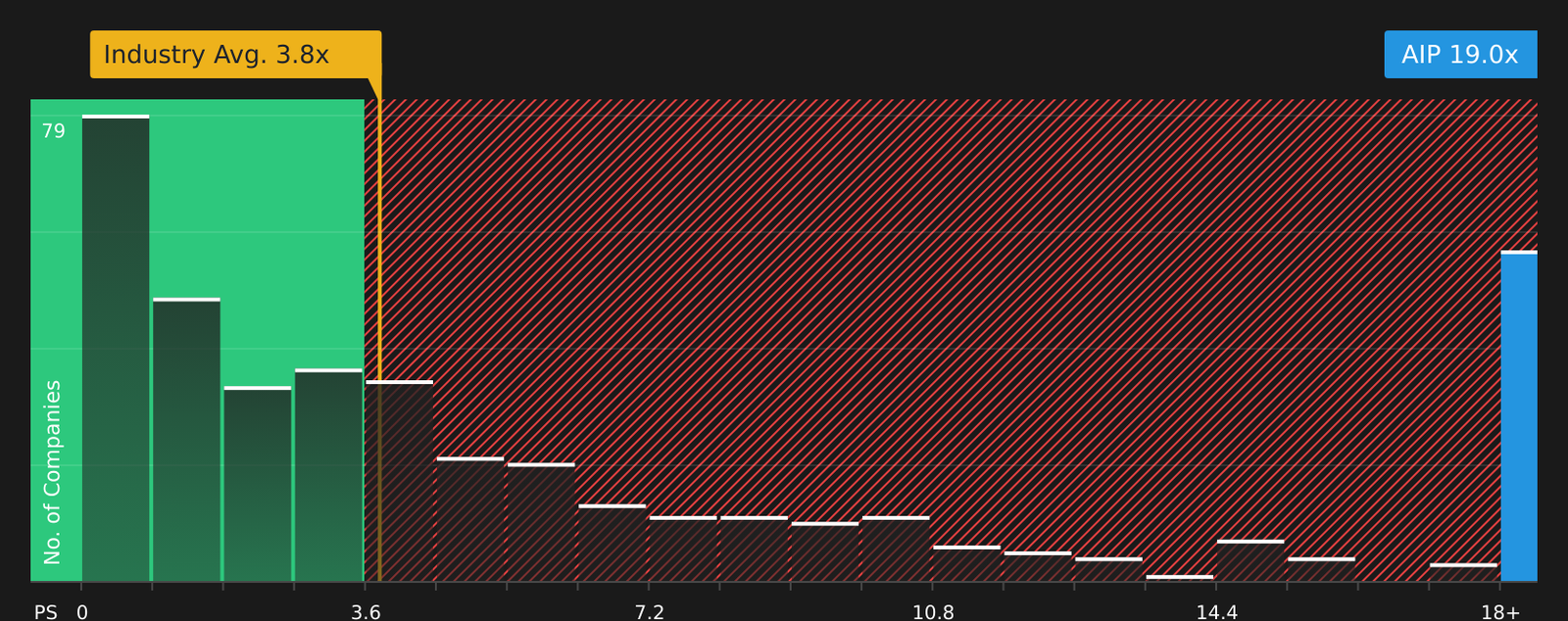
    Alternative valuation models provide varying perspectives on the stock. One discounted cash flow analysis estimates a fair value of $61.08, while a comparison based on the current price-to-sales (P/S) ratio of 19x highlights a stark contrast to the U.S. software industry average of 3.8x and a fair ratio of 6.8x. This discrepancy forces investors to weigh the risks of paying a high premium for a company that remains in a loss-making phase.

    The long-term outlook for Arteris remains sensitive to shifting customer concentration in large chip deals and the company’s ability to narrow its operating losses. As the leadership transition approaches, the market remains focused on whether the firm’s fundamental data can sustain its current growth narrative.

  • Why Momentum and Fed Policy Signal Further Stock Gains

    Why Momentum and Fed Policy Signal Further Stock Gains

    Market momentum, shifting Federal Reserve liquidity expectations, and stellar tech earnings are fueling a bullish outlook for the remainder of the year. According to data from OddStats, the QQQ index gained 17.7% in the first 150 days of 2026—a historical threshold that has consistently preceded strong performance through year-end.

    Liquidity Remains the Market’s Primary Engine

    As legendary investor Stanley Druckenmiller famously noted, it is not just earnings that drive the broader market, but the movement of liquidity directed by the Federal Reserve. While many investors fixate on conventional earnings metrics, the true catalyst for asset prices remains the central bank’s policy stance.

    The Impact of the Jobs Report on Fed Policy

    The market narrative shifted abruptly following last week’s dismal jobs report. Prior to the data release, investors were bracing for a September rate hike driven by inflation fears linked to the U.S.-Iran conflict. However, payrolls suffered a staggering 5-sigma miss, contracting by 23,000 against expectations of an 80,000 gain.

    This economic cooling has drastically reduced the likelihood of a September rate hike under Federal Reserve Chair Kevin Warsh. Predictably, betting markets like Polymarket have seen the odds of aggressive policy tightening plummet, providing a more favorable environment for equities.

    Mega-Cap Tech Earnings Signal Strength

    The market’s resilience is further underscored by dominant performances from the tech sector. SpaceX (SPCX) made a historic public debut, shattering Zacks Consensus Estimates by 65.38% in its inaugural earnings report.

    Meanwhile, tech giants Amazon (AMZN), Microsoft (MSFT), and Alphabet (GOOGL) continue to outperform expectations, validating their massive multi-billion-dollar capital expenditure (CapEx) strategies. Notably, Amazon shares surged 15% in late July on trading volumes 150% above historical norms. The fact that the stock has maintained these gains while trading sideways suggests significant institutional accumulation, a classic sign of underlying strength.

    The Road Ahead

    When combining historical momentum patterns, the pivot in Federal Reserve expectations, and the sustained earnings power of market leaders, the current financial backdrop points toward continued upside potential for the broader market.

  • Beacon Financial Q2 2026: Loan Pipeline Surges to $1.9B

    Beacon Financial Q2 2026: Loan Pipeline Surges to $1.9B

    Beacon Financial Corp (BBT) delivered a robust performance in Q2 2026, characterized by a significant earnings beat and a massive $1.9 billion commercial loan pipeline, signaling a pivotal shift in momentum for the remainder of the year.

    Momentum Shift: The Path to Loan Growth

    Addressing the outlook for the rest of the year, President and CEO Paul Perrault noted that while the first half of 2026 was hampered by merger conversions and portfolio runoff, a tangible change is underway. Perrault emphasized that the commercial pipeline currently stands at $1.3 billion, ballooning to approximately $1.9 billion when including loans currently in the approval process. He noted that although the market feels different, the firm is prepared for a busy second half.

    Credit Quality and Asset Management

    Chief Credit Officer Mark Meiklejohn provided clarity on the rise in non-performing assets (NPAs). He explained that the increase was primarily driven by smaller-dollar accounts within the Eastern Funding specialty vehicle portfolio, which is currently in runoff. Regarding charge-offs, Meiklejohn confirmed they were isolated to three previously identified credits: a Boston office loan, an industrial laundry relationship, and rent-controlled multifamily properties. These were fully reserved, and the bank remains well-positioned with $75 million in specific reserves against $400 million in classified assets.

    Operational Efficiency and Expense Outlook

    With merger integration officially complete, expenses have outperformed initial targets. Perrault indicated that the expense run rate is expected to remain stable for the rest of the year. CFO Carl Carlson added that while marketing costs may see a slight uptick, incentive compensation—driven by strong fee income—reflects the firm’s positive trajectory. Formal guidance for 2027 is expected to be released later this year.

    Yields, Spreads, and Deposit Strategy

    Carlson highlighted that Q2 originations of over $850 million carried a weighted average coupon of 631 basis points, significantly outpacing the existing portfolio yield. Despite some competitive pressure on spreads, the firm expects the steepening yield curve to bolster loan yields. On the deposit side, the bank does not anticipate rate hikes for the remainder of the year and is focusing on extending CD maturities to stabilize costs.

    Capital Deployment and Portfolio Resolution

    Regarding capital allocation, Perrault confirmed that while no stock was repurchased during the quarter, the $50 million buyback authorization remains active and fluid. On the credit resolution front, the bank is actively managing a $21 million substandard loan and a $16 million office loan in Stamford, Connecticut, both of which are expected to reach favorable resolutions. Furthermore, the exposure to rent-controlled NYC multifamily properties has been reduced to the “low 10s” (in millions) following proactive charge-downs.

  • Carlsmed Revenue Soars 57% as Surgeon Adoption Accelerates

    Carlsmed Revenue Soars 57% as Surgeon Adoption Accelerates

    Carlsmed (NASDAQ:CARL) posted second-quarter 2026 revenue of $18.9 million, a 57% increase year-over-year, driven by the rapid expansion of its aprevo lumbar platform and the successful integration of its new cervical product line.

    Surgeon Adoption and Growth Drivers

    CEO Mike Cordonnier reported that the company’s surgeon user base expanded by over 60% compared to the previous year. This growth is attributed to a combination of new surgeon onboarding, higher utilization rates among established clients, and rising demand for aprevo in high-acuity spinal fusion procedures. Cordonnier noted that an increasing number of surgeons are now adopting both lumbar and cervical offerings, fueling a faster rate of user acquisition.

    Raised Revenue Guidance for 2026

    Following a strong performance in the first half of the year, Carlsmed has upwardly revised its full-year 2026 revenue guidance to a range of $74 million to $78 million. CFO Leo Greenstein described this forecast as prudent, noting that while first-half growth hit 57%, the guidance anticipates a 45% growth rate for the second half of 2026.

    Medicare Reimbursement and Long-Term Strategy

    Management highlighted a significant regulatory development from the Centers for Medicare & Medicaid Services (CMS). Effective October 1, 2026, the new Inpatient Prospective Payment System rule will implement three specific MS-DRG codes (523, 524, and 525) for aprevo lumbar procedures, replacing 11 legacy codes. While the company expects this to simplify coding and improve hospital access, management does not anticipate a material financial impact on the remainder of 2026, viewing the rule primarily as a growth catalyst for 2027 and beyond.

    Operational Efficiency and Margin Expansion

    Gross margins saw a notable improvement, rising to 76.8% from 73.4% in the same quarter last year. Greenstein credited this expansion to reduced contract-manufacturer costs and increased efficiencies within the firm’s digital production system. Looking ahead, the company aims to push margins toward the low 80% range over the next two years through continued technological refinements.

    Operating expenses increased to $25.6 million, reflecting strategic investments in R&D—specifically AI initiatives and product development—as well as expanded sales personnel and marketing efforts. The company reported a GAAP net loss of $10.5 million, with adjusted EBITDA at negative $8.6 million.

    Pipeline and Clinical Evidence

    As of June 30, Carlsmed maintained a solid liquidity position with $89.3 million in cash and investments against $34 million in total liabilities. The company continues to prepare for upcoming commercial launches:

    • aprevo Bilateral: Scheduled for a Q4 commercial launch, with early feedback highlighting the system’s 3D planning and visualization capabilities.
    • Corra Cervical Plating System: Also slated for a Q4 launch, intended to enhance the average revenue per cervical procedure.

    Furthermore, the company is advancing its clinical data collection with the ACE (aprevo Cervical Effectiveness) multicenter registry, set to begin enrollment in the fourth quarter. These efforts are supported by recent data, including a study in the Global Spine Journal demonstrating a 74% reduction in reoperations for patients treated with aprevo personalized implants.