
Blog

  • WEC Energy Q2 2026: Data Center Boom Drives Growth

    WEC Energy Q2 2026: Data Center Boom Drives Growth

    WEC Energy Group reported second-quarter 2026 earnings of $0.91 per share on Wednesday, July 29, 2026, driven by robust regional economic growth and massive infrastructure demand from hyperscale data center operators. CEO Scott Lauber confirmed the company remains on track to meet its full-year guidance of $5.51 to $5.61 per share.

    Data Center Expansion Fuels Capital Plan

    The company’s growth strategy is anchored by significant developments in the Milwaukee region. Microsoft’s facility in Pleasant Prairie is now fully operational, with the company securing over 2,200 acres to support a projected 2.6-gigawatt demand increase by 2030. Simultaneously, construction is advancing on the Vantage Data Centers project for Oracle, which is expected to reach 3.5 gigawatts of demand capacity over time. With $37.5 billion in planned capital investments over five years, WEC anticipates that 15% of its asset base will serve these large-scale customers by 2030.

    Regulatory Landscape and Tariff Implementation

    WEC Energy is navigating critical regulatory milestones, including the implementation of its “Very Large Customer” (VLC) tariff. This framework ensures that high-demand users cover their full share of infrastructure costs, mitigating risks for other ratepayers. While Oracle has initiated legal discussions regarding credit support for the Port Washington project, leadership remains confident, noting that construction remains on time and on budget. Furthermore, rate filings for 2027 and 2028 are moving through the Public Service Commission, with final orders expected by the end of the year.

    Financial Performance and Weather Impact

    CFO Liu Xia highlighted that Q2 earnings increased by $0.15 compared to the same period in 2025. Despite a $0.05 negative impact from weather, grid-based growth—bolstered by incremental equity returns from capital projects—contributed $0.13 to the bottom line. Retail electric sales, excluding large-scale data centers and iron ore mining, saw a 1.2% increase. The company also reaffirmed its commitment to shareholders, having increased its dividend by 6.7% earlier this year, marking the 23rd consecutive year of dividend growth.

    Strategic Outlook and Future Projects

    Looking ahead, WEC is exploring generation capacity additions, including potential combined-cycle natural gas facilities to meet the reliability needs of data center clients. Management is also evaluating the future of the Point Beach nuclear facility and continues to engage with potential new data center counterparties. While the company maintains an efficient “at-the-market” (ATM) equity program to fund its capital needs, leadership is actively monitoring economic conditions and political developments in Wisconsin to ensure sustained growth through 2030 and beyond.

  • Wall Street Futures Edge Up Ahead of Crucial Inflation Data

    Wall Street Futures Edge Up Ahead of Crucial Inflation Data

    U.S. stock futures are trending slightly higher this Tuesday, signaling a potential recovery after major indices faced a volatile, marginally lower close during Monday’s trading session.

    Market Sentiment and Oil Price Fluctuations

    Investor sentiment received a boost as crude oil prices retreated significantly from their earlier peaks. U.S. crude futures are currently trading up approximately 0.4%, cooling down from a 3% surge earlier in the day caused by uncertainty surrounding negotiations over the reopening of the Strait of Hormuz.

    Investors Brace for Critical Inflation Reports

    Despite the optimistic tone in the futures market, traders remain cautious as they await key U.S. inflation data later this week. The Labor Department is slated to release consumer inflation figures on Wednesday, followed by producer inflation data on Thursday.

    These reports carry heightened importance following Friday’s unexpected dip in U.S. employment figures. Investors are currently weighing how this combination of labor market performance and upcoming inflation data will influence the Federal Reserve’s interest-rate trajectory.

    “US equities are hovering near record highs, but the next leg of the rally will depend on Wednesday’s US inflation report,” notes Daniela Hathorn, Senior Market Analyst at Capital.com.

    “After another strong earnings season, particularly among the technology giants, investors have become increasingly comfortable with the idea that the economy can continue expanding without forcing the Federal Reserve into further policy tightening,” Hathorn added. “Whether that optimism proves justified now hinges on the inflation data.”

    Reflecting on Monday’s Market Performance

    U.S. stocks struggled to find a clear path on Monday, following a week of robust gains. The Dow Jones Industrial Average fell 60.95 points (0.1%) to 53,975.98, the Nasdaq Composite dropped 85.26 points (0.3%) to 26,605.36, and the S&P 500 slipped 4.53 points (0.1%) to 7,753.11.

    This subdued session followed a record closing high for the S&P 500 on Friday, prompting a natural reassessment of the market’s recent rapid advance.

    Geopolitical Tensions and Sector Shifts

    Developments in the Middle East continue to be a primary driver of market sentiment. While reports suggest Iran and Oman are nearing an agreement regarding the Strait of Hormuz, Tehran remains resistant to direct negotiations with the United States.

    Iran has signaled that the vital waterway will remain restricted unless Washington meets specific conditions, dampening hopes for a swift normalization of global energy flows. This tension led to a sharp rise in oil prices on Monday, fueling energy stocks; U.S. crude futures jumped nearly 5%, the Philadelphia Oil Service Index rose 5.8%, and the NYSE Arca Oil Index gained 5.3%.

    Beneath the surface of the broader market, sector divergence was evident. Software stocks saw strong performance, with the Dow Jones U.S. Software Index climbing 1.9%. Conversely, airline stocks faced heavy pressure due to rising fuel costs, with the NYSE Arca Airline Index plunging 4.4%. Semiconductor stocks also struggled, dragging the Philadelphia Semiconductor Index down by 2.9%.

    With futures now leaning positive, the market’s focus remains firmly fixed on Wednesday’s inflation data, which could solidify or challenge the current interest-rate outlook supporting the market’s record-level valuations.

  • Google Consolidates AI Power in California to Battle Rivals

    Google Consolidates AI Power in California to Battle Rivals

    Alphabet Inc. is centralizing its artificial intelligence leadership at its Mountain View, California, headquarters to accelerate the development of its AI models and regain a competitive edge against industry rivals Anthropic and OpenAI.

    Restructuring Leadership for Global Dominance

    The tech giant has appointed Koray Kavukcuoglu, who relocated to Mountain View over the past year, to oversee its expansive AI research and operations. Simultaneously, Demis Hassabis, the long-time CEO and co-founder of DeepMind, is transitioning to the role of chairman of Google DeepMind and Chief Scientist for Alphabet, stepping back from daily operational duties. This shift includes the relocation of key personnel, such as AI coding lead Sebastian Borgeaud, from the UK to California, while other staff members have departed the London headquarters entirely.

    Bridging the Continental Divide

    This centralization effort seeks to resolve long-standing friction caused by the 2023 merger of Google Brain in Mountain View and the London-based DeepMind. Despite operating under the Google DeepMind banner, the teams remained geographically separated, which reportedly complicated decision-making processes and caused frustration among top-tier talent.

    Pressure to Deliver Amidst Market Competition

    Kavukcuoglu now leads Google’s AI ambitions at a critical juncture. The company has faced delays in launching the most advanced version of its flagship AI model and has struggled to gain traction in the lucrative coding automation market. With Google committing up to $205 billion in capital expenditures this year to support its AI goals, the pressure on Kavukcuoglu to produce tangible results is mounting.

    Stemming the Tide of Talent Departures

    Google has experienced a significant wave of defections as researchers leave to launch startups or join competitors like Anthropic and OpenAI. Notable exits include veteran researcher David Silver, who founded Ineffable Intelligence, and Simon Bouton, DeepMind’s Chief Experience Officer, who is moving to the London-based startup CuspAI. While Google maintains that London remains a vital hub—with Hassabis focusing on vision and strategy from there—the strategic focus for the Gemini model has shifted firmly to California.

    The Rise of Koray Kavukcuoglu

    As the primary lead for Gemini, Kavukcuoglu has become the central figure in Google’s AI roadmap. Google CEO Sundar Pichai and co-founder Sergey Brin have become increasingly active in overseeing Gemini, with Brin noting his close working relationship with Kavukcuoglu. Brin described his own role as a “disruptive” presence that challenges the team, while crediting Kavukcuoglu with the operational execution required to deliver products.

    Kavukcuoglu, a foundational leader at DeepMind who previously served as Google’s Chief AI Architect, is highly regarded by peers like Yann LeCun for his technical acumen and management skills. As the last remaining co-lead of the Gemini project at Google, Kavukcuoglu faces the significant challenge of stabilizing the team and accelerating innovation to keep pace with the rapidly evolving AI landscape.

  • Brazil Central Bank: Demand Still Drives Inflation

    Brazil Central Bank: Demand Still Drives Inflation

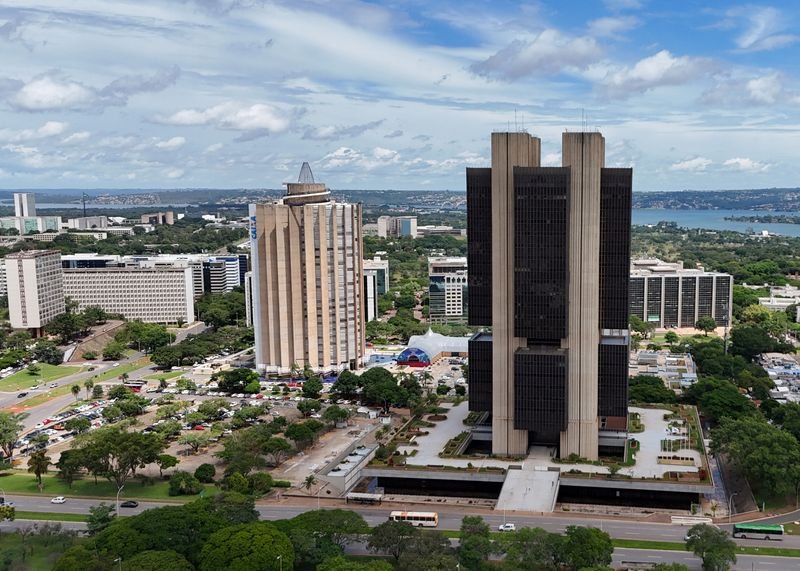
    Brazil’s central bank confirmed on Tuesday that while high interest rates are beginning to drag on economic activity, persistent demand-side pressures keep inflation high, necessitating a continued restrictive monetary policy.

    Monetary Policy Strategy

    The minutes from the bank’s latest policy meeting—which saw a fourth consecutive 25-basis-point rate cut, bringing the Selic rate to 14.00%—revealed a more optimistic outlook on growth and inflation. However, policymakers stopped short of signaling the future trajectory of the current easing cycle.

    “The Committee will continue to incorporate new information and monitor developments in the scenario in order to keep monetary policy adequately restrictive to ensure convergence to the inflation target,” the bank stated.

    Monitoring Global and Domestic Risks

    Board members emphasized the importance of tracking potential second-round inflation effects stemming from supply shocks. They noted the need for decisive action should these pressures materialize, specifically refining their previous focus on the inflationary impacts linked to the U.S.-Israel and Iran conflict.

    Economic Cooling and Inflation Targets

    Regarding domestic economic activity, the central bank observed a clear deceleration between the first and second quarters. This slowdown, which spans both supply and demand components of aggregate output, is viewed as a vital component in steering inflation back toward the 3% target.

    The minutes also highlighted a positive shift compared to June, noting a slowdown in both headline and underlying inflation measures, contrasting with earlier concerns regarding accelerating price pressures.

    Addressing Market Expectations

    Policymakers addressed the rising long-term inflation expectations, a persistent point of concern for the committee. While they did not specify the exact drivers behind this deterioration, they confirmed they are “closely monitoring” the situation.

    “Perseverance, determination, and serenity in the conduct of monetary policy will contribute to the reanchoring of expectations, which is crucial for the convergence of inflation to the target at a lower cost,” the central bank concluded.

  • Vertiv Q2 2026: Profit Soars 51% Amid AI Data Center Boom

    Vertiv Q2 2026: Profit Soars 51% Amid AI Data Center Boom

    Vertiv (VRT) delivered a powerhouse performance in the second quarter of 2026, reporting a 24% year-over-year revenue increase to $3.27 billion and a massive 51% jump in adjusted operating profit, reaching $738 million. Driven by relentless demand for AI-ready data center infrastructure, the company has officially raised its full-year 2026 guidance across all key financial metrics, signaling strong confidence in the digital age’s long-term trajectory.

    Record Financial Growth and Raised Outlook

    Executive Chairman David Cote and CEO Giordano Albertazzi highlighted a quarter defined by operational excellence and strategic investments. Adjusted diluted EPS reached $1.52, a 60% increase compared to Q2 2025. The company’s free cash flow performance was particularly notable, surging 234% year-over-year to $925 million, supported by efficient working capital management and project milestone collections.

    As a result of this momentum, Vertiv updated its full-year 2026 outlook:

    • Net Sales: Projected at $14 billion, representing 37% growth year-over-year.
    • Adjusted Diluted EPS: Raised to $6.70, a 60% increase over 2025.
    • Adjusted Free Cash Flow: Now expected to reach $2.5 billion.

    Scaling Infrastructure for the AI Era

    The company is aggressively expanding its global capacity to meet the complex needs of next-generation AI data centers. Notable capacity expansions include new sites in Malaysia and multiple large-scale plant upgrades across the Americas and EMEA.

    CEO Giordano Albertazzi emphasized that Vertiv is successfully managing the increasing complexity of large-scale, multi-phase projects. “We are delivering data center infrastructure solutions at an increasing scale and level of complexity—that is exactly where we want to be,” Albertazzi noted. Despite minor timing shifts in Q2 revenue due to supply chain interdependencies, the company remains confident in its second-half execution.

    Leading the Transition to 800V DC Architectures

    Technology leadership remains central to Vertiv’s strategy. The company is actively positioning itself at the forefront of the power architecture evolution, supporting both AC and DC solutions. A major highlight is Vertiv’s collaboration with NVIDIA and VisionBay AI in Taiwan, where they are deploying the world’s first AI data center featuring 800V DC architectures at the rack and pod level.

    Furthermore, Vertiv is revolutionizing thermal management with its “near-zero water” cooling solutions. By combining closed-loop cooling architectures with PurgeRite near-zero fluid management technology, the company is enabling customers to reduce water consumption by up to 90% during commissioning, setting a new sustainability standard in the industry.

    Strategic Regional Performance

    Vertiv’s global footprint continues to drive growth:

    • The Americas: Remains a stronghold with 29% net sales growth, supported by a pipeline that continues to accelerate.
    • APAC: Also grew 29%, showing broad-based demand across the region.
    • EMEA: Returned to positive momentum, with management signaling increased confidence for further acceleration in the second half of 2026.

    With a net cash position achieved by the end of Q2 and a robust backlog, Vertiv is well-positioned to maintain its leadership in power and thermal management. The company continues to invest in organic R&D and strategic acquisitions, such as the recent additions of Thermo King and Thermal-Lube, to bolster its high-density thermal management capabilities.

  • Mexico’s Energy Dilemma: Fracking, Gas Imports, and Policy

    Mexico’s Energy Dilemma: Fracking, Gas Imports, and Policy

    Mexico currently faces a significant energy gap, consuming roughly 9 billion cubic feet per day (bcfd) of natural gas while importing 6.5 bcfd—or 75% of its total demand—via pipelines from the United States. Observing the massive success of U.S. shale production, the Mexican government has appointed a commission to evaluate how to unlock its own domestic potential and reduce this heavy reliance on imports.

    The Road to 2030: Pemex and Power Expansion

    State-owned oil company Pemex aims to boost domestic production to 4 bcfd by 2030. While this marks a clear step forward, it remains insufficient to bridge the supply deficit entirely. Simultaneously, Mexico has unveiled an ambitious $42 billion investment plan to increase power capacity by 32 gigawatts (GW) by 2030. This strategy includes the construction of five combined-cycle gas plants and a major push toward renewables, with President Claudia Sheinbaum targeting an increase in renewable energy from 24% to 38% of total power generation.

    Untapped Potential: Northern vs. Southern Basins

    Mexico holds over 140 trillion cubic feet (Tcf) of unconventional gas resources, primarily located in northern shale and tight sand basins. While significant, this pales in comparison to the 281 Tcf found in the U.S. Delaware Basin—the most documented oil and gas deposit by the USGS. The proximity of the Delaware Basin suggests that the technical blueprint for success is already available just across the border.

    Table: Unconventional gas plays in Mexico.

    Development in the north faces unique hurdles. The Burgos basin, geologically linked to the highly productive Eagle Ford play in Texas, is hampered by security risks related to organized crime. Meanwhile, the Sabinas-Burro-Picachos play remains underdeveloped due to regulatory friction with opposition-led state governments.

    The Tampico-Misantla Fracking Ban

    The southern Tampico-Misantla basin contains 20 Tcf of unconventional gas and, more importantly, 35 billion barrels of unconventional crude oil. Despite its value, the government commission has advised against fracking here. The region is densely populated, home to indigenous tribes opposed to the practice, and sits atop critical freshwater aquifers essential for agriculture and drinking water.

    President Sheinbaum has solidified this stance, declaring that unconventional exploitation in these areas is off the table unless deep saline reservoirs can be confirmed. Furthermore, any future projects must include an independent monitoring system for aquifer integrity, environmental impact, and seismic activity. These mandates add significant financial pressure to Pemex, which already carries one of the largest debt loads of any national energy company globally.

    Environmental Risks and Technical Solutions

    Water management remains a primary concern. Fracking a single horizontal well can require up to 20 million gallons of water. Additionally, the handling of produced wastewater—which often requires expensive reinjection or surface treatment—poses the risk of induced seismicity, a phenomenon observed in Oklahoma and the Permian Basin.

    Moving forward, the government is focusing on northern basins that contain saltwater rather than freshwater, making them more viable for current fracking technology. Success will depend on the cost-effectiveness of treating this saltwater for industrial use. By adopting horizontal drilling techniques and “stacked pay” designs perfected in the U.S. Delaware Basin, Mexico hopes to leverage established expertise to finally secure its energy future.

  • Jobs Report Miss Sparks Market Rally: Key Stocks Surge

    Jobs Report Miss Sparks Market Rally: Key Stocks Surge

    Wall Street rallied this afternoon as a cooling labor market, marked by an unexpected loss of 23,000 jobs in July against an anticipated gain of 80,000, fueled investor optimism regarding potential Federal Reserve interest rate cuts.

    The “Bad News is Good News” Market Dynamic

    The U.S. Bureau of Labor Statistics reported that the unemployment rate remained stable at 4.1%. This data, falling short of analyst expectations, has triggered a shift in market sentiment. Investors are increasingly betting that a slowing economy will discourage the Federal Reserve from further rate hikes, potentially paving the way for cuts to stimulate economic growth. Because lower interest rates reduce the discount rate on future earnings, growth stocks—which rely heavily on long-term cash flow projections—are seeing significant benefits.

    Market Volatility and Opportunities

    While equity markets often overreact to macroeconomic data, these fluctuations frequently create entry points for high-quality assets. Among the stocks experiencing notable movement today is Redwire.

    Redwire Performance Analysis

    Redwire’s shares have demonstrated extreme volatility, recording over 100 moves exceeding 5% within the last year. Today’s price action highlights a significant shift in market perception regarding the space and defense technology firm.

    This follows recent momentum from yesterday, when Redwire shares climbed 9.6% after the company’s second-quarter financial results surpassed revenue expectations. The firm reported $117.1 million in revenue—an 89.6% year-over-year increase—outperforming the $107.7 million analyst consensus. Although the GAAP loss of $0.19 per share was wider than the expected $0.15 loss, investors prioritized the company’s record $542.1 million backlog and reaffirmed full-year revenue guidance of $475 million.

    Confidence remains high among analysts; Cantor Fitzgerald recently maintained its “Overweight” rating on Redwire, raising its price target from $9.00 to $13.50.

    Despite a 48.3% gain year-to-date, Redwire’s current price of $13.39 remains 48.3% below its 52-week high of $25.90, reached in May 2026. A $1,000 investment in Redwire five years ago would currently be valued at $1,330.

  • Supermicro Revenue Warning: High Backlog vs. Growth Concerns

    Supermicro Revenue Warning: High Backlog vs. Growth Concerns

    Super Micro Computer Inc. recently issued a cautionary business update, signaling that quarterly revenue may land at the lower end of its previously projected $11 billion to $12.5 billion range. Despite this tempered revenue outlook, the company reported a massive surge in demand, with new orders exceeding $60 billion during the period, pointing toward a record-breaking backlog that underscores significant market interest in its technology.

    Market Sentiment Remains Cautious

    The broader financial landscape remains in a state of hesitation following a sluggish start to the trading week. Stock futures tied to the Dow Jones Industrial Average showed minimal movement, trading fractionally lower as investors weigh mixed economic signals and individual corporate performance updates.

    Oil Prices and Index Performance

    Beyond the tech sector, the energy market saw a notable shift as oil prices pulled back from recent highs. This retreat in energy costs, combined with the cautious posture of major stock indexes, suggests that market participants are currently adopting a “wait-and-see” approach while navigating the complexities of the current fiscal quarter.

    Read the original article on Investopedia

  • Pay Cuts for Stability: Why Workers Are Choosing Security

    Pay Cuts for Stability: Why Workers Are Choosing Security

    More than half of U.S. workers (54%) are now willing to accept a pay cut to guarantee job security, according to the Monster 2026 Job Security Report, which surveyed 1,020 employees on July 17. This shift marks a stark contrast to 2024, when a Ford Trends survey revealed that most Americans were primarily focused on sacrificing 20% of their salary in exchange for better work-life balance.

    The Shift from Balance to Survival

    This dramatic reversal in workplace priorities is driven by mounting economic uncertainty, leaving employees increasingly anxious about their financial futures and professional stability. Analysts point to a cooling labor market as the primary catalyst for this change in sentiment.

    “A few years ago, workers prioritized work-life balance. Now, sentiments have shifted into protecting their job overall,” says Vicki Salemi, a career expert at Monster. “Factoring in AI (artificial intelligence) anxiety, layoffs, and restructuring, job security reigns supreme. Their mindset falls more along the lines of ‘at least I still have a job,’ rather than pounding the pavement without a steady paycheck and health insurance.”

    Quantifying the Cost of Security

    The data highlights just how much employees are willing to lose to remain employed. Monster reports that 26% of respondents would accept a pay cut of up to 5%, while another 28% would agree to a reduction of 5% or more—with 11% willing to slash their earnings by over 10% to stay on payroll.

    “In today’s labor market, predictability and stability may outweigh the promise of higher earnings for many professionals,” Salemi explains.

    Sacrificing Perks and Flexibility

    Beyond base salary, workers are reconsidering the value of their total compensation packages. Three in five (61%) employees stated they would be willing to give up at least one aspect of their workplace experience or benefits to secure their position.

    “That’s significant,” Salemi notes. “The data shows that job security has become one of the most valuable assets when it comes to employment and compensation.”

    According to the survey, 26% of workers are prepared to sacrifice bonuses, incentives, or workplace perks. Perhaps most notably, 23% of respondents indicated they would give up workplace flexibility—including remote work options—to maintain job security. This represents a major shift, as remote work has been a primary battleground between employees and major corporations over the last few years. Additionally, 17% of workers said they would be willing to shoulder higher health insurance costs to keep their roles.

    Navigating the Current Job Market

    As job security becomes the top priority for the workforce, experts suggest that employees should approach their career planning with a focus on long-term stability and market-resilient skills.

  • Central Garden & Pet Q3 Results: Organic Growth and TRIXIE Deal

    Central Garden & Pet Q3 Results: Organic Growth and TRIXIE Deal

    Central Garden & Pet (NASDAQ:CENT) reported an 8% decline in fiscal third-quarter net sales to $882 million, a shift primarily driven by the company’s exit from its pet distribution business at the start of the quarter. Excluding this divestiture, organic net sales climbed 2% to $862 million, bolstered by solid performance in both its pet and garden divisions.

    Upgraded Outlook and Financial Performance

    Following the quarterly results, the company raised its fiscal 2026 outlook for non-GAAP diluted earnings per share to $2.85 or higher, up from its previous guidance of $2.70. This projection excludes future acquisitions, such as the pending purchase of an 80% stake in the European firm TRIXIE, as well as potential restructuring costs or tariff refunds.

    During the quarter, non-GAAP gross profit fell 4% to $318 million, though the gross margin expanded by 140 basis points to 36%. Meanwhile, non-GAAP operating income dipped 2% to $136 million, impacted by corporate spending tied to the TRIXIE transaction and ongoing investments in data capabilities. Non-GAAP net income reached $96 million, resulting in diluted EPS of $1.54, compared to $1.56 in the prior-year period.

    Pet Segment: Stabilization and Strategic Shifts

    The Pet segment saw a 19% decline in total sales to $400 million due to the distribution exit, though organic sales rose 2% to $380 million. CEO Niko Lahanas noted that the business is stabilizing, with notable strength in professional, equine, avian, and small-animal categories. The company also reported market share gains in professional products, dog treats, rawhide, and flea and tick solutions.

    Operational challenges arose from a fire at a South American supplier plant, forcing the company to source alternatives and utilize air freight, which pressured margins. Additionally, management attributed two-thirds of the decline in dog and cat sales to promotional timing, noting that July performance showed promising signs of recovery. eCommerce sales in the pet segment remained a bright spot, growing 10% year-over-year behind a record-breaking Prime Day.

    Garden Segment: Resilient Demand

    The Garden segment posted a 3% increase in sales to $482 million, fueled by strong consumer demand for fertilizer, wild bird supplies, and grass seed. Despite mixed weather conditions—ranging from cold, wet spells to an intense heat dome—the company’s manufactured products saw mid-to-high single-digit growth.

    Garden eCommerce outperformed, surging over 40% compared to the previous year. Operating income for the segment rose 7% to $91 million, with operating margins improving to 18.9%. Management highlighted that retailer inventories are well-positioned heading into the fourth quarter, with sell-through rates for key categories like fertilizer and grass seed exceeding expectations.

    The TRIXIE Acquisition and Global Expansion

    Central Garden & Pet is moving forward with its acquisition of an 80% interest in TRIXIE, a European leader in pet supplies. The deal, valued at up to €400 million, is expected to close in the first half of fiscal 2027. TRIXIE provides access to over 30,000 retail stores globally, with a product portfolio that is 90% branded.

    Lahanas emphasized that this move is part of a broader strategy to increase international sales to roughly 10% of total revenue. While no significant synergies are expected in the first year post-close, the company views Europe as a primary theater for future M&A activity, noting that valuation multiples in the region are currently more favorable than in the U.S.

    Cash Flow and Operational Modernization

    The company achieved a record $327 million in cash provided by operations, largely driven by inventory reductions following the distribution exit. Central ended the quarter with $997 million in cash and cash equivalents, maintaining a strong balance sheet with a gross leverage ratio of 2.8 times.

    Finally, the “Project Horizon” initiative—a multiyear effort to modernize garden logistics—is now 95% complete. By consolidating separate distribution networks into a four-node national system and closing 13 legacy facilities since 2022, the company has improved efficiency while keeping the project under budget and minimizing disruption to customers.